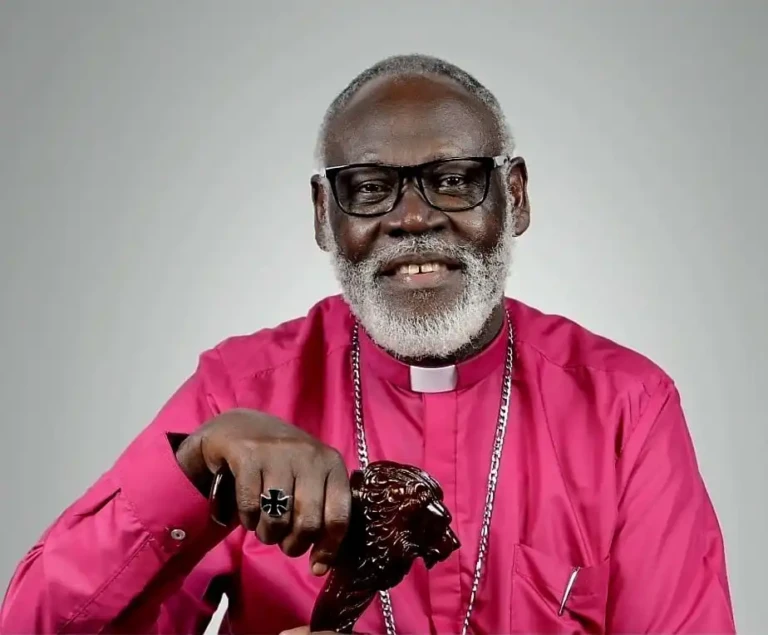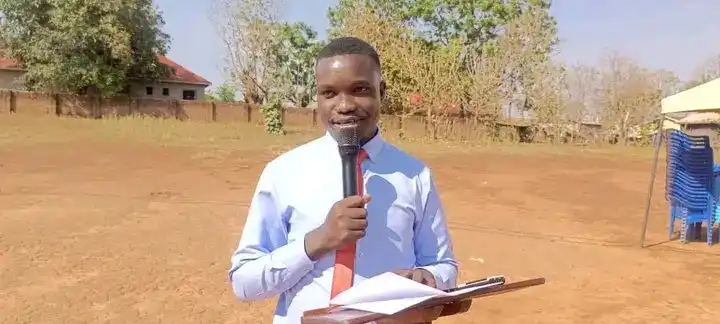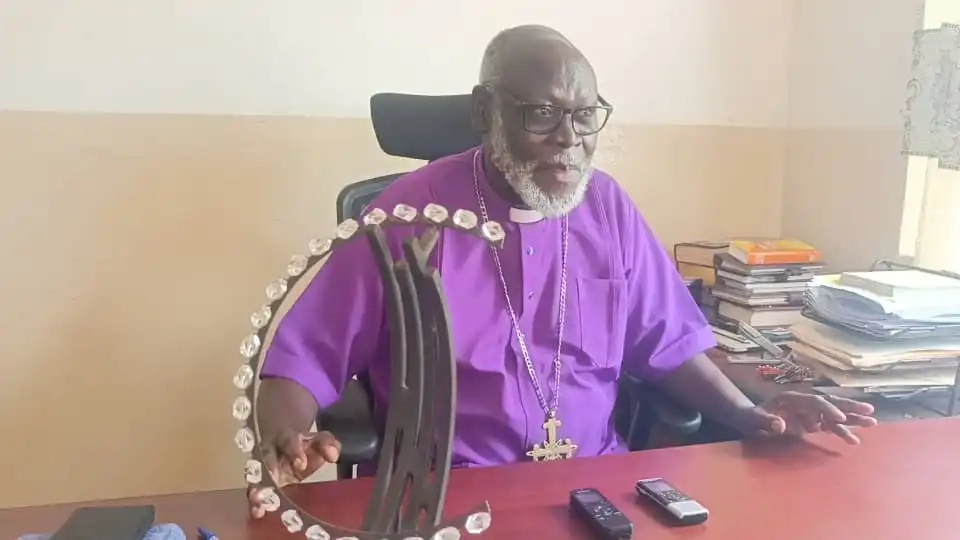
Arcbishop Elias Taban Parangi. PHOTO CREDITS: Access Radio (File Photo)
(OPINION / ELIAS TABAN PARANGI) – The situation in South Sudan is indeed grave. Yet even in such darkness, the call for dialogue and reconciliation must not be ignored. It echoes deeply with biblical principles that remind us of the power of truth, healing, and unity.
In the face of conflict and division, the survival of South Sudan depends on sincere dialogue and the genuine implementation of the Truth, Reconciliation, and Healing Commission. Scripture teaches us that healing begins with truth and is sustained through understanding and forgiveness.
● The Call for Reconciliation
The Apostle Paul writes in 2 Corinthians 5:18–19 (NIV):
“All this is from God, who reconciled us to himself through Christ and gave us the ministry of reconciliation: that God was reconciling the world to himself in Christ, not counting people’s sins against them. And he has committed to us the message of reconciliation.”
This passage reminds us that reconciliation is not merely a human effort—it is a divine calling. South Sudan must embrace this sacred responsibility to heal the wounds of its past and rebuild its future.
● The Importance of Truth
In John 8:32 (NIV), Jesus says:
“Then you will know the truth, and the truth will set you free.”
Acknowledging the truth about past injustices and atrocities is essential for genuine healing. Without confronting what has happened, the cycle of violence and mistrust will continue, pushing the nation further toward destruction.
● The Pursuit of Peace
Psalm 34:14 (NIV) instructs:
“Turn from evil and do good; seek peace and pursue it.”
Peace is not passive—it requires deliberate action. Leaders and citizens alike must commit to dialogue, justice, and mutual understanding. This pursuit must also be practical: peace cannot thrive where there is hunger and suffering. Serious resource mobilization is essential, for there is no peace where people go to bed hungry.
● The Power of Forgiveness
Colossians 3:13 (NIV) reminds us:
“Bear with each other and forgive one another if any of you has a grievance against someone. Forgive as the Lord forgave you.”
Forgiveness is not weakness; it is strength. It breaks the chains of bitterness and opens the door to lasting healing. Without forgiveness, reconciliation cannot take root.
Now more than ever, there is a need to massively mobilize the interfaith community to lead grassroots dialogue and reconciliation efforts across the nation. Faith leaders, communities, and citizens must rise together in unity to rebuild trust and restore hope.
South Sudan is not forgotten. God’s eyes remain upon the nation. Let us not lose hope.
The Most Rev. Eng. Elias Taban
Primate and Metropolitan Archbishop
Evangelical Presbyterian Church of South Sudan and Uganda
Disclaimer:
Access Radio® publishes opinion articles to provide a platform for diverse and independent views. The opinions expressed are solely those of the authors and do not necessarily reflect the views of Access Radio® or its editorial team.
The publication of any opinion piece does not imply agreement with or endorsement of its content by Access Radio®.
Responsibility for the accuracy of facts and the validity of opinions rests entirely with the author. Access Radio® does not assume responsibility for any claims made by contributors.
We welcome thoughtful opinion contributions from our listeners and readers. To share your views, please email: news@radioyei.org. All submissions may be edited for grammar, clarity, and style.
Discover more from Access Radio Yei News
Subscribe to get the latest posts sent to your email.