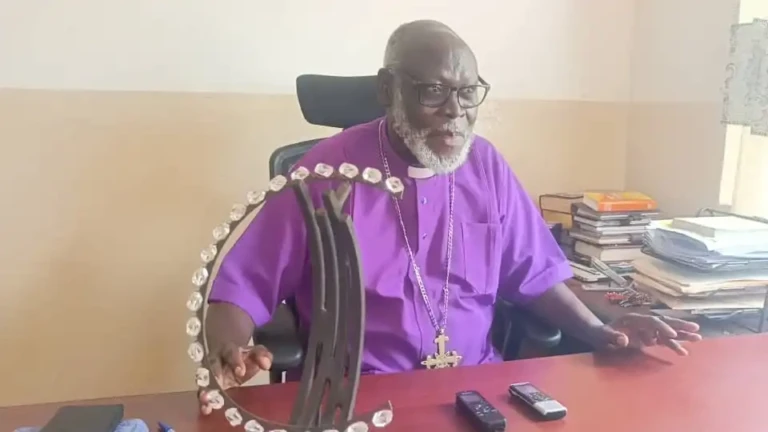
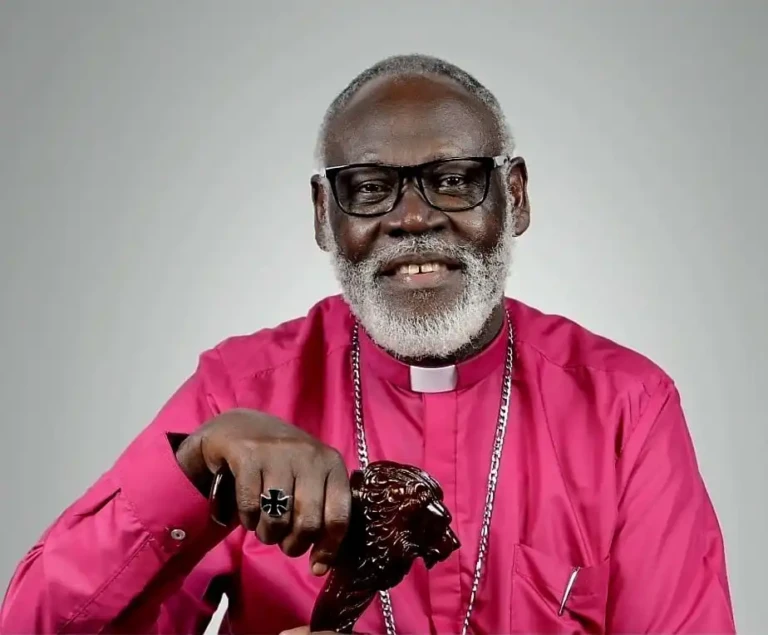
The Most Rev. Engineer Elias Taban Parangi
Archbishop, Evangelical Presbyterian Church of South Sudan and Uganda
The Most Rev. Engineer Elias Taban Parangi Archbishop, Evangelical Presbyterian Church of South Sudan
Listen to this article
(OPINION / ARCHBISHOP ELIAS TABAN PARANGI ) – Drawing on Scripture and the realities in South Sudan—is powerful and grounded in both moral teaching and lived experience. It connects deeply with the social and political struggles many communities face.
Greed, is not just a personal issue; it becomes a national one when it shapes leadership, governance, and public life. Here are some biblical reflection on greed and its consequences in South Sudan.
● Conflict and Strife:
Greed often leads to disputes and conflicts. When individuals prioritize their own desires over the well-being of others, it creates an environment of tension and hostility.
● James 4:1-2 (NIV):
“What causes fights and quarrels among you? Don’t they come from your desires that battle within you? You desire but do not have, so you kill. You covet but you cannot get what you want, so you quarrel and fight.”
● Discontentment:
Greed fosters a sense of discontentment, making it difficult for individuals to find peace. When people are constantly seeking more, they overlook the blessings they already have a nation called South Sudan. When comes to money we want to be all millionaires, when comes to promotion we all want to be Generals, Excellencies, honorables etc.
– Ecclesiastes 5:10 (NIV):
“Whoever loves money never has enough; whoever loves wealth is never satisfied with their income. This too is meaningless.”
● Separation from Love of your nation:
Greed can create a barrier between individuals and their relationship with their communities. When selfish material possessions become the focus, peace is often sacrificed and communities are forgotten.
– Matthew 6:24 (NIV):
“No one can serve two masters. Either you will hate the one and love the other, or you will be devoted to the one and despise the other. You cannot serve both God and money.” In other words you not serve South Sudan and money. Many have sacrificed their own communities for position in Government; the very government that is charged with responsibility of peace of the community.
The Call to Generosity
In contrast to greed, the Bible encourages generosity and selflessness, which are pathways to peace in a nation. Putting others first, putting the people of South Sudan first.
● Acts of Kindness:
Generosity fosters community and builds relationships, leading to a more peaceful existence among individuals and communities.
– 2 Corinthians 9:6-7 (NIV):
“Remember this: Whoever sows sparingly will also reap sparingly, and whoever sows generously will also reap generously. Each of you should give what you have decided in your heart to give, not reluctantly or under compulsion, for God loves a cheerful giver.”
Till all of us in South Sudan begin to see the benefit of giving to our Country; dialogues and peace talks will remain a business of the month and paper work. All money designated for implementation will end up to serve our selfish desires.
By: The Most Rev Engineer Elias Taban Parangi.
Archbishop of the Evangelical Presbyterian
Church of South Sudan and Uganda
Disclaimer:
Access Radio® publishes opinion articles to provide a platform for diverse and independent views. The opinions expressed do not necessarily reflect the views of Access Radio® or its editorial team.
The publication of this opinion does not imply agreement or endorsement by Access Radio®.
Responsibility for facts and opinions rests solely with the author. Access Radio® does not take responsibility for the accuracy of claims made by contributors.
We welcome thoughtful opinion contributions from our listeners and readers. To share your views, email news [at] radioyei.org. All submissions may be edited for grammar or related issues.
Listen to Access Radio 88.8 FM ONLINE
Follow on WhatsApp, Facebook and X
Got a story to share?
Help us cover the stories that matter. Send your news tip via WhatsApp: +211 927 588 870 or email: news [at] radioyei.org.