
















Registering as a voter should be more than an administrative exercise. It should be an important step in a citizen’s participation in the democratic life of a country.
As a policy and political analyst, Chief Executive Officer of the Institute of Social Policy and Research (ISPR), and a civil society leader, I am pleased to share that I have officially registered as a voter.
However, my experience at the voter registration centre left me with mixed feelings and raised serious questions about how prepared we are, as a country, for meaningful democratic participation.
An Experience That Raised Questions
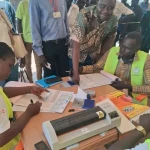
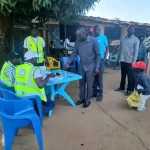
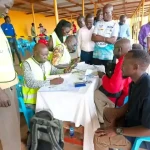
During my time at the registration centre, I observed prospective South Sudanese voters, particularly people I estimated to be between the ages of 18 and 60.
What struck me most was the difficulty many people appeared to have in stating their exact dates of birth.
Based solely on the group I personally observed, I estimated that approximately 80 percent could not confidently provide their exact date of birth, including the day, month or, in some cases, year.
This figure is my personal observation from that particular registration experience. It is not a scientific survey and should not be interpreted as representing 80 percent of South Sudanese voters nationally.
Nevertheless, what I witnessed deserves serious consideration.
The issue is bigger than whether someone can remember a date. It raises broader questions about civil documentation, civic awareness, identity systems and the capacity of citizens to navigate important public institutions.
Identity and Registration
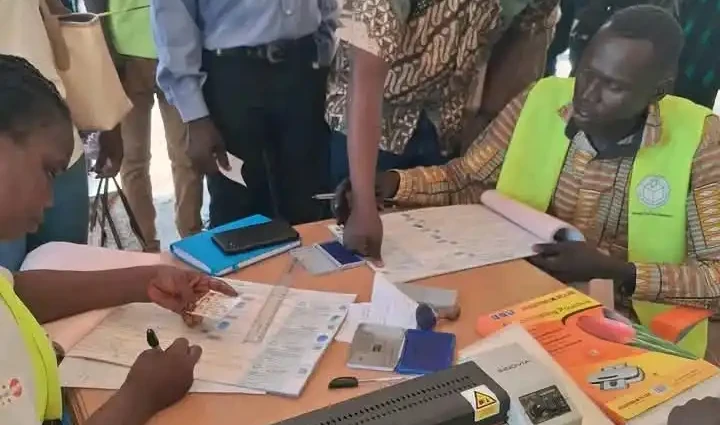
I also observed registration officials largely recording information verbally provided by applicants. Many people I saw did not appear to present national identification documents or other readily available documentation establishing their identity and citizenship.
This does not necessarily mean that the registration process was unlawful or improperly conducted. The requirements for establishing voter eligibility must be assessed against South Sudan’s applicable electoral laws, regulations and procedures.
That distinction is important.
Where national identification documentation is not a mandatory condition for registration, there must still be clear public understanding of what evidence or procedures are legally acceptable for establishing a person’s age, citizenship and eligibility.
Citizens should not have to speculate about such an important democratic process.
NEC Must Strengthen Public Information
The National Elections Commission (NEC) has an important responsibility to ensure citizens understand not only where and when to register, but also the legal basis upon which voter eligibility is determined.
I therefore call upon the NEC to:
- Make the applicable electoral legislation, regulations and constitutional provisions governing elections readily accessible to the public.
- Clearly communicate voter registration requirements, particularly those concerning eligibility, minimum voting age, citizenship and identity verification.
- Explain, in simple language, what documentation or other evidence may legally be used when a prospective voter does not possess a national identification document.
- Work closely with civil society organisations, community leaders, media institutions and other stakeholders to strengthen civic and voter education.
- Ensure voter registration procedures are transparent, consistent and guided by clearly communicated legal provisions across registration centres.
Public access to these legal instruments and procedures would enable civil society organisations, political stakeholders, journalists, community leaders and ordinary citizens to provide and receive accurate information about the electoral process.
Registration Alone Is Not Enough
As civil society leaders, our responsibility should not end with encouraging people to register and vote.
We should help build informed, responsible and democratic citizens who understand their rights, responsibilities and the institutions established to govern them.
An election, by itself, does not automatically make a country democratic.
A functioning democracy also requires credible institutions, respect for the rule of law, political tolerance, accountability and citizens who are sufficiently informed to participate meaningfully in decisions affecting their country.
That is why voter education should not simply teach citizens how to mark a ballot. It should help people understand what elections mean, what elected leaders are responsible for, how citizens can hold public institutions accountable and why political differences should be resolved peacefully.
South Sudan therefore needs more than registered voters.
We need informed citizens who understand democracy, know their rights and responsibilities, and are prepared to participate meaningfully in shaping the future of their country.
Registering to vote is an important beginning. Building democratic citizenship is the bigger task.
Let us build democratic citizens to build a democratic South Sudan.
Disclaimer
This is an opinion article based on the author’s personal experience and observations during voter registration. The observations, including the estimated proportion of people who appeared unable to state their exact dates of birth, are not based on a scientific survey and should not be interpreted as nationally representative statistics.
The views and interpretations expressed in this article are those of the author and do not necessarily represent the official position of the Institute of Social Policy and Research (ISPR), the National Elections Commission, or any other institution.
Discover more from Access Radio®
Subscribe to get the latest posts sent to your email.