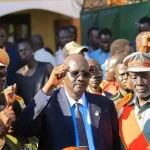














(JUBA) – The Caretaker Commissioner of Juba County, Kalisto Ladu, has warned foreign traders against engaging in retail business activities within Juba County, saying the sector should be reserved for South Sudanese entrepreneurs.
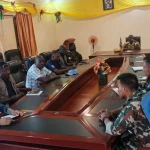
Speaking to traders at Kubri Habuba Street on Monday, Ladu said the move is intended to create and protect business opportunities for local businessmen and women, while encouraging foreign investors to focus on larger scale commercial ventures.
The commissioner stressed that foreign investors are welcome in Juba County but should concentrate on wholesale trading and company based investments rather than small scale retail businesses.
He added that foreigners seeking to invest in South Sudan should establish companies and engage in wholesale trade, while leaving retail businesses for South Sudanese citizens.
Several traders who attended the public business address at Kubri Habuba on Monday evening expressed their willingness to cooperate with the county authorities and implement the commissioner’s directive.
The announcement comes amid growing calls by local authorities to strengthen economic participation among South Sudanese citizens by safeguarding opportunities for local traders and youth entrepreneurs.
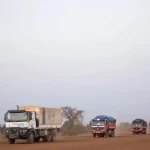
A United Nations Mission in South Sudan assessment team has arrived in Yei River County in Central Equatoria State to review security, health and logistical conditions before a planned 45 day deployment of more than 250 personnel.
The team travelled from Juba and is also identifying accommodation for the expected UNMISS staff. Atar Bengani, a member of the assessment team, said the work was being carried out in consultation with the Governor of Central Equatoria State.
The Executive Director of Yei River County, Hillary Lokudu Muhammed, welcomed the UNMISS team but advised them to wait for further recommendations from the caretaker Commissioner of Yei River County. The Commissioner was expected to return from Juba before a final decision on accommodation arrangements.
Lokudu briefed the team on the county’s health and security situation. He said Yei had no reported Ebola cases, though authorities had put preparedness measures in place because of the county’s proximity to the Democratic Republic of Congo, where Ebola cases have been reported.
The World Health Organization’s Regional Office for Africa reported in June 2026 that South Sudan remains classified as a high risk country for the importation of Ebola cases due to its proximity to outbreak areas in the Democratic Republic of Congo and high traffic with Uganda.
The WHO has been working in high risk locations including Yei to support preparedness measures.
On security, the Executive Director described the situation in Yei as generally calm but noted isolated incidents involving young people. He said authorities had intervened and arrested some of those involved.
Yei, Lainya and Morobo counties in Central Equatoria are among areas expected to record relatively cooler temperatures over the next week, with mean temperatures forecast to remain below 28°C from 7th to 14th October, according to the South Sudan Meteorological Service.
In a weekly weather forecast issued on Tuesday, the meteorological service said most parts of South Sudan are expected to experience average temperatures above 28°C during the forecast period, while lower temperatures are likely across parts of Central and Eastern Equatoria, Western Equatoria and Western Bahr el Ghazal.
In Central Equatoria, cooler conditions are expected across Kajo Keji, western parts of Juba, Lainya, Yei and Morobo counties.
Most counties in Western Equatoria are also forecast to record mean temperatures below 28°C, while south western parts of Wau and most parts of Raja in Western Bahr el Ghazal are expected to experience similar conditions.
The forecast comes as the South Sudan Meteorological Service warned of warmer than usual temperatures across South Sudan during the week. Despite relatively cooler conditions in parts of the south, the service classified heat stress as extreme caution for most payams across the country, particularly in central, northern and eastern areas.
The service advised residents to reduce prolonged exposure to high temperatures, stay in shaded or cool areas during the hottest hours and drink water frequently. It also urged communities to monitor vulnerable groups, including children, the elderly, people with disabilities and pregnant women.
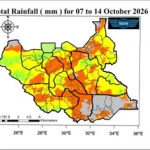
The meteorological service also forecast moderate rainfall of between 50 and 100 millimetres in parts of Western Equatoria, Western Bahr el Ghazal, Northern Bahr el Ghazal, Warrap, Unity, Jonglei and Pibor Administrative Area. Most other parts of the country are expected to receive light rainfall below 30 millimetres.
Recent monitoring from 26th September to 3rd October showed generally wet conditions across South Sudan, with several areas in the south, west and north receiving more than 50 millimetres of rain. The highest cumulative rainfall, above 70 millimetres, was recorded in parts of Wau and Raja, Twic, western Tonj North, western Abyei Administrative Area, parts of Upper Nile State and Magwi County in Eastern Equatoria State.
The service said that despite moderate rainfall expected in selected counties, most parts of the country are forecast to experience drier than usual conditions. Light to moderate south westerly winds of 2 to 6 metres per second are expected across most areas, with stronger winds of up to 8 metres per second forecast in most of Eastern Equatoria State and south western parts of Pibor Administrative Area.
The meteorological service advised agriculture, transport, health and disaster management authorities to use the forecast for short term planning and preparedness. It warned that isolated heavy rainfall, thunderstorms and strong wind gusts could affect roads and exposed infrastructure during the forecast period.
The caretaker Minister of Information, Communication Technology and Postal Services has called on mobile operators to expand their coverage to rural areas ahead of the December elections.
Ateny Wek Ateny made the call during a consultative meeting with representatives of MTN, Zain and Digital Telecommunications in Juba.
The meeting focused on strengthening cooperation between the ministry and telecommunications companies and improving network services across the country.
Ateny stressed the need for reliable communication services in rural areas, particularly as the country prepares for December elections.
In a statement to the press, the Executive Director in the office of the Minister, Chol Duang Chan, said the meeting was aimed at renewing and strengthening relations between the ministry and telecommunications operators.
The ministry says improved network coverage will help communities access information and communicate more effectively across the country.
President Salva Kiir has travelled to South Africa after leaving Kenya, where he held bilateral talks with President William Ruto, a Kenyan official has said.
According to Kenyan Cabinet Secretary for Public Service Geoffrey Kiringa Ruku, President Salva Kiir left Kenya today for a bilateral visit to South Africa.
South African discussions are a follow up to talks with President Cyril Ramaphosa, who chairs the African Union High Level Ad Hoc Committee for South Sudan, known as C5.
The talks follow the adoption of the C5 declaration, which reaffirmed the committee’s commitment to accompany the government and people of South Sudan towards durable peace, prosperity and development. It acknowledged progress in implementing the Revitalised Peace Agreement and took note of preparations for the December 2026 elections.
The follow up engagement will focus on translating those discussions into practical cooperation, including South African support for electoral preparations and election related materials.
The visit marks the third time President Kiir has travelled to South Africa for bilateral talks this year. He first visited South Africa in March and later in August.
The State House in Juba has not provided details on the purpose of the President’s visit to South Africa.
The trip comes after President Kiir travelled to Nairobi on Sunday for talks with Kenyan President William Ruto. The two leaders discussed bilateral relations, South Sudan’s elections and regional economic cooperation.
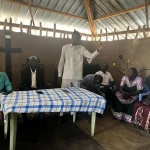
Local authorities on Gondokoro Island, Juba County, have raised concern over increasing drug use among young people and urged the government to establish a police post to help curb the problem.
The concern was raised on Friday during an experience sharing session organised by the Women Foundation for Humanity in Minuit Boma.
Paramount Chief Martin Ladu Soka said young people are increasingly using illicit drugs, which he said are brought from Uganda through Jebel Nyoka.
Gondokoro Monenyit Island, north east of Juba, is accessible by boat through the Nile. Ladu said a police post could help restrict the entry of drugs.
He said he had reported the issue to payam authorities and requested police deployment but received no response. He also said drug use had contributed to threats against women and girls.
Dorothy Ambrose Drabuga, executive director of the Women Foundation for Humanity, urged women to speak out about gender based violence and other challenges affecting their communities.
She said the formation of a women’s group and the election of women to leadership positions were among the achievements recorded on the island.
Drabuga encouraged women to challenge beliefs that they could not become community leaders, citing women serving as chiefs and quarter council leaders elsewhere.
Kenya has confirmed its first Ebola case linked to the major outbreak in the Democratic Republic of Congo after a Kenyan man who travelled from Congo died in Nairobi, health authorities said on Tuesday.
The case makes Kenya the third country to record an infection connected to the outbreak in eastern Congo, which has infected more than 8,400 people and killed more than 4,000.
Health Minister Aden Duale said the patient, a Kenyan citizen who had lived in Congo for seven years, had been ill for about a month before beginning his journey to Kenya.
He travelled by road from Congo to Uganda’s capital Kampala before boarding a Jambojet flight to Nairobi on Saturday.
The man passed through health screening at Nairobi’s international airport before a relative later took him to Nairobi Hospital. He was admitted with symptoms including fever, chills, severe fatigue, muscle pain, sore throat and bleeding beneath the skin and was quickly placed in isolation.
He died late on Monday.
Kenya’s health ministry Director General Patrick Amoth said medication taken by the patient may have suppressed his symptoms, allowing him to pass through airport screening without being detected.
Authorities have identified 28 people who came into contact with the patient in Kenya, including relatives and healthcare workers.
Officials are also trying to trace 23 passengers and four crew members who were aboard the Jambojet flight from Kampala to Nairobi.
Ebola is transmitted through direct contact with the bodily fluids of infected people, including those who have died. Symptoms can include fever, vomiting and diarrhoea, with severe cases causing internal and external bleeding.
The outbreak in Congo was officially declared in mid May, although health officials believe transmission may have begun months earlier.
The epidemic involves the rare Bundibugyo strain of the Ebola virus and has caused more than 4,000 deaths, according to figures cited by Reuters.
Discover more from Access Radio®
Subscribe to get the latest posts sent to your email.