






(DAKAR, SENEGAL) – African countries have recovered $758.04 million in additional tax revenue in the first seven months of 2026, as policymakers and tax experts called for stronger systems to reduce illicit financial flows.
The African Tax Administration Forum said its supported interventions generated $529.71 million in additional tax assessments and $228.33 million in collections between January and July 2026.
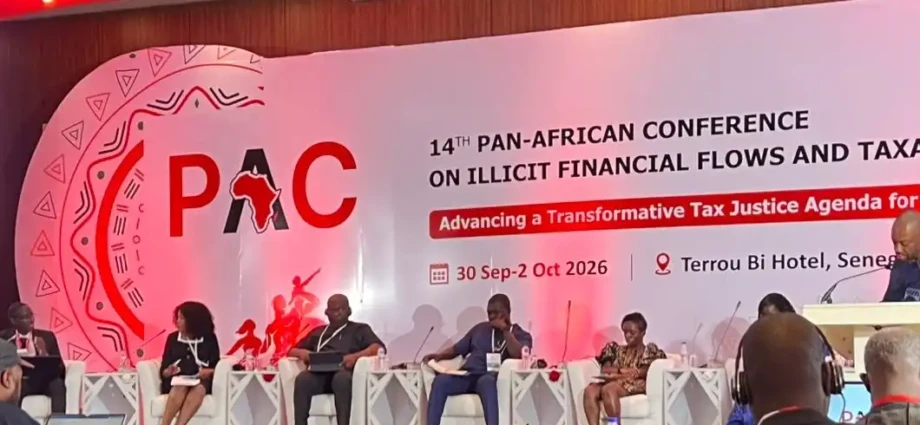
The figures were released at the 14th Pan-African Conference on Illicit Financial Flows and Taxation, which opened in Dakar, Senegal. The three day conference is themed “Advancing a Transformative Tax Justice Agenda for Africa.”
Emmanuel Eze, speaking on behalf of African Tax Administration Forum Executive Secretary Mary Baine, said the revenue gains were already making a difference. “Taken together, these are not abstract numbers. There are schools, roads, and social protection programmes that our member states can now afford,” he said.
He said African countries needed to combine enforcement with greater transparency, improved policy tools and cooperation between tax administrations. Areas identified for action included transfer pricing, value added tax compliance on cross border transactions, withholding taxes and automatic exchange of information.
The conference brings together policymakers, parliamentarians, researchers, civil society organisations and development partners. It is examining how taxation can support economic transformation, public services and sustainable development.
The opening session focused on the pressure facing African tax systems. These include widening inequality, tight government budgets, increasingly mobile capital and rapidly changing business models.
The discussions come as governments across Africa face pressure to finance development while limiting their dependence on external borrowing and aid.
Gamal Ibrahim of the United Nations Economic Commission for Africa said African economies needed to retain a greater share of the wealth generated on the continent. “Africa’s future must increasingly be financed by the wealth that Africa generates,” Mr Ibrahim said.
He urged participants to strengthen mechanisms for tracking commitments and measuring progress in tackling illicit financial flows and improving tax transparency. “Let us use this Conference not only to exchange ideas, but to renew our collective resolve, deepen our collaboration and move decisively from dialogue to delivery,” he said.
Tax Justice Network Africa executive director Chenai Mukumba said the debate should extend beyond the technical capacity of tax authorities to broader questions about economic sovereignty. She challenged participants to examine how African countries manage revenues from natural resources, finance development and engage with international capital.
“How should Africa participate in the global economy? What should happen to wealth generated from natural resources? How should development be financed? What should the relationship with capital be?” said Ms Mukumba.
She said decisions being made by African governments collectively and individually could influence the continent’s economic trajectory for decades.
The conference is examining taxation in the context of redistribution, economic transformation, regulation, representation and resilience. Other issues on the agenda include illicit financial flows, natural resources, debt, inequality, public health and changes to the international tax system.
Participants are also expected to discuss Africa’s role in global tax governance and how countries can strengthen their collective position in international negotiations.
The opening discussions identified three broad priorities. These are improving the capacity of tax administrations to mobilise domestic resources, strengthening accountability for commitments on illicit financial flows and tax reform, and defining what greater economic sovereignty should mean in practice.
The discussions are expected to culminate in policy proposals aimed at ensuring a larger share of Africa’s economic wealth contributes to public revenues and development.
Discover more from Access Radio®
Subscribe to get the latest posts sent to your email.