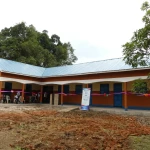

(AWEIL, SOUTH SUDAN) – Two thirds of primary healthcare centres in Northern Bahr el Ghazal State have closed due to cuts to international aid budgets, according to Médecins Sans Frontières Australia.
The medical charity reported in October 2026 that the closures have made it difficult for women to access primary healthcare close to home for their children, allowing common conditions such as diarrhoea to escalate into life threatening emergencies.
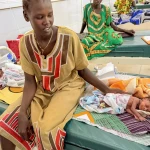
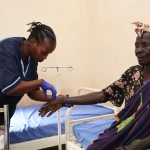
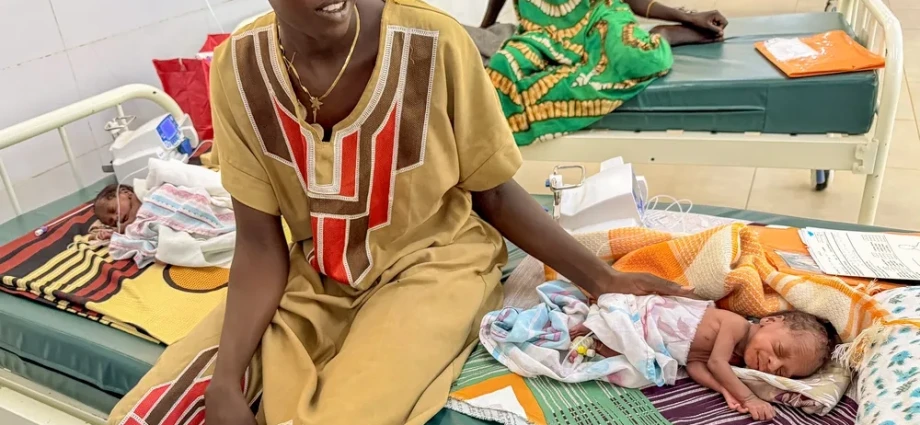
This is what happened to Akok, a woman who spoke to Médecins Sans Frontières at the MSF supported Aweil State Hospital. When her twin girls started having diarrhoea, she sought help at her local clinic but found it closed.
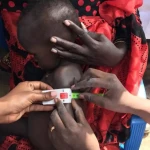
With the girls’ conditions deteriorating fast and without money for transport, she walked six hours in 40 degree heat to reach the hospital. After assessment by the MSF team, the girls were diagnosed with severe acute malnutrition with complications.
Another woman, Abuk, took two boda boda motorbike taxi trips of nearly eight hours to reach the hospital. Her son was critically ill when they arrived. Many others would not be able to make the journey, MSF said, adding that a lack of primary healthcare directly costs lives.
The accounts were shared by Joanne Lillie, a field communications coordinator with Médecins Sans Frontières Australia, who worked in South Sudan earlier this year.
MSF has been operating in the area that is now South Sudan for more than 40 years and has become a significant healthcare provider across the country. Its work there is delivered through 18 projects run by five MSF operational centres.
Alongside providing healthcare to communities in crises, MSF said its other mandate is to bear witness to the experiences of those communities, especially when they face injustice. This witnessing, known within MSF by the French term témoignage, is an essential part of the organisation’s work.
In May, the MSF communications and advocacy teams produced an advocacy report on violence in the country, particularly violence targeting healthcare. Since the beginning of 2025, MSF has experienced 12 attacks on staff and facilities, including the bombing of two MSF supported hospitals in Lankien and Old Fangak. These bombings eliminated healthcare access for an estimated 760,000 people.
MSF said the report is important and necessary and resulted in robust discussions with the government. It added that speaking out is integral to its independence, neutrality and impartiality.
Working under MSF’s storytelling guidelines, teams follow the principles of dignity, informed consent and doing no harm. In some cases, it was not appropriate to share patients’ names or take their pictures.
In one case, a man was severely traumatised following an attack by a hostile tribe that killed 16 of his community members in a forest and left him, the only survivor, unable to walk. In another, a young woman of 16 was in labour without assistance for two days and lost her baby because she could not get skilled care in time. There was also a newborn baby who had been abandoned and was being cared for by several unrelated women until a home could be found.
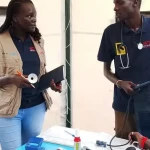
MSF said that while many images gathered during the period show South Sudanese staff at work, or smiling mothers with their recovering children in the neonatal or paediatric wards or the inpatient therapeutic feeding centre, these are only the ones who reached care. Many more did not.
Other patients were too traumatised or too vulnerable to be shown, MSF said, adding that they should not be forgotten.
MSF also described the experience of Met Kur and her two week old twin boys Chan and Ngor. Born prematurely, the boys initially had difficulty breathing and feeding, so she brought them to the neonatal intensive care unit at the MSF supported Aweil State Hospital.
Reflecting on her time in South Sudan, Lillie said growing up in southern Africa meant some aspects of life in South Sudan were not totally unfamiliar to her. She said exposure to the complexities of rural and remote life, poor road infrastructure and long distances, living with limited luxuries and a lack of resources in general all foster resilience and a go with the flow attitude.
She said being used to multi national and multi cultural teams means you are likely to get along well with everyone, and that long forgotten life skills show up in some way and at some time.
Lillie said MSF means a lot to people in a place like South Sudan where it has been working for decades. When you wear the white T shirt or vest, people know what you stand for.
She described a situation where she was with a young woman who had lost her baby, and the young woman’s mother, when the medical team told her that she needed another surgery to remove excess fluid collecting in her belly. The mother was afraid she was going to lose her daughter as well.
When the mother saw Lillie on the ward the next day, after a successful surgery, her face lit up and she reached out both her hands. As Lillie was in the white vest, in her mind, she was part of the team that saved her daughter’s life. With tears in her eyes, she expressed how thankful she was.
MSF said its teams of medical and non medical professionals provide healthcare to millions of people caught in crises in more than 70 countries around the world.
Discover more from Access Radio®
Subscribe to get the latest posts sent to your email.