





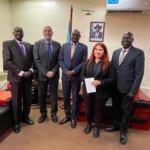




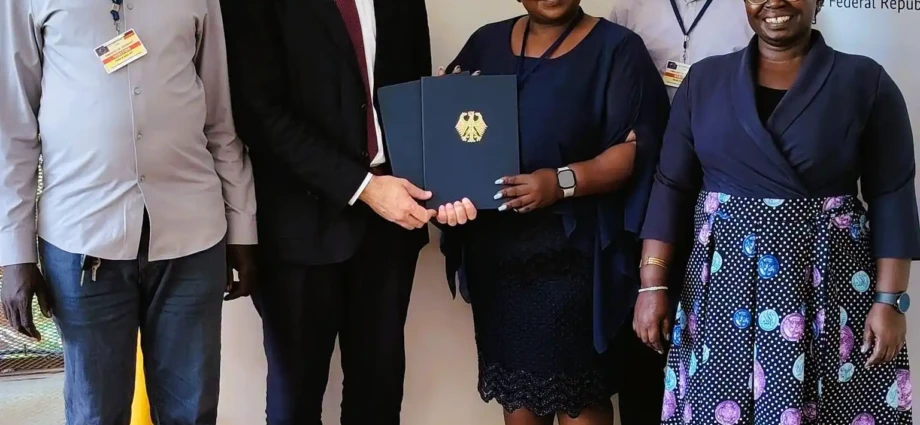
(JUBA, SOUTH SUDAN) – Germany is funding five community based projects aimed at supporting women and girls in three South Sudanese states, the German embassy in Juba said on Friday.
The projects, funded directly by the embassy, are being carried out in Central Equatoria, Eastern Equatoria and Western Bahr el Ghazal states.
They focus on education, protection, women’s economic empowerment, menstrual health and community cohesion, according to the embassy.
The funding adds to Germany’s wider support for women and girls in South Sudan. The German government is one of the biggest donors to the country’s humanitarian response and has committed more than US$200 million to World Food Programme operations in South Sudan since 2021.
In 2026 alone, Germany contributed US$2.97 million to the South Sudan Humanitarian Fund.
Ambassador Says Women Are Actors, Not Just Beneficiaries
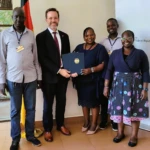
German Ambassador to South Sudan Sebastian Brökelmann said women and girls should be regarded as participants in peacebuilding and development rather than simply beneficiaries.
“Women and girls are not only beneficiaries of peace and development. They are important actors in building peaceful, resilient and inclusive communities,” he said after the signing of the funding agreements.
Germany’s development cooperation with South Sudan focuses on projects aimed at improving conditions for groups who are particularly in need, especially women and children, internally displaced persons, refugees and host communities, according to the German Embassy in Juba.
Five Projects Across Three States
In Narus, Eastern Equatoria, St Joseph Parish of the Catholic Diocese of Torit is supporting a project to provide a safer learning environment for students at St Bakhita Girls Secondary School.
In Lafon County, also in Eastern Equatoria, African Parks South Sudan is working with Lafon Secondary School to improve the learning environment for students and teachers. The stated aim is to strengthen access to education and skills development.
In Kator Payam, Central Equatoria, the Women and Children Protection Initiative is combining women’s livelihood support with peacebuilding and community dialogue.
Another project in Juba County, Central Equatoria, implemented by the Community Empowerment Organization for Peace and Development, focuses on adolescent girls’ knowledge of menstrual health, dignity and peer support.
In Wau, Western Bahr el Ghazal, the Acting Community Team is upgrading an existing centre into a space for women and girls. It is intended to provide protection, economic empowerment and community support.
Germany’s Broader Support for Women and Girls
The embassy said the projects are part of Germany’s support for locally led peace, development and resilience initiatives in South Sudan.
Germany also provides humanitarian assistance and supports longer term development programmes. These cover local governance, rural development, agriculture, water and sanitation, peace and reconciliation, gender equality, and the prevention of sexual and gender based violence.
Beyond the five projects announced on Friday, Germany has backed several larger initiatives focused on women and girls.
The German government co-funds the ResPEct project, which stands for Stop SGBV – Respond, Prevent, Educate. It is a three year project with a total budget of €8.26 million, co-funded by the European Union and Germany’s Federal Ministry for Economic Cooperation and Development and implemented by the Deutsche Gesellschaft für Internationale Zusammenarbeit.
The ResPEct project supports counselling services, community awareness, engagement of men and boys, strengthening women’s networks and supporting women led initiatives. Since September 2025, 480 women have participated directly in its training programmes, while 300 stakeholders and 420 young people have benefited indirectly.
In September 2026, the Nyamlel Women’s Centre was inaugurated in Aweil West County. The centre sits on a 46 by 25 metre plot and consists of three rooms designed to accommodate training and empowerment activities.
Women have participated in business and financial management training, leadership and people management training, and gender based violence prevention training under the project. The programme has also engaged men through community dialogues on gender roles and responsibilities.
Germany also supports the Community Care programme through UNICEF. In July 2026, representatives from UNICEF and the German Embassy conducted a field monitoring visit to hear from participants about the programme’s impact.
Participants described how it increased awareness of services for survivors of sexual and gender based violence and encouraged families to keep girls in school instead of marrying them off early.
Discover more from Access Radio®
Subscribe to get the latest posts sent to your email.