





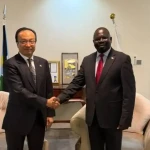



















The swearing-in of Isaac Moro Johnson Lupai as the new Caretaker Commissioner of Morobo County, Central Equatoria State, is more than a routine administrative transition. It is a crucial test of leadership, governance and resilience in one of South Sudan’s most challenging counties.
Appointed on October 1, 2026, and officially sworn in by Caretaker Governor Augustino Jadalla Kamilo Wani the following day, Moro assumes office at a time when Morobo faces deep-seated security, humanitarian and governance challenges. His tenure is likely to be judged not by political promises, but by his ability to deliver tangible improvements in the lives of ordinary citizens.
Moro’s background in security may prove to be one of his greatest assets. Having previously served as the county’s Security Coordinator, he is familiar with the complex realities on the ground. In an environment where leadership often requires practical experience rather than abstract policy solutions, his understanding of local security dynamics provides a strong foundation upon which to build.
Yet the obstacles before him are formidable. For years, Morobo County has endured the effects of armed conflict, insecurity, and instability. Continued tensions between the South Sudan People’s Defence Forces (SSPDF) and the Sudan People’s Liberation Army-in-Opposition (SPLA-IO), coupled with frequent ambushes along critical transport corridors such as the Kaya highway, have undermined economic activity and restricted the movement of people and goods.
The consequences extend far beyond security concerns. Persistent instability has significantly reduced the operational presence of humanitarian organisations, United Nations agencies and development partners, many of whom remain cautious about deploying staff to high-risk areas. This has left vulnerable communities with limited access to much-needed services and assistance.
At the same time, Morobo is grappling with growing humanitarian pressures. The arrival of internally displaced persons and returnees from neighbouring Uganda and the Democratic Republic of Congo continues to place immense strain on already fragile health, education, and water systems. Local authorities face the difficult task of responding to increasing demands with limited resources and institutional capacity.
Equally troubling is the county’s governance deficit. Chronic staffing shortages, weak administrative structures, and limited local revenue collection have hindered effective service delivery. Public institutions often operate below capacity, while economic stagnation continues to constrain efforts to fund essential infrastructure and public services.
Against this backdrop, Commissioner Moro’s priorities must be clear and pragmatic. Restoring security should remain at the centre of his agenda, not only through strengthening cooperation among security actors but also by fostering trust between armed forces and civilian communities. Sustainable peace in Morobo will require more than military solutions; it will depend on building confidence, dialogue, and coexistence among all stakeholders.
At the same time, Moro must work to rebuild the confidence of humanitarian and development partners. Encouraging their return to the county will be critical to addressing immediate humanitarian needs and supporting long-term recovery efforts. While external assistance remains important, local initiatives aimed at mobilising resources and revitalising economic activity should also form a central part of his strategy.
Commissioner Moro takes office at a defining moment for Morobo County. The challenges are immense, but so too is the opportunity. If he can leverage his security experience to stabilise the county, strengthen governance, and create conditions for development partners to return, he could help steer Morobo away from prolonged crisis and towards recovery and renewal.
For years, Morobo has been viewed as a county on the margins. The true measure of Isaac Moro’s leadership will be whether he can transform it into a county of opportunity, resilience, and hope.
Disclaimer: Tito Justin is a journalist and communications development analyst who monitors current affairs and governance issues. The views expressed in this article are solely those of the author and do not necessarily reflect the views of Access Radio or its editorial team and partners.
Discover more from Access Radio®
Subscribe to get the latest posts sent to your email.