

















By Taban Kwaje
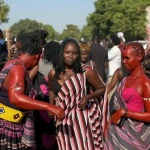
As a trained socio-cultural anthropologist who has studied governance systems and cultural institutions across the world, I have been closely following the ongoing election for the Kakuwa Community leadership in Juba. I listened carefully to the first debate, examined the manifestos of the various candidates and observed the excitement surrounding the process.
From an analytical point of view, it is clear that while some candidates show a strong understanding of the role and responsibilities of a cultural institution, others appear to approach the contest as though competing for a modern political office. This blending of political campaigning and cultural leadership is worth examining closely.
The current excitement partly reflects the novelty of competitive elections in a community whose governance has traditionally operated outside the framework of electoral democracy. In many African societies, including the Kakuwa, cultural leadership was not decided through open voting.
Instead, it followed hereditary succession, seniority, consensus and ritual affirmation. Authority was rooted in lineage, clan structures and ancestral legitimacy, not in popular votes. These traditional systems ensured continuity, legitimacy and the preservation of cultural values, while reinforcing the symbolic and spiritual authority of leaders.
Historically, among the Kakuwa people found in present day South Sudan, Uganda and the Democratic Republic of Congo, leadership within the chieftaincy or council of elders was passed on through kinship lines or clan consensus. Decisions were often guided by the wisdom of senior elders and ritual custodians.
Leadership was not bought through financial campaigns but inherited as a trust to be upheld for the benefit of the community. This mirrors broader African traditions, where power transfer involved rituals conferring sacred legitimacy.
Surviving monarchies such as the Buganda Kingdom in Uganda, the Ashanti Kingdom in Ghana and in South Sudan the Azande, Otuho, Chollo and Anyuak, still retain aspects of this hereditary and ritual governance.
In this context, adopting competitive, resource intensive elections for the Kakuwa leadership marks a significant break from tradition. The key question is: Is the Kakuwa community deliberately reshaping its governance to match modern democratic ideals, or is this a departure from its cultural roots? If it is a transformation, how do elders and traditional custodians, holders of collective memory and cultural authority, view it?
From an anthropological perspective, cultural institutions are more than administrative bodies. They are guardians of identity, moral order and social unity. If such institutions are remodelled to function like political or civil society organisations, they risk losing their cultural essence. The Kakuwa Community (KC) must decide whether its role is to safeguard cultural heritage or to operate as a modern civic association.
Modern democracy offers transparency, participation and a shared sense of agency. However, it can also bring factionalism, vote buying, and short term populism, which may weaken unity and symbolic authority. If unmanaged, these influences could turn the KC into a political battleground rather than a protector of heritage.
Before commercialising or politicising the Kakuwa leadership process, the community should undertake a thorough anthropological and historical study. This study should map traditional governance, succession practices and the social and spiritual roles of leadership in the Kakuwa context.
Only then can modern participatory elements be integrated without undermining the cultural foundations that have sustained the community for centuries.
In short, the question is not whether the Kakuwa community should evolve. it must, as all living cultures do, but how to balance tradition with innovation.
The aim should be to ensure that change strengthens, rather than weakens, identity, unity and legitimacy. Without such reflection, the adoption of modern elections could erode the very cultural authority the KC is meant to protect.
Taban Kwaje, also known as Wuneta Kwaje, is a socio-cultural anthropologist with extensive experience researching governance systems and cultural institutions in Africa.
Access Radio® publishes opinion articles as a platform for diverse and independent perspectives. The views expressed are solely those of the author and do not necessarily reflect the views of Access Radio® or its editorial team.
We welcome thoughtful contributions from our listeners and readers. To share your opinion, email news [at] radioyei.org. Submissions may be reviewed before publication.
Discover more from Access Radio®
Subscribe to get the latest posts sent to your email.