






(JUBA) – Morobo is the only county above the 80% readiness floor at 83.2%, followed by Yei at 75.4% and Kajo Keji at 70.2%, according to the South Sudan Health Cluster Bulletin for August and September 2026.
Budi at 33.3%, Ibba at 37.9% and Kapoeta South at 38.6% remain below 40% and need immediate critical function closure.
The second round sub national readiness assessment found subnational readiness at 56.0%, a 15.8 point improvement on the previous assessment.
Surveillance stands at 84.8%, risk communication and community engagement at 79.2% and rapid response teams at 69.2%. Safe and dignified burial remains the weakest pillar at 34.8%, followed by operations and logistics at 38.5% and essential health services at 41.7%, which declined by 12.5 points.
South Sudan’s health response faces a funding cliff at the end of September 2026, with several partner projects closing within days of each other even as the country battles multiple disease outbreaks and severe malnutrition emergencies.
The bulletin warns that the Coalition for Humanity’s SSHF-USG project in Mayendit and its Cholera Emergency Response in Leer, Concern Worldwide’s USG-SSHF-funded facilities across Guit, Leer and Panyijiar, and GOAL’s SSHF-US-funded Twic sites and BHA-US-funded Ulang nutrition sites all close within days of each other.
The bulletin calls for urgent funding to prevent an end-September and October service cliff.
A joint field assessment has verified a severe mortality, food security and nutrition emergency in Lafon County and Imehejek Administrative Area in Eastern Equatoria, where 73 deaths were recorded, including 49 in Lafon and 24 in Imehejek.
Of the 49 deaths in Lafon, 27 were children under five. The deaths were linked to acute malnutrition, malaria, acute watery diarrhoea, unsafe water and delayed access to care.
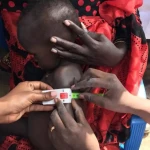
A total of 660 of 2,191 children screened were acutely malnourished, and moderate acute malnutrition treatment is non functional in Imehejek after World Food Programme support withdrew.
An Initial Rapid Needs Assessment across five Warrap State counties from 7th to 15th September found 210,000 people, or about 35,000 households, in need.
Global acute malnutrition among under fives screened reached 34.5%, with four sites at Majak Juer, Athieng Puol, Kanaf and Chueicok past the IPC Phase 5 threshold. Only 27 of 84 boreholes, or 32%, are functional.
The assessment also recorded 188 people reportedly killed over the previous 12 months of intercommunal conflict.
The bulletin reports that cholera continued to decline through July, falling 72% week on week around the end of July, before holding broadly stable.
In Week 39, 65 new cases and zero deaths were reported across four counties: Mayom with 33, Rubkona with 19, Renk with 12 and Fangak with one. Twelve of the cases were among internally displaced people and 15 remained admitted.
Over the last four weeks, 399 cases and three deaths were reported, with Rubkona, Mayom and Renk leading. Unity State accounted for 79.9% of cases and Upper Nile 19.3%. Forty nine of 55 counties reported no new cases in this period.
A total of 271 rapid diagnostic tests were conducted over the last four weeks, with 182, or 67.2%, testing positive.
The cumulative cholera caseload has been revised down to 112,148 cases and 1,723 deaths, a case fatality rate of 1.5%, following a review of the Unity line list. The Rubkona cholera treatment centre has been downgraded to a cholera treatment unit although active transmission continues there and in Mayom and Renk.
New measles outbreaks were confirmed in Tonj North in Warrap State and Aweil South in Northern Bahr el Ghazal, bringing the cumulative suspected total to 1,233 cases, of which 147 are laboratory confirmed.
A seven day reactive vaccination campaign is under way in Pariang, with 7% coverage as of late September. Of 47,240 under fives, 3,456 have been vaccinated.
Outbreak investigations continue in Rubkona, Aweil East and Centre, Magwi and Wau.
No new circulating vaccine derived poliovirus isolates were detected in Week 39.
Cumulatively, RSS-UNL-2 has 10 acute flaccid paralysis confirmed cVDPV1 cases in Maiwut, Nasir, Malakal, Longechuk, Pibor and Juba, plus two environmental isolates in Juba. RSS-CEQ-2 has three confirmed cVDPV2 cases in Tonj South and Ayod, plus two environmental isolates in Juba.
Acute flaccid paralysis surveillance performance continued to strengthen, with 469 cases in 2026 compared with 359 in 2025. The non polio acute flaccid paralysis rate stands at 5.90 compared with 4.80. There are zero silent counties and stool adequacy is 94%.
National readiness for polio National Immunisation Days Round 1, scheduled for 13th to 16th October 2026, stood at 69% as of Week 39, with state readiness at 46% and county readiness at 41%.
Malaria cases remained well below 2025 levels, with 53,441 cases reported in Week 39, a reduction of 37.9% compared with 86,046 in the same week of 2025. There were 12 deaths compared with 38 in 2025, a reduction of 68.4%.
Insecticide treated net distribution reached 8.66 million of the 9.5 million campaign nets planned, or 91.1%.
South Sudan has recorded 144 confirmed Mpox cases across nine counties as of Week 39, following two new confirmed cases in Juba and Ezo after a six week period without a positive case.
Confirmed cases by county are Yambio with 60, Juba with 39, Ezo with 29, Tambura with seven, Nzara with four, Rumbek Centre with two, and Malakal, Rumbek East and Yei with one each.
Cumulative suspected cases since the outbreak began in February 2025 stand at 737.
A Hepatitis E outbreak is growing in Chuil Payam in Jonglei State, with 13 new cases reported in the week to 27th September bringing the cumulative total to 35 since early September.
A separate Hepatitis E cluster has emerged in Nyirol, with 22 acute jaundice cases among internally displaced people between 13th August and 14th September. Two of five samples tested positive and one death was recorded.
In Northern Bahr el Ghazal, Hepatitis E has caused 201 cases and 19 deaths in 2026, a case fatality rate of 9.4%, including five pregnant women.
Northern Bahr el Ghazal has recorded 117 meningitis cases in 2026 across six counties, led by Aweil West with 49 and Aweil East with 31.
Nationally, 110 snakebite cases and five deaths have been recorded in 2026, a case fatality rate of 4.5%, with 400 antivenom vials pre positioned across all counties.
Conflict in Duk Padiet, Jonglei, on 24th September reportedly killed approximately 97 people and injured more than 140. The International Committee of the Red Cross evacuated the severely wounded and county surveillance activities have been suspended.
In Warrap State, the Initial Rapid Needs Assessment recorded four intercommunal violence incidents in Tonj North with eight deaths and three injured, and one in Lietnhom, Gogrial East, with six deaths during the assessment week alone.
This followed an August attack on Pan Ariik and Apuk Padoch that killed 60 people and a 4th September attack on the Acong-chong SSPDF barracks that killed 26.
Local authorities recorded 188 conflict related deaths, including 32 women, 13 children and 143 men, across the five assessed Warrap counties over the previous 12 months.
In Uror, Jonglei State, Yuai Primary Health Care Centre has been closed for over a week by order of the County Commissioner, disrupting integrated disease surveillance and response reporting and polio campaign preparations.
Road insecurity in Yei and fluctuating access elsewhere in Western Equatoria continue to affect field supervision, supply movement, referral vehicles and emergency preparedness operations along the Yei to Morobo corridor.
In Akobo County, 5,286 consultations were reported across 11 static and mobile facilities in Week 39, up from 5,128 in Week 38 and 4,627 in Week 37.
Malaria accounted for 1,458 cases, acute respiratory infections for 937 and acute watery diarrhoea for 587, together making up 56.4% of morbidity. No acute bloody diarrhoea was reported.
Two of the seven health facilities in Akobo West that had been non operational since February have now resumed, and a SMART nutrition survey is under way in Akobo East.
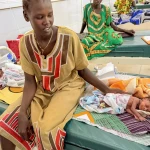
During the reporting period, 2,248 children were screened at the Akobo reception and stabilisation centre, with 215 cases of severe acute malnutrition without complications and one case of moderate acute malnutrition. Nine under five children were admitted to the stabilisation centre with zero deaths, and 439 pregnant and lactating women were screened.
In Ayod, 32,685 people were newly displaced to Pakuem, Haat, Korwai and Mogok Payam and remain unassessed. The Health Cluster is coordinating an interagency assessment once access is confirmed.
South Sudan has recorded no confirmed viral haemorrhagic fever cases to date and remains at high risk of importation.
As of 1st October 2026, the Democratic Republic of the Congo had reported a cumulative 8,573 confirmed cases and 4,052 deaths, a case fatality rate of 47.3%, across 67 health zones in seven provinces.
Haut-Uele, which borders South Sudan, has reached 349 confirmed cases and 146 deaths across seven health areas. On 18th September, DRC’s Dungu Health Zone confirmed its first case, bringing transmission closer to the Western Equatoria border corridor.
In South Sudan, 92 alerts have been investigated and classified cumulatively as of 1st to 3rd October, with 21 tested negative, 55 discarded and four new in the last seven days in Kaya, Yambio, Tambura and Yitoto.
Cumulative point of entry screening reached 1,352,133 travellers by end September, with zero active alerts.
The bulletin calls on partners to mount an immediate multisectoral response in Lafon County and Imehejek Administrative Area, scale up health, nutrition and water, sanitation and hygiene support across the five Warrap State counties, and close last mile gaps in viral haemorrhagic fever readiness.
It also calls for sustaining the cholera response in Mayom, Rubkona and Renk, responding to new measles outbreaks in Tonj North and Aweil South, and restoring surveillance and health services after the Duk Padiet conflict.
Partners are urged to engage the Jonglei State authorities to reopen Yuai Primary Health Care Centre in Uror and coordinate an interagency assessment of the 32,685 people newly displaced to Ayod.
According to the South Sudan Health Cluster Bulletin, 475 health facilities are supported across the country, with 7,756 partner reports received between January and August 2026.
The bulletin was produced by the South Sudan Health Cluster with support from the World Health Organization.
Discover more from Access Radio®
Subscribe to get the latest posts sent to your email.