


(JUBA, SOUTH SUDAN) – Conflict and prolonged dry conditions continue to drive displacement and deepen food insecurity across South Sudan, with the situation particularly severe in Eastern and Western Equatoria, Warrap, Northern Bahr el Ghazal, Jonglei and Upper Nile states.
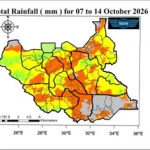
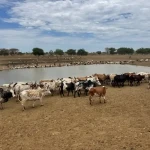
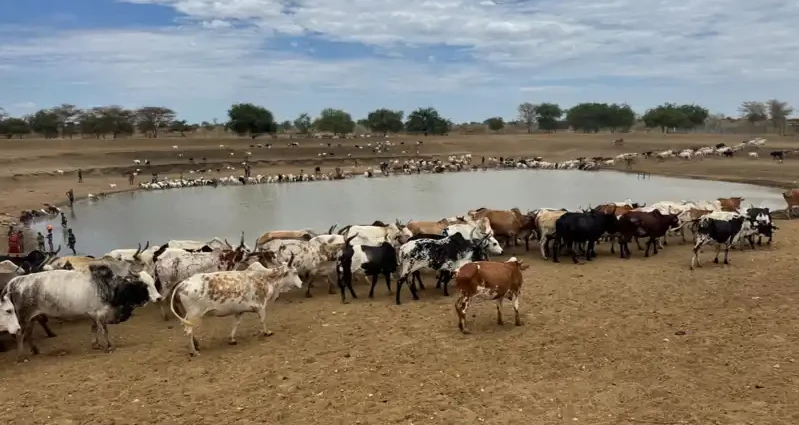
Below average rainfall has caused crop losses, degraded pasture and reduced water availability, undermining household food production and livelihoods, according to the South Sudan Humanitarian Update as of 30th September 2026.
Findings from a September 2026 Emergency Food Security Assessment conducted by state authorities and Food Security and Livelihoods Cluster partners indicate that prolonged dry spells and drought like conditions affected nearly 1.3 million people across all five counties of Northern Bahr el Ghazal State.
Aweil East recorded the highest number, with an estimated 564,929 people affected, followed by Aweil North with 253,492, Aweil West with 234,222 and Aweil South with 155,877. Aweil Centre reported the lowest number, at 87,492.
Food Security and Livelihoods Cluster partners also report that the prolonged dry season has caused crop losses of up to 85% in Greater Kapoeta and between 50% and 70% in Wau and Jur River counties of Western Bahr el Ghazal State.
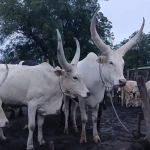
Livestock productivity is also declining.
In Warrap State, an inter agency rapid needs assessment completed on 15th September found that more than 210,000 people were affected by conflict and displacement across five counties.
Households reported losing access to farms, livestock and other sources of income, forcing families to rely on wild foods, distress migration and the sale of productive assets to meet basic needs.
Warrap State authorities have declared a humanitarian emergency.
Many conflict displaced and drought affected communities have reported receiving limited or no support since the end of the World Food Programme’s lean season response in August 2026.
Insecurity, poor road conditions, market disruptions and competition over scarce water and grazing resources also continue to limit access to vulnerable communities, increasing the risk of worsening food insecurity in affected areas in the coming months.
Humanitarian partners are responding to growing needs. In Lafon County, Eastern Equatoria, the Emergency Rapid Response Mechanism is providing one off cash assistance to 2,144 drought affected households, reaching 12,800 people.
The Food and Agriculture Organization has also supported 2,850 households, or 17,100 people, with agricultural inputs and livelihood recovery assistance, including seeds, tools and fishing kits.
Despite these efforts, humanitarian needs continue to outpace assistance, with funding shortfalls and access challenges further constraining humanitarian operations.
In Ulang County, Upper Nile State, nearly 24,000 people, including more than 17,000 displaced people, need urgent humanitarian assistance following conflict and displacement in August 2026.
An inter agency rapid needs assessment conducted on 10th September in Barmach Payam found severe humanitarian needs among conflict affected displaced and host communities.
Affected households face critical shortages across multiple sectors, including food, health, nutrition, water and sanitation, shelter, education and protection.
Women, children, older persons and people with disabilities are among the most vulnerable, facing heightened protection risks and limited access to basic services.
The findings highlight the need for a coordinated, multi sectoral response to address life saving needs, strengthen protection services and support displaced and host communities in Ulang County.
In the Abyei Administrative Area, more than 4,300 people have been displaced following intercommunal violence between Ngok Dinka and Misseriya communities.
Clashes at the Amiet Common Market in mid September killed 26 people and injured 82, followed by widespread looting and destruction of the market, a key trading and livelihood hub for communities in the area.
An inter agency rapid needs assessment identified urgent needs, particularly in water, sanitation and hygiene, health and protection.
Displaced families face growing challenges accessing essential services and livelihoods, while market activities have yet to resume.
The security situation has reportedly stabilised, with local, religious and joint peace committees leading reconciliation efforts. The United Nations Interim Security Force for Abyei has increased patrols and monitoring to support stability and conflict prevention.
The United Nations Emergency Relief Coordinator, Tom Fletcher, announced a $6 million allocation from the Central Emergency Response Fund to support anticipatory action in South Sudan as El Nino related dry conditions threaten livelihoods and food security in Eastern Equatoria and Northern Bahr el Ghazal states.
Complementing this effort, the Humanitarian Coordinator has approved a $9 million reserve allocation from the South Sudan Humanitarian Fund to respond to worsening drought conditions.
The funding will assist an estimated 161,269 people in six priority counties: Lafon, Budi, Kapoeta East, Kapoeta North, Kapoeta South and Aweil Centre.
The combined $15 million allocation will support interventions in food security and livelihoods, water, sanitation and hygiene, health, nutrition and protection.
Central Emergency Response Fund and South Sudan Humanitarian Fund activities will be coordinated at the county level to complement existing responses, avoid duplication and maximise humanitarian impact.
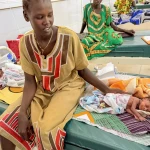
The nutrition situation remains critical in parts of Jonglei and Upper Nile states, where conflict, displacement, climate shocks and limited humanitarian access continue to contribute to acute malnutrition among children.
Recent screenings indicate very high levels of acute malnutrition, exceeding the global World Health Organization threshold of 15% global acute malnutrition in several counties, particularly in northern Jonglei.
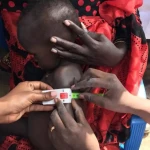
In Ayod, Akobo and Nyirol counties, nutrition partners screened 1,893 children under five and identified 104 cases of severe acute malnutrition and 548 cases of moderate acute malnutrition, resulting in a global acute malnutrition rate of more than 34%, more than twice the World Health Organization threshold of 15% for very high acute malnutrition.
In Upper Nile, partners screened 5,236 children in Panyikang and Malakal counties, including 2,316 in Panyikang and 2,920 in Malakal.
Of those screened, 443 were identified with severe acute malnutrition and 784 with moderate acute malnutrition, resulting in global acute malnutrition rates of 18% in Panyikang and 28% in Malakal, both above the World Health Organization threshold of 15%.
More than 2,860 pregnant women were also screened in the two counties, with nearly 600 identified with moderate acute malnutrition.
Humanitarian partners continue to provide nutrition, health, food assistance and water, sanitation and hygiene services across affected counties.
However, access constraints, including heavy rains and poor road conditions, are limiting the response.
Restricted access along the Sobat Corridor continues to hinder the delivery of assistance in Nasir, Ulang, Maiwut and Longochuk counties of Upper Nile, while insecurity and poor infrastructure remain major challenges in northern Jonglei.
Shortages of Ready to Use Therapeutic Food and other nutrition supplies have been reported in Baliet, while Maiwut County faces shortages of programme tools and nutrition supplies.
Humanitarian organisations are restoring damaged facilities and expanding services where possible, but logistical challenges, high operational costs and limited access continue to hamper efforts to reach vulnerable children and families with life saving assistance.
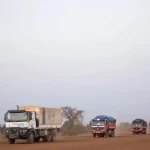
The Logistics and Telecommunications Cluster continues to support delivery of critical humanitarian supplies across South Sudan.
During the reporting period, the Cluster transported 484 metric tons of humanitarian cargo on behalf of 29 organisations, including 40 metric tons by air, 437 metric tons by river and 7 metric tons by road.
The cargo supported interventions across multiple sectors, including health, nutrition, food security, protection, shelter, water, sanitation and hygiene, education and camp coordination and camp management.
As access challenges persist due to poor infrastructure, insecurity and seasonal flooding, shared logistics services remain important for delivering assistance to vulnerable populations.
In a positive development, the Cluster received a $2 million contribution from the European Union Civil Protection and Humanitarian Aid Operations, allowing helicopter operations to continue through December 2026.
The funding enabled the Cluster to extend helicopter operations beyond the previously planned end of September.
Helicopter operations are vital for transporting humanitarian personnel and relief supplies to locations inaccessible by road or river.
Despite this support, a funding gap threatens the continuation of helicopter operations in 2027.
Without additional resources, the humanitarian community’s ability to reach some of South Sudan’s most remote and vulnerable populations could be reduced, potentially delaying the delivery of life saving assistance.
Humanitarian access across South Sudan remains increasingly constrained by insecurity, violence against aid workers, movement restrictions and interference in humanitarian operations.
As of 30th September, at least 601 humanitarian access incidents, including 39 aid worker and contractor deaths, have been recorded nationwide since January, a 37% increase compared with the same period in 2025, when 440 incidents were recorded.
During the reporting period, several incidents disrupted aid delivery and put humanitarian personnel at risk.
In Central Equatoria State, two health workers were reportedly abducted along the Yei to Maridi Road in Yei County, while aid workers in Eastern Equatoria and Western Equatoria states faced attacks, detention, abduction and robbery by armed men while on humanitarian missions.
In Jonglei State, armed men disrupted a food distribution for nearly 49,000 people in Ayod County and assaulted an aid worker and community members.
Interference by authorities also continued. In Upper Nile State, water, sanitation and hygiene supplies and non food items intended for vulnerable communities were confiscated in Renk County by local authorities.
New administrative directives in Upper Nile and Western Bahr el Ghazal states imposed additional operational requirements on humanitarian organisations.
Meanwhile, tensions among armed groups in Unity State disrupted health and nutrition services for nearly 5,800 households in Panyijiar County.
These incidents continue to hamper the delivery of life saving assistance to vulnerable communities, underscoring the need for safe, timely and unhindered humanitarian access across South Sudan.
South Sudan’s cholera outbreak remains a major public health concern, with more than 112,000 cases and 1,723 deaths reported since September 2024.
While transmission has declined across much of the country, new infections continue to be reported in hotspot areas in Mayom and Rubkona counties in Unity State and Renk County in Upper Nile State.
Between 21st and 27th September, 64 new cholera cases and no deaths were recorded, compared to 24 cases the previous week.
Over the past month, nearly 400 cases and three deaths were recorded, with Unity and Upper Nile states accounting for almost all infections.
Health authorities and partners continue to strengthen the response through vaccination campaigns, disease surveillance and water, sanitation and hygiene interventions.
Cholera vaccination campaigns have achieved high coverage rates, reaching 93% in Leer, 88% in Mayom and 80.5% in Rubkona, while post campaign assessments are under way to identify remaining gaps.
Meanwhile, other disease outbreaks are placing additional strain on the country’s fragile health system.
New measles outbreaks have been confirmed in Tonj North and Aweil South, bringing the total number of suspected cases to more than 1,200 this year.
Mpox transmission also continues, with 144 confirmed cases reported across nine counties since January, while Hepatitis E remains active in Nyirol County, Jonglei State.
The persistence of multiple disease outbreaks is increasing pressure on limited health services and highlights the need for sustained investment in prevention, surveillance, treatment, vaccination and water, sanitation and hygiene services to prevent further transmission and protect vulnerable communities.
The ongoing Ebola virus disease outbreak in the Democratic Republic of the Congo, coupled with cross border population movement, continues to pose a risk to South Sudan, particularly in Western Equatoria State.
While no Ebola cases have been confirmed in South Sudan, health authorities have reported 47 alerts to date, of which 20 tested negative, and 27 were either discarded or remain under investigation.
Surveillance and preparedness measures remain on high alert across high risk locations, with more than 56,500 travellers screened at points of entry on 27th and 28th September.
Preparedness efforts continue to face challenges, including limited transport and ambulance services, telecommunications constraints, shortages of personal protective equipment, gaps in referral systems and insecurity along key access routes.
On 30th September, the Acting World Health Organization South Sudan Representative, Dr Moses Ongom, joined the Ministry of Health, the National Public Health Laboratory and partners on a joint mission to assess Ebola preparedness in Western Equatoria State.
The delegation visited the Nabiapai point of entry, Ebola holding areas at Nabiapai Primary Health Care Unit and Yambio State Hospital, as well as the newly established 28 bed Ebola isolation unit.
The mission commended ongoing preparedness measures and thanked donors supporting preparedness efforts.
Only 35.7% of $1.46 billion required for the 2026 Humanitarian Needs and Response Plan for South Sudan has been funded as of 30th September 2026.
This funding shortfall is increasingly affecting partners’ ability to deliver essential assistance.
Timely, flexible and increased funding is urgently needed to sustain and scale up life saving assistance across the country.
Despite the shortfall, support from the South Sudan Humanitarian Fund has enabled humanitarian partners to maintain critical operations across the country.
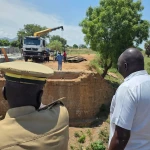
In Panaam, Panyikang County, Upper Nile State, 11 year old Madel and her family are healthy and happy after a South Sudan Humanitarian Fund partner, World Vision, installed a new water point closer to their community.
In Nakabangole, Kapoeta, communities can now access safe and clean water closer to home after Save the Children, with support from the South Sudan Humanitarian Fund, repaired four boreholes.
According to the South Sudan Humanitarian Update, the water point in Panaam provides nearby access to safe water for local families, who previously depended on river water considered unsafe.
Discover more from Access Radio®
Subscribe to get the latest posts sent to your email.