


















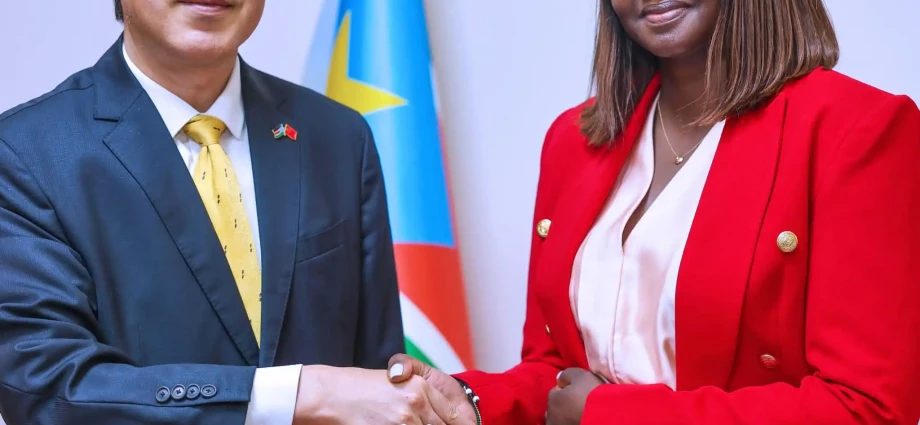
(JUBA) – China’s expanded zero-tariff policy for African countries could create new opportunities for South Sudanese products to enter the Chinese market, the Chinese ambassador to South Sudan has said.
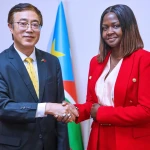
Ambassador Ma Qiang made the remarks on Monday at a reception in Juba marking the 77th anniversary of the founding of the People’s Republic of China.
“More and more South Sudanese products are expected to enter China’s vast market,” Ambassador Ma Qiang said, referring to the policy, which took effect on 1st May.
China says the policy provides zero-tariff treatment covering 100% of tariff lines for all African countries with which it has diplomatic relations.
South Sudan was already among 33 African least developed countries covered by China’s zero-tariff arrangements before the latest expansion.
The latest measures extended the treatment to 20 additional African countries that are not classified as least developed, for an initial two year period. Goods must still meet relevant rules of origin and other import requirements.
The Chinese envoy said the policy is part of China’s efforts to promote what it described as high quality Belt and Road cooperation with African countries.
Ma Qiang said China and South Sudan had treated each other as equals and supported one another since establishing diplomatic relations.
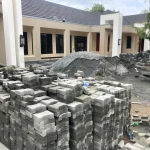
He also highlighted Chinese supported projects in South Sudan, including the country’s air traffic management system, a drilling and water supply project involving 47 water wells, and the renovation and expansion of Juba Teaching Hospital.
China has also provided training and scholarships for South Sudanese, while Chinese medical teams have conducted mobile clinics in several states, he said.
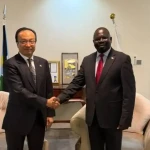
South Sudan has been seeking to expand economic and commercial ties with China. Senior Presidential Adviser Kuol Manyang Juuk called for greater cooperation in trade and investment, agriculture and agro processing, infrastructure, energy, education, technology and health.
Juuk said greater economic cooperation could support value addition, create jobs and promote industrial development and economic growth in South Sudan.
He said South Sudan’s natural resources and young population provide potential for increased economic and commercial cooperation with China.
Access Radio reported in May 2026 that South Sudan was among 53 African countries granted 100% zero-tariff treatment for goods entering the Chinese market from May this year.
According to the report, Ambassador Ma Qiang said the policy would allow South Sudanese products to enter the Chinese market duty-free and encourage trade flows between the two countries.
The ambassador said China encourages its enterprises to import high quality South Sudanese products such as honey, sesame and turmeric.
The State Council Information Office of China reported in September 2026 that China’s imports from Africa reached 193.8 billion yuan in May and June this year, up 23.5 percent year on year.
Imports of avocados rose 130 percent, apples 89.6 percent, oranges 27.9 percent and grapefruit 11.9 percent during the period.
The Chinese Ministry of Finance said in April 2026 that the zero-tariff treatment for the 20 non least developed African countries would run from 1st May 2026 to 30th April 2028.
During the two year period, China will continue to promote the signing of economic partnership agreements with the relevant African countries.
China had already scrapped tariffs on 100 per cent of tariff lines for 33 least developed countries in Africa, including South Sudan, since 1st December 2024.
The Observatory of Economic Complexity reported in July 2026 that South Sudan exported 464 million United States Dollars to China in May 2026, up from 54 United States Dollars in May 2025.
Crude oil accounted for 464 million United States Dollars of that total.
The Observatory of Economic Complexity also reported that South Sudan’s main exports to China in 2024 were crude oil valued at 300 million United States Dollars, alongside smaller shipments of measuring instruments and printed materials.
China’s main exports to South Sudan in 2024 were telephones valued at 10.5 million United States Dollars, liquid pumps at 9.47 million United States Dollars and iron pipes at 7.84 million United States Dollars.
The Chinese Ministry of Foreign Affairs reported in July 2026 that bilateral trade between the two countries totalled 420 million United States Dollars in 2025.
China’s exports to South Sudan were valued at 110 million United States Dollars, while imports from South Sudan reached 310 million United States Dollars.
China mainly exports electrical equipment and machinery to South Sudan, and mainly imports crude oil.
The Ministry of Foreign Affairs said the figures reflect the two countries’ long standing economic relationship, which is centred on energy but has the potential to expand into other sectors.
Discover more from Access Radio®
Subscribe to get the latest posts sent to your email.