

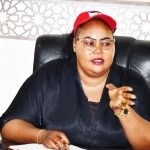


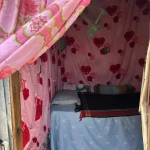
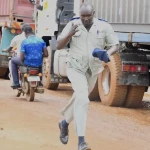













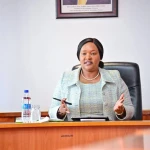
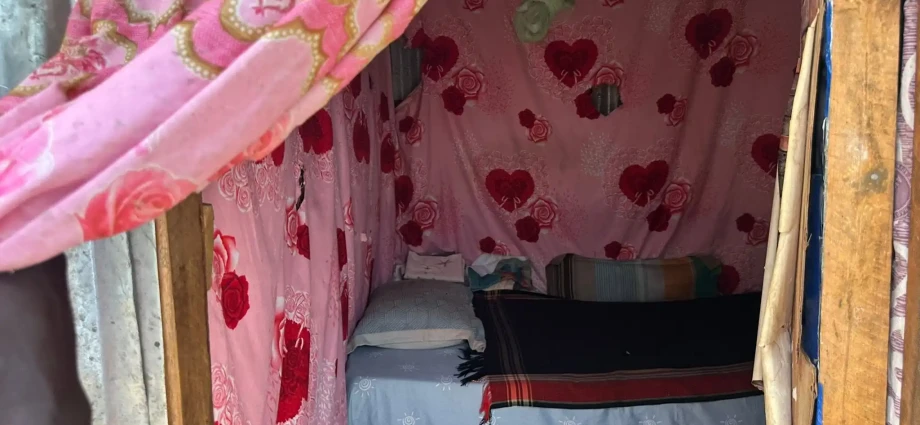
(JUBA COUNTY) – Juba County Caretaker Commissioner Kalisto Lado has raided sex dens commonly known as “Jigi jigi” in Kuburi Haboba as part of a continuing clean-up exercise in the county.
The operation took place on Tuesday during an inspection of structures said to be used for activities that break the law and public order, including illegal sexual businesses.
The commissioner said the exercise will not stop in Kuburi Haboba and will be extended to other areas in Juba County to make the county clean, safe and well organised.
He asked residents, business owners and community leaders to cooperate and follow the lawful orders.
The raid forms part of a wider clean-up campaign in Juba County. The Sudans Post reported in October 2026 that Lado had ordered foreign traders to leave small retail businesses and focus instead on wholesale trade, factories and other large investments.
Under South Sudanese law, selling sex is legal but soliciting in a public place is illegal. Buying sex is not a crime.
Facilitating prostitution is illegal. This includes running a brothel, soliciting on behalf of sex workers and procuring. Living on the earnings of prostitution is also criminalised and classified as vagrancy under Section 379 of the Penal Code, according to the Global Network of Sex Work Projects.
Juba has the largest number of female sex workers in South Sudan. A mapping exercise in 2012, carried out with the South Sudan AIDS Commission and the World Health Organization, estimated between 2,013 and 3,008 female sex workers in the city.
A more detailed survey known as the Eagle Survey, conducted between 2015 and 2016 by the South Sudan Ministry of Health with the United States Centers for Disease Control and Prevention and IntraHealth International, put the figure at approximately 5,800.
The JMIR Public Health and Surveillance journal published the findings in 2019. It found that 62% of sex workers in Juba came from neighbouring countries, while South Sudanese made up 34%. Ugandans accounted for 40%, South Sudanese 34% and Congolese 22%.
The median age was 29, with about 4% aged 19 or younger. Half had not completed primary school, and two thirds could neither read nor write in any language.
Most sex workers operated from lodges, but they could also be found in large hotels and bars during the day and at night. Fridays, Saturdays and Sundays were the busiest days. Clients included soldiers, government officials, businessmen and drivers, as well as staff of non governmental organisations and United Nations agencies.
The Eagle Survey found an HIV prevalence of 38% among female sex workers in Juba. Of those infected, 37% did not know their status. Sixty five per cent of those living with HIV had a CD4 count below 500 cells per cubic millimetre.
12% had ever been infected with syphilis, and 7.3% had active syphilis at the time of the survey.
Violence was also widespread. About 22% of sex workers had experienced physical violence, and more than half, or 59%, did not seek professional help afterwards. About 20% had experienced sexual violence, with strangers the most common perpetrators at 32%.
34% reported being abused by a client in the past six months, and 13% had been threatened by a client.
On health seeking, nearly half reported abnormal vaginal discharge at 28% or vaginal ulcers at 21% in the past 12 months. Of those who sought treatment, 56% were formally diagnosed with a sexually transmitted infection and 93% received treatment.
This is not the first time authorities have moved against brothels in Juba. Africa Press reported in November 2021 that the Juba City Chamber of Commerce, Industry and Agriculture had called for the demolition of brothels and areas popular with sex workers, saying they had become hideouts for criminals.
The chamber’s president, Stephen Wani Aquilino, singled out Jebel as one of the most notorious locations, where sex workers and gangs linked to shop break ins were said to gather.
Kalisto Lado, who was mayor of Juba at the time, also ordered landlords not to convert residential buildings into commercial use for hotels, lodges and clubs. He said residential areas were meant for people to live in with their families, and converting them for business was not allowed. He threatened to shut down hotels that allowed minors and gangs to enter.
A 2016 study on sex work in South Sudan by Orly Stern estimated that the Gudele brothel, which is another name for Kuburi Haboba or Gudele West, had between 200 and 400 sex workers. Most were South Sudanese, and many were underage girls.
Lado’s actions go beyond the raid on sex dens. The UG Bulletin reported in October 2026 that he had told foreign traders at Kuburi Haboba market to leave small retail businesses. He named chapati selling, boda boda services and the retail of tomatoes, onions and charcoal.
“Why should a person come from their country to Juba to make chapati and retail a few kilograms of onions and tomatoes? What will our South Sudanese women sell?” Lado said.
The South Sudan Embassy in Kampala later clarified that Lado’s remarks did not represent the official position of the national government. The embassy’s charge d’affaires, Akuol Abijok Deng, said Lado was not the mayor of Juba but the caretaker commissioner of Juba County, a local government official.
Lado took a similar position in 2021 when he served as mayor of Juba, calling for foreigners to be barred from small retail and urging them to invest in wholesale, factories and industry.
The APA news agency reported that Ugandans have historically played a large role in Juba’s informal economy, with many running shops, taxis and boda boda services, salons and repair workshops. During the Juba conflict in 2016, the Ugandan military said it needed to evacuate about 3,000 stranded Ugandan citizens.
Discover more from Access Radio®
Subscribe to get the latest posts sent to your email.