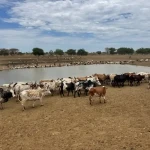







(BENTIU, UNITY STATE) – South Sudan’s government is being urged to take the lead in responding to a climate crisis that threatens to cause catastrophe in Bentiu, where flooding has submerged about 70% of the land.
The United Nations Mission in South Sudan says the situation in Unity State has moved from a cyclical flood emergency to a permanent hydrological crisis.
For years, residents have suffered the effects of rising water levels caused by persistent and extraordinary flooding.
Heavy rains and rising water levels in the Nile River, combined with the low lying geography of the Sudd region, have changed communities’ lives forever.
People have lost loved ones, been forced to abandon ancestral lands, and adopted new ways of earning a living, such as shifting from farming to fishing.
Many are now almost wholly dependent on humanitarian aid to survive.
While this year’s rainy season has been delayed, it is still expected to arrive with force.
“The residents of Bentiu face a multipronged threat,” warned Sam Korutaro Muhumure, Head of the United Nations Mission in South Sudan’s Field Office in Bentiu.
“While the weather pattern has changed, heavy rains are set to coincide with the El Niño phenomenon from October to February. If the water level rises above what we saw at the beginning of this year, then the earthen dykes will not be able to hold back the water.”
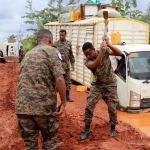
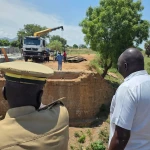
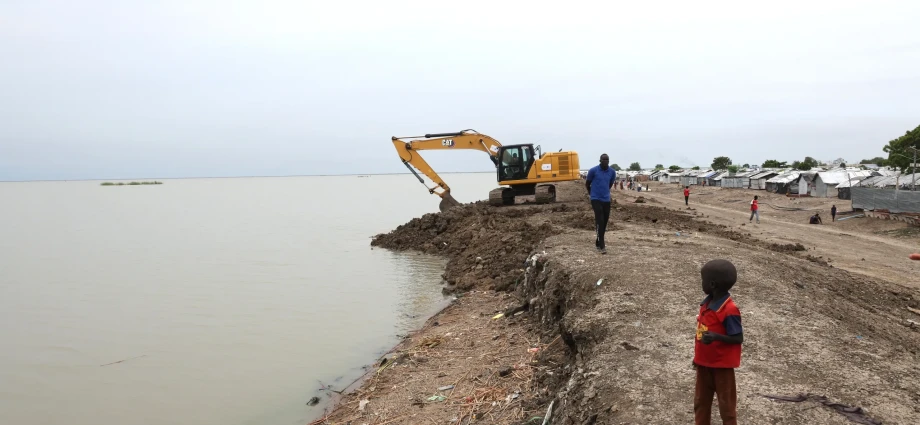
A vast network of berms and dykes, built and maintained around the clock by the United Nations Mission in South Sudan and the International Organization for Migration, protects 300,000 civilians sheltering behind them.
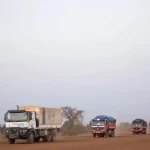
The dykes also protect the main supply routes into the town, including the airport.
For now.
“The International Organization for Migration is shouldering the largest burden of the work to maintain the dykes and pump out the water that collects in the displacement camp, but they have a shortage of resources,” Mr Muhumure explained.
“If they cannot get funding to continue their work, then the lives of the people in this region are at stake and it will be a major humanitarian situation.”
“Remember that this camp is filled with women and children. If the work of the UN and the International Organization for Migration were to be affected, and if a breach in the dykes was not repaired within ten hours, we estimate that 50,000 people will be submerged,” he said.
Given the scale of the threat, the community is desperate for international support to continue.
“My message to humanitarian actors and donors is to work hand in hand with communities and provide funding to sustain the construction and maintenance of the dykes, and to support mechanisms to protect us,” pleaded Nyier Gatchang, Chairperson of the Community High Committee in the displacement camp.
However, with scarce humanitarian resources stretched across competing global crises, it is more important than ever for South Sudan’s government to take the lead.
“We are here to support the people of South Sudan, but the primary responsibility for the protection of the people is that of the government,” Mr Muhumure said.
“That is why we call upon the government to shoulder this responsibility, to feed the displaced community as well as to provide them with security and a long term solution to this flooding problem.”
The delayed rain has not brought relief for flood weary Bentiu residents. Instead, it has created a new problem.
Those who still have access to land have planted crops. But the lack of rain means they are unlikely to produce a significant harvest this year.
It is another blow for communities who have suffered for far too long and are fast losing hope.
The United Nations Mission in South Sudan works to protect civilians, facilitate the safe delivery of humanitarian aid, promote human rights, and build lasting peace.
Discover more from Access Radio®
Subscribe to get the latest posts sent to your email.