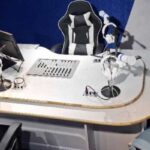


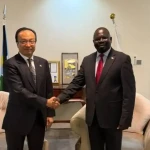
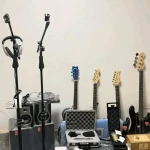




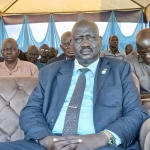

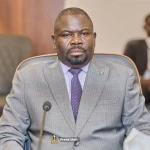


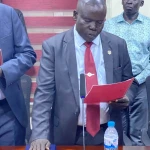





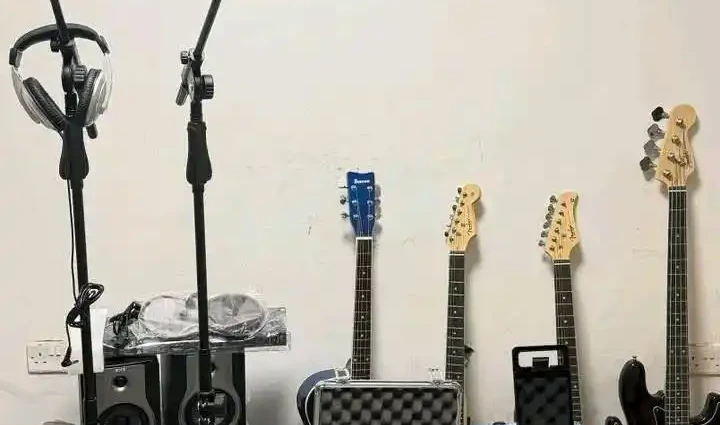
(JUBA, SOUTH SUDAN) – The South Sudan Artistes Union has received studio equipment worth $11,000 (about 61.9 million South Sudanese pounds) donated by Tiger Division Commander Major General Atem Salva Kiir.
The equipment was handed over to the union at its headquarters at the Nyakuron Cultural Centre over the weekend.
The donation is expected to support the setting up of a recording studio that will provide free or affordable recording services to fully registered members of the union.
Nyambura Kenyi, Secretary General of the South Sudan Artists Union, thanked the donor for supporting the initiative.
“We would like to thank the general and his team for donating this equipment to us,” Kenyi told media.
Kenyi said preparations are already under way to install the equipment and prepare the studio for recording.
“They are already in our office here, and maybe on Wednesday we are going to set up the studio. We are trying to put the windows up and all those things,” he said.
The union says the studio will mainly serve artists who cannot afford the cost of recording music in commercial studios.
Kenyi said the initiative will have a big impact on local artists and the wider community.
He said the union also plans to bring in a producer to work with artists and train local producers.
“A producer will be hired to train the producers here, so they can have a pitch on getting their own material,” Kenyi said.
According to Kenyi, artists who cannot afford recording fees will be allowed to use the studio, while those who can afford it may contribute towards production costs.
The union also plans to introduce guidelines for songs recorded at the facility, including reviewing music before it is released to the public.
Kenyi said this will help make sure that music released through the studio benefits the community.
“Before releasing it, we might listen to the song first before releasing it to the community, so that the community benefits from the song,” he said.
Kenyi made clear that the $11,000 equipment donation is part of the wider support from Major General Atem Salva Kiir.
The donation comes as the South Sudan Artists Union has sought to strengthen its organisational structures.
Eye Radio reported in September 2026 that Brigadier General Mike Mike, Director of the Cyber Security Unit, proposed establishing a dedicated unit within the South Sudan People’s Defence Forces for artists serving in the military.
He made the proposal during an extraordinary meeting of the union held under the theme “Together, We Build a Strong Entertainment Industry” at the union’s office at Nyakuron Cultural Centre in Juba.
Brigadier General Mike Mike said the proposed unit would provide military artists with a formal institutional structure while ensuring they continue to observe military discipline and professional standards.
He said the proposed structure could take the form of an Artists’ Union or a dedicated unit within the army, aimed at promoting coordination, mutual respect and professional development among military personnel involved in the arts.
The initiative would also seek to use artists as a link between the military and the civilian population through music, entertainment and other creative activities.
During the meeting, Brigadier General Mike Mike presented $13,000 from Atem Salva Kiir to the South Sudan Artists Union to support the initiative and activities within the artistic community, Eye Radio reported.
The donation also comes amid broader efforts to strengthen South Sudan’s music sector, which faces deep structural challenges.
Music Economy, a research platform focused on recorded music in emerging markets, notes that South Sudan has no enacted national copyright legislation and is not a member of any international copyright treaties .
Without collective management organisations to track and collect royalties, rights holders lack a key mechanism to earn from their work or prevent piracy, the platform states.
The platform also notes that high poverty rates and inflation, combined with high mobile data costs and low internet penetration, severely limit spending on music and make traditional music sales or subscriptions nearly impossible for the average citizen .
In July 2026, the Ghines Foundation and UNESCO released the Mapping the Music Sector in South Sudan Report, the country’s first systematic assessment of its music ecosystem.
The report, based on surveys of 41 music practitioners conducted between September 2025 and March 2026, found that the sector faces the absence of a national music policy, limited access to finance, weak copyright administration and a scarcity of recording and rehearsal facilities .
Lucy Ilado, a culture policy and creative economy specialist who presented the findings, said talent is not the main challenge.
“Talent is abundant, but the professional infrastructure is missing,” she said, stressing the need for a national music policy, a functional copyright system, investment in studios, stronger music education and improved financing options for artists .
Agele Kennedy Joseph, Chairperson of the Central Equatoria State Artists Association, known as AKJ Africa, said musicians produce quality work but lack the structures needed to benefit financially.
“We are doing good music, but we are not benefiting from it financially. We don’t have policies to protect artists’ work, we don’t have enough recording studios, we don’t have practice spaces and we don’t even have permanent offices,” Joseph said .
Francis Wani, a musician and Executive Director of the Street Beats Foundation, known as Yuppie J, called for the creation of a long term government strategy, implementation of copyright laws, payment of royalties and greater support for digital music distribution.
“We really need to put this into an action plan. The government needs to create a permanent strategy for our industry. Copyright must be implemented, artists must receive royalties and our music must be monetised on digital platforms,” Wani said .
Radio Tamazuj reported in November 2025 that a group of South Sudanese artists called on the government to urgently pass a long delayed copyright law, saying the current legal vacuum leaves them vulnerable to exploitation.
Artist Meen Mabior Meen, known as Manimen, said the group was appealing directly to President Salva Kiir to intervene and ensure the legislation is passed.
“For over 10 years we have been battling with the push of the copyright law,” Mabior said. “Artist work has constantly been at risk of theft, piracy, and misuse.”
He argued that a comprehensive and enforceable law was needed to restore dignity, confidence and motivation among artists across the country.
The union’s recording studio project aims to address part of that gap by providing a space where artists can record without the costs charged by commercial studios.
Discover more from Access Radio®
Subscribe to get the latest posts sent to your email.