










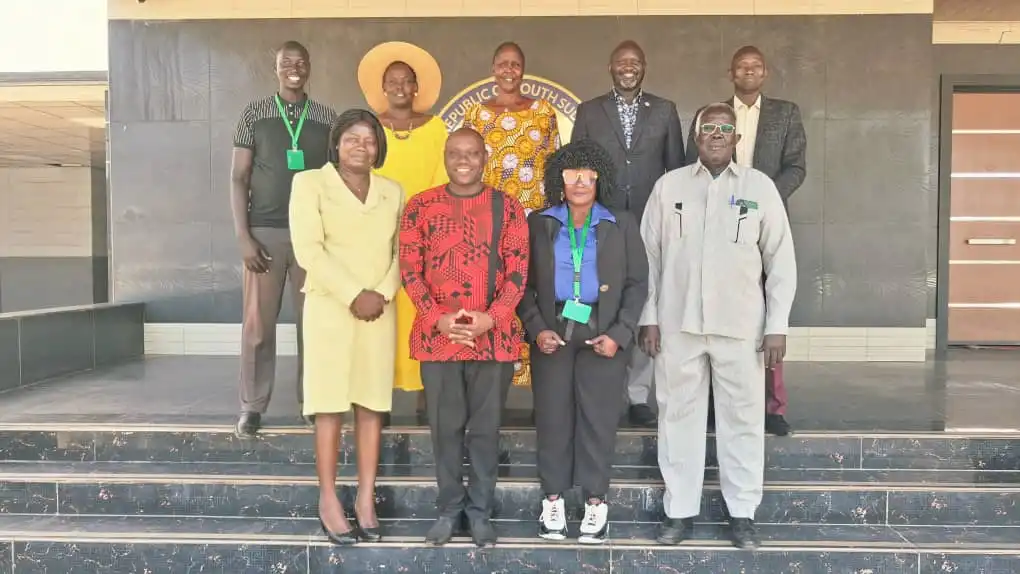
(JUBA) — Long-delayed National Land Policy has returned to the centre of debate after the South Sudan Land Alliance held consultations with the new leadership of Parliament’s specialised committee on land, physical planning and infrastructure.
The consultation seeks renewed momentum for the passage of the land policy, which has stalled in Parliament after the first reading.
The policy, first drafted in 2006 and approved by the Council of Ministers in 2023, has remained before Parliament for about two years, according to the Land Alliance.
Its progress has been complicated by disagreement over a key principle that holds that land belongs to the people, while its use is regulated by the government.
According to Dorothy Ambrose Drabuga, chairperson of the South Sudan Land Alliance, a section of lawmakers and communities, especially from the Equatoria region, objected to the phrase. But they are also unwilling to offer an alternative.
She said civil society organisations want the policy passed to strengthen land rights and create a more transparent system of land administration.
Drabuga said the Alliance had conducted consultations with land administrators across the 10 states and three administrative areas, but Parliament has requested further consultations, particularly in Greater Equatoria.
The Transitional Constitution of South Sudan recognises that land belongs to the people, while the South Sudan Land Act recognises customary land rights and provides that land traditionally and historically held or used by local communities should be defined, protected and managed by law.
It also envisages land governance at different levels of government rather than concentrating all land administration in one authority.
That framework, however, has not eliminated disputes. Over the years, land disputes have persisted around major towns in South Sudan. Rapid urbanisation has increased pressure on land around Juba and other towns.
Diing Lam, chairperson of Parliament’s specialised committee on land, said lawmakers would engage with civil society and examine the policy rather than simply remove it from Parliament.
He questioned whether communities had genuinely been consulted about the proposed division of authority between the national government and lower levels of government.
“If the people are not happy, why would they not be willing to share” what they want instead, Lam said, while acknowledging that land governance requires deeper consultation.
Lam also warned that the issue cannot be reduced to a disagreement between Parliament and civil society. He said lawmakers represent communities and can seek changes to provisions they consider problematic.
For the Land Alliance, the immediate priority is to help facilitate additional consultations in Western Equatoria, Central Equatoria and Eastern Equatoria, subject to funding.
The challenge now is how South Sudan can reconcile customary ownership with the government’s responsibility to regulate land, while protecting communities from dispossession and creating predictable rules for investment and development.
Discover more from Access Radio®
Subscribe to get the latest posts sent to your email.