














(JUBA, SOUTH SUDAN) – South Sudan’s stabilization centres recorded a cure rate of 93.4% for children treated for severe acute malnutrition with medical complications between January and June 2026, according to a factsheet published by the World Health Organization in October 2026.
The death rate stood at 3.2%, while the default rate was also 3.2%, the WHO South Sudan Knowledge Management Series for Health reported.
The findings draw on data from the Early Warning, Alert and Response System (EWARS), the Nutrition Information System (NIS), and partner medical-supplies consumption reports.
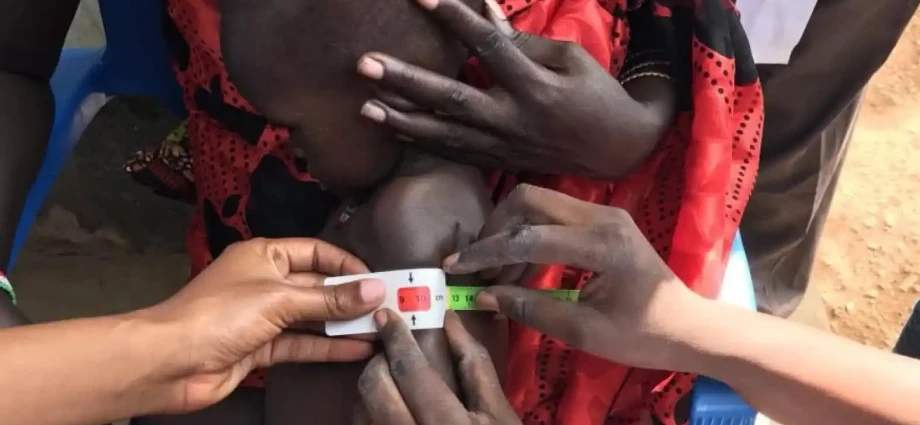
A total of 72,232 children were screened during the period, with 7,022 identified as having severe acute malnutrition (SAM) and 13,182 as having moderate acute malnutrition (MAM).
There were 6,634 admissions and 5,643 discharges across 87 functional stabilization centres nationwide.
The median average weight gain was 8.8 g/kg/day, with a mean of 11.5 g/kg/day. The median length of stay was six days, with a mean of 6.6 days.
Screening activity peaked in March and fell to 5,300 in June, while admissions rose to 1,517 in the same month. The WHO said this divergence suggests access dynamics may differ across stages of the nutrition pathway.
The WHO noted that declining screening volumes may indicate reduced active case finding, disruptions in outreach activities, limitations in geographic coverage, population displacement, or incomplete reporting from community and facility screening sites.
Despite more than 72,000 screening events, acute malnutrition remained common, indicating sustained demand for nutrition services across the country.
Admissions increased throughout the reporting period despite declining screening activity, reaching 1,517 in June. The WHO said this pattern may indicate differences in reporting completeness, referral practices, service accessibility, or underlying disease burden.
Mortality was concentrated in a small number of states. Central Equatoria recorded 88 deaths, representing 17.8% of discharges, followed by Western Equatoria at 5.4% and Eastern Equatoria at 4.7%.
These three states accounted for 131 of 181 deaths, or 72.4% of the total. The WHO called for a review of source registers, case severity, referral delays and clinical management before attributing performance differences.
The WHO also reported that 40 records showed weight loss and 12 had absolute average weight gain above 50 g/kg/day. There were 6,428 new admissions, 213 relapses, 85 medical transfers, 317 transfers to stabilization centres, nine non-responders, and eight children who returned after defaulting.
A total of 102 reporting site names were recorded, with 198 children reported as moved in and three reported as moved out. Thirty-one reporting facilities and eight reporting partners submitted data.
The stable length of stay observed from March onwards, together with improving average weight gain, suggests that recovery performance improved without extending treatment duration, the WHO said.
The WHO supported the Ministry of Health to coordinate, oversee and monitor services across 87 functional stabilization centres providing inpatient management of severe acute malnutrition with medical complications.
It also strengthened service readiness through the distribution of SAM treatment kits and essential commodities to all 87 stabilization centres nationwide.
More than 80 health workers were trained on inpatient management of SAM with medical complications using national and WHO clinical guidelines.
Quality-of-care assessments were conducted in stabilization centres across Eastern Equatoria, Western Equatoria and Central Equatoria, engaging more than 60 health workers to identify gaps and inform quality improvement actions.
The WHO said routine nutrition information continued to be generated from multiple reporting systems despite the complex humanitarian environment, enabling monitoring of service delivery, treatment outcomes and recovery indicators across the country.
It noted that continued efforts to strengthen data quality and standardization will further enhance the reliability and resilience of nutrition programme monitoring systems.
The WHO called on national and subnational health authorities, nutrition partners and stabilization-centre teams to act on five priority actions for the next programme cycle.
These include validating mortality by reviewing registers, discharge denominators, case severity, referral delays and clinical management in Central, Eastern and Western Equatoria.
It also called for restoring screening reach by assessing EWARS reporting completeness, outreach, access and referral continuity, duplicate screening records, and the factors contributing to increasing admissions despite declining screening activity.
The WHO urged partners to protect service readiness by maintaining essential supplies and trained staffing across the 87 functional stabilization centres using admissions and risk data.
It called for targeted quality support using the quality-of-care tool and recovery findings to prioritize clinical mentorship and supportive supervision.
The WHO also called for strengthening data controls by standardizing facility identifiers and automating checks for duplicate screening, dates, weights, outcomes, length of stay and extreme average weight gain.
The factsheet was coordinated by Anabay Mamo of Strategic Health Information at the WHO South Sudan country office.
It was written by Kuol Alier, Anabay Mamo, Lucy Maseka, Jetri Regmi and Aggrey Bategereza.
The WHO cited the Ministry of Health and the National Bureau of Statistics 2025 Health Statistical Abstract and the Ministry of Health South Sudan Annual Health Sector Performance Report 2024-2025 as references.
Discover more from Access Radio®
Subscribe to get the latest posts sent to your email.