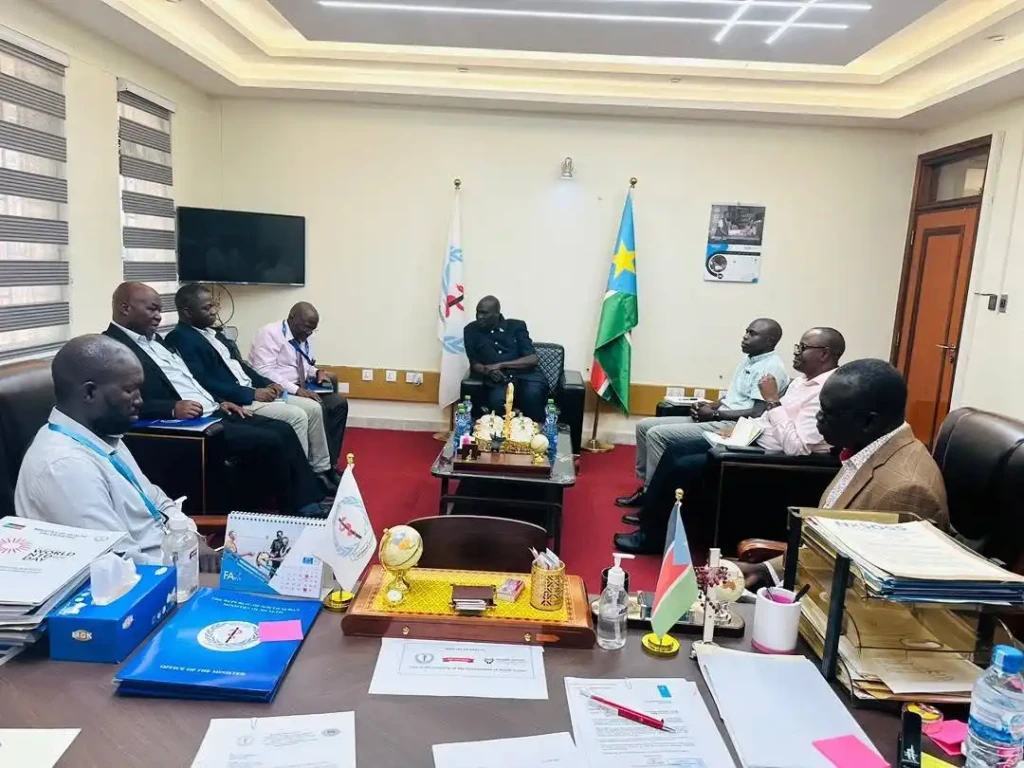
South Sudan Moves to Strengthen Government Role in Health Sector/PHOTO: National Health Portal
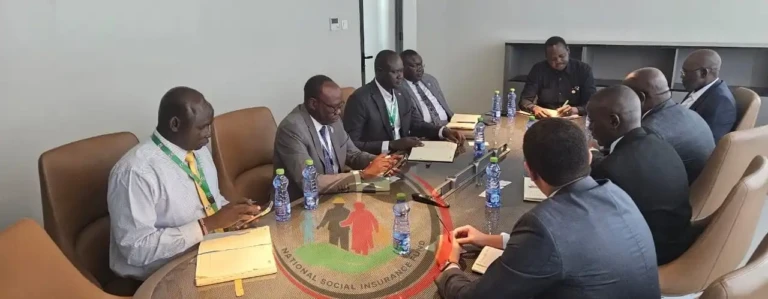
(JUBA) – The Undersecretary of the Ministry of Health, Dr. Oromo Francis Seriano, has met with World Health Organization and UNICEF polio country representatives to discuss the current polio immunisation campaign, vaccine supplies and partnership with the government and other stakeholders.
Dr. Oromo said the Ministry of Health leadership is working closely with partners to find the best way to solve the issue of traditional vaccines in the country.
He added that disease outbreaks remain a serious challenge, with mpox, cholera, malaria and other infectious diseases spreading rapidly and cases rising every day.
The meeting follows the Ministry’s recent launch of a direct implementation pilot programme, which Dr. Oromo described as an important step forward in the Ministry’s long term vision.
He said the pilot aims to strengthen government oversight of the health sector while making projects more efficient, less cumbersome, and ultimately less costly.
For many years, South Sudan has relied heavily on UN agencies and non-governmental organisations to deliver essential health services.
While this approach has been necessary, it has also meant that much of the implementation responsibility sits outside government systems.
“The pilot offers a practical opportunity to begin testing a different approach, one where the government gradually takes on more responsibility for managing donorfinanced programmes while still ensuring that services continue without disruption,” Dr. Oromo said.
He stressed that the objective is not to replace existing partners.
Rather, the aim is to reposition the Ministry as the principal steward of the health sector.
Under this model, implementing partners will continue to deliver services on the ground, but the Ministry, through the Health Sector Transformation Project Management Unit, will take on a stronger role in contract management, performance oversight, coordination and accountability.
In doing so, the Ministry begins to exercise more direct leadership over how programmes are implemented and how results are achieved.
The pilot also aligns closely with the evolving direction of development financing.
The World Bank and other partners are increasingly calling for government ownership, stronger national institutions and more sustainable systems, particularly in fragile and conflict-affected settings like South Sudan.
In taking this step, the Ministry is positioning itself to respond to these expectations and to demonstrate readiness for more direct engagement in programme management:
“If the pilot is successful, it will provide practical, real-world evidence that South Sudan can manage increasingly complex development programmes while maintaining transparency, accountability, and continuity of service.
Just as importantly, it will show that strengthening government systems and maintaining service delivery can go hand in hand,” Dr. Oromo said.
Discover more from Access Radio Yei News
Subscribe to get the latest posts sent to your email.