
(JUBA) – Health Minister Dak Duop says hundreds of South Sudanese die from cancer every year, as the country continues to struggle without a functional national cancer control system.
Cancer survivors and families of patients have called on the government to establish a specialised cancer treatment centre.
They say the lack of services in the country is forcing patients to seek care abroad at high financial and emotional costs.
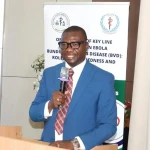
The call was made during a workshop on 7th October.
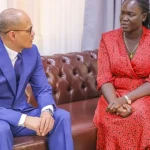
The workshop brought together experts, health partners, victims and families of cancer survivors to review gaps in detection, treatment and management.
For many families, a cancer diagnosis brings the added burden of finding money for transport, accommodation, documentation and repeated medical visits outside the country.
Agnes, a cancer survivor diagnosed with breast cancer in 2025, said she had to leave South Sudan for treatment with financial and logistical support from her family.
“I knew my cancer status in 2025. I was told to go for treatment outside. Which is difficult but I went with the help of my family,” she said.
Agnes, who is now undergoing follow up care, said cancer patients require continued medical support after treatment.
She urged the Ministry of Health to establish specialised services in the country.
“I urge the Ministry of Health to establish a cancer centre here instead of us going outside the country with the little money we have,” she said.
She also called for an end to stigma against people living with cancer.
For other families, the cost of accessing cancer care has resulted in the sale of property and prolonged delays in treatment.
Matiop Chol, whose family has dealt with cancer for about three years, said the costs of medical examinations and treatment have been difficult to meet.
Thomas Ladu said his six year old child developed a swollen stomach, prompting the family to visit several health facilities in search of a diagnosis.
“This disease started in a way we don’t even know what it is. We tried to check up from one clinic to another. I collected a number of medical reports but still we couldn’t find what the disease is,” he said.
Thomas said he eventually sold his motorcycle to pay for his child’s medical investigations and treatment.
The family was later advised to seek treatment outside South Sudan.
Thomas said treatment could be provided in Uganda at no cost, but travelling there would still require about 900 US dollars for transportation and documentation for the child and one parent.
He said the financial difficulties have also affected the child’s follow up care.
“Doctors asked me to follow up. This month I am supposed to meet his doctor, but now with this situation it is so difficult,” he said.
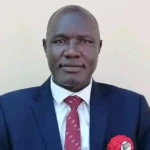
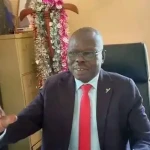
Caretaker Minister of Health Dak Duop acknowledged major gaps in cancer services in South Sudan.
He said this was the case despite the presence of teaching hospitals in Juba, Wau and Malakal.
“South Sudan faces serious gaps in cancer services control, although we have major hospitals, including Juba, Wau and Malakal teaching hospitals,” he said.
Dak said the gaps are forcing many South Sudanese to seek treatment outside the country.
“Many of our citizens are therefore forced to seek treatment outside the country. We must change this situation. Cancer must not be a death sentence in South Sudan,” he said.
The Ministry of Health says it plans to establish a National Cancer Control Steering Committee or a dedicated working group to guide the development of a comprehensive National Cancer Control Plan.
The ministry also says it intends to strengthen cancer services across the health system, including prevention, early detection, diagnosis, treatment and survivorship.
The World Health Organization has identified several critical gaps that remain unaddressed.
According to a World Health Organization knowledge management report published in May 2025, a National Cancer Control Plan has not yet been developed.
National screening guidelines and standard clinical protocols are in place for only one of the five most common cancer types.
HPV vaccination is not included in the national immunisation schedule.
There is no population based or hospital based cancer registry, limiting surveillance and planning.
The number of trained oncologists is extremely limited.
Only 16% of health facilities expected to provide diagnostic services actually offer them.
Most cancers are diagnosed based on clinical presentation alone, as laboratory testing for cancer markers is minimal and largely confined to private facilities.
There is no radiotherapy available anywhere in the country.
Specialised treatments like immunotherapy are also unavailable.
A few private hospitals provide limited chemotherapy, but most patients needing definitive treatment must seek care outside the country.
Although cervical cancer screening has been introduced in five pilot sites, four in Juba and one in Wau, a 2023 study found that only 11.5% of women aged 26 to 65 had ever been screened.
Palliative care services are available in only 13% of health facilities, offering basic pain management but no standardised care packages.
According to the World Health Organization’s International Agency for Research on Cancer, South Sudan recorded an estimated 8,124 new cancer cases and 5,218 cancer deaths in 2024.
Breast cancer was the most frequently diagnosed cancer, with an estimated 1,760 cases.
Cervical cancer followed with 890 cases and prostate cancer with 629 cases.
Breast cancer also accounted for the highest number of estimated cancer deaths, at 840.
Cervical cancer followed with 554 deaths and prostate cancer with 401.
The World Health Organization notes that cancers do not rank among the top 70 diagnoses recorded in the national health system.
This suggests widespread underdiagnosis and weak case detection.
In May 2025, the Ministry of Health approved the establishment of the country’s first Cancer Department to coordinate planning and service delivery, according to the World Health Organization.
In February 2026, Vice President Josephine Lagu Yanga met with World Health Organization officials in Juba to discuss strengthening prevention, screening, treatment and palliative care.
The World Health Organization said in February 2026 that the Vice President reaffirmed the government’s commitment to expanding access to quality healthcare services, scaling up cancer screening and treatment, and mobilising greater national investment in the health sector.
The Ministry of Trade and Industry has also backed an initiative to establish local treatment facilities.
The then Minister Atong Kuol Manyang said the plan would save lives and reduce the outflow of foreign currency spent on treatment abroad.
On 4th February 2026, South Sudan marked its first national World Cancer Day commemoration in Juba.
The event also saw the official launch of the South Sudan Cancer Network, a group of medical professionals working to provide affordable treatment and humanitarian assistance.
For survivors and families affected by the disease, the establishment of cancer services inside South Sudan would reduce the need to travel abroad and the financial burden associated with seeking treatment outside the country.
Meanwhile, a separate cross-border medical pathway continues to bring South Sudanese children with life threatening neurological conditions to Uganda for surgery.
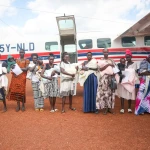
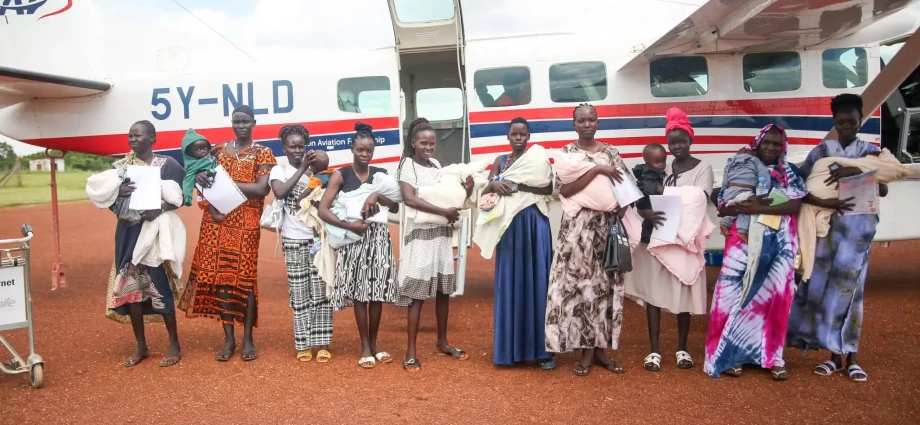
CURE Children’s Hospital of Uganda said in October 2026 that it received ten patients and their caregivers from Juba, all of whom required urgent neurosurgical intervention.
The group was transported by Mission Aviation Fellowship South Sudan as part of an ongoing partnership with USRATUNA, a medical organisation based in Juba.
USRATUNA identifies and refers critical paediatric neurosurgical cases to CURE Uganda.
CURE Children’s Hospital of Uganda said the corridor of care, from USRATUNA’s referral network through Mission Aviation Fellowship’s air transport to its neurosurgical team in Mbale, continues to bring children across borders to receive specialised treatment.
For families in Juba, this partnership is often the only viable pathway to neurosurgical care.
CURE Children’s Hospital of Uganda said it remains grateful for the commitment of both Mission Aviation Fellowship and USRATUNA to ensuring that geography does not determine a child’s access to life changing treatment.
According to the Catholic Register in October 2026, Mission Aviation Fellowship has flown more than 300 children from South Sudan to receive life saving treatment at CURE Uganda.
The programme helps babies with hydrocephalus and other serious neurological conditions reach neurosurgical care.
CURE Children’s Hospital of Uganda is one of Africa’s leading paediatric hospitals for brain surgery.
It conducts more than 2,200 paediatric neurological surgeries each year.
Mission Aviation Fellowship pilot Matthew Marples said the flights are at the core of what the organisation does.
“For many of these families, there is no other option. Their child is looking at an existence of suffering without this treatment,” Marples said, according to The Manila Times in September 2026.
In South Sudan, there are no permanent neurosurgeons providing the specialised surgeries these children need.
Tim Erickson, Executive Director of CURE Children’s Hospital of Uganda, said many of the children arriving are in a life threatening situation.
“Their condition needs urgent intervention. Every day that is missed is worse impact on the brain,” Erickson said, according to The Manila Times.
The Star Phoenix reported in September 2026 that the partnership between Mission Aviation Fellowship, CURE Uganda and USRATUNA is among the first efforts of its kind in the region.
It is designed to close the gap between diagnosis and treatment for children in South Sudan.
One mother, Ayen, said her daughter Achirin’s head started growing rapidly when she was just over one month old in January 2025.
“I remember the exact date Achirin’s head started growing,” Ayen said, according to The Star Phoenix. “It was the 5th of January, and she was one month old and a few days.”
Ayen sought help and eventually reached USRATUNA, which helped arrange the care and transport for Achirin to travel to Uganda.
Discover more from Access Radio®
Subscribe to get the latest posts sent to your email.