













JUBA — The South Sudan Council of Churches has called for an immediate nationwide ceasefire and an end to the mobilisation and arming of youth, warning that renewed fighting, intercommunal violence and insecurity are killing and displacing civilians across several parts of the country.
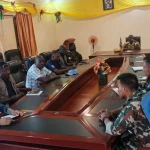
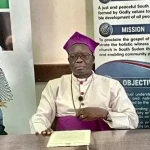
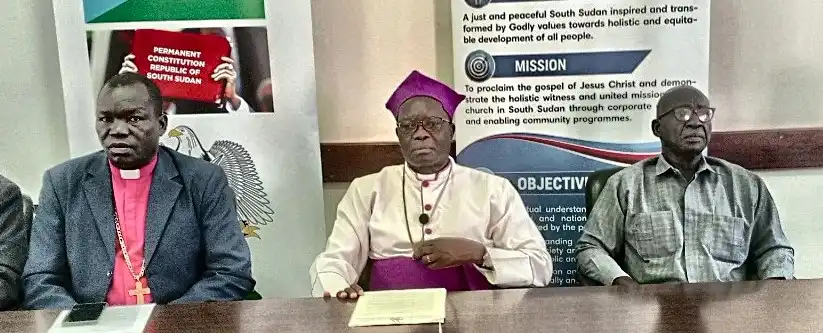
In a statement on Tuesday, read by The Most Rev. Dr. Justin Badi Arama, Chairperson of the South Sudan Council of Churches and Primate of the Episcopal Church of South Sudan, the church leaders raised concern over the deteriorating security situation.
Re. Badi said violence in Upper Nile, Jonglei, Unity, Warrap and parts of Equatoria was also disrupting humanitarian access and threatening civilians and aid operations along key roads and river corridors.
He said renewed fighting and mobilisation of armed youth in Nasir and Ulang counties in Upper Nile State had resulted in deaths, displacement and disruption of humanitarian assistance.
In Jonglei State, he mentioned Nyirol, Uror, Ayod, Akobo, Twic East and Duk counties, as well as the Pibor Administrative Area, where fighting, intercommunal violence and armed youth mobilisation were causing civilian deaths, displacement and humanitarian concerns.
The statement also raised concerns over insecurity around Bentiu and the Ruweng Administrative Area in Unity State, where the church leaders said displaced and vulnerable communities continued to be affected.
In Warrap State, the Council identified Tonj North and Gogrial East, as well as the Abyei Administrative Area, as areas affected by intercommunal and revenge-related violence.
The church leaders also warned of insecurity along roads linking major towns in Equatoria, including the Juba-Mundri, Juba-Torit and Juba-Bor routes.
Bishop Badi said attacks along the roads were threatening civilians and humanitarian operations, while parts of Yei River County continued to experience armed insecurity.
He called on the government, traditional authorities, armed groups and communities to take immediate steps to protect civilians, end violence and revenge attacks, guarantee humanitarian access and commit to dialogue.
The clergy further called for the protection of civilians, the securing of roads and river transport corridors and safe, unhindered humanitarian access to affected communities.
He urged communities to reject hatred, retaliation and violence and instead strengthen local peace and reconciliation efforts.
“We therefore call upon all conflicting parties and communities to choose restraint over retaliation, dialogue over confrontation and reconciliation over revenge,” Badi said.
The Council said South Sudanese had endured decades of conflict and should not continue to live in fear of being killed on roads, displaced from their homes or abducted from their communities.
“The suffering of our people has reached a point where silence is no longer an option,” Badi added.
The statement comes days after an ambush along the Juba-Mundri road in Western Equatoria State in which more than 30 civilians were reportedly abducted and several vehicles burned.
At least 27 passengers abducted during the September 26 attack were later released, while local officials said others remained unaccounted for. Four civilian vehicles were reportedly burned during attacks along the road. No group has claimed responsibility for the incidents.
The attacks have renewed concerns over the safety of civilians using major roads in Western Equatoria. The United Nations Mission in South Sudan said recent ambushes, vehicle burnings and abductions had amplified risks for communities along the Yambio-Ibba and Juba-Mundri-Yambio routes.
The government has previously blamed armed groups allied to holdout opposition groups for some attacks, although responsibility for the latest Juba-Mundri road ambush remains unclear.
The concerns also come amid renewed intercommunal violence in parts of the country. In Tonj South County in Warrap State, at least 19 people were killed and 14 injured in clashes in July, according to state authorities.
Discover more from Access Radio®
Subscribe to get the latest posts sent to your email.