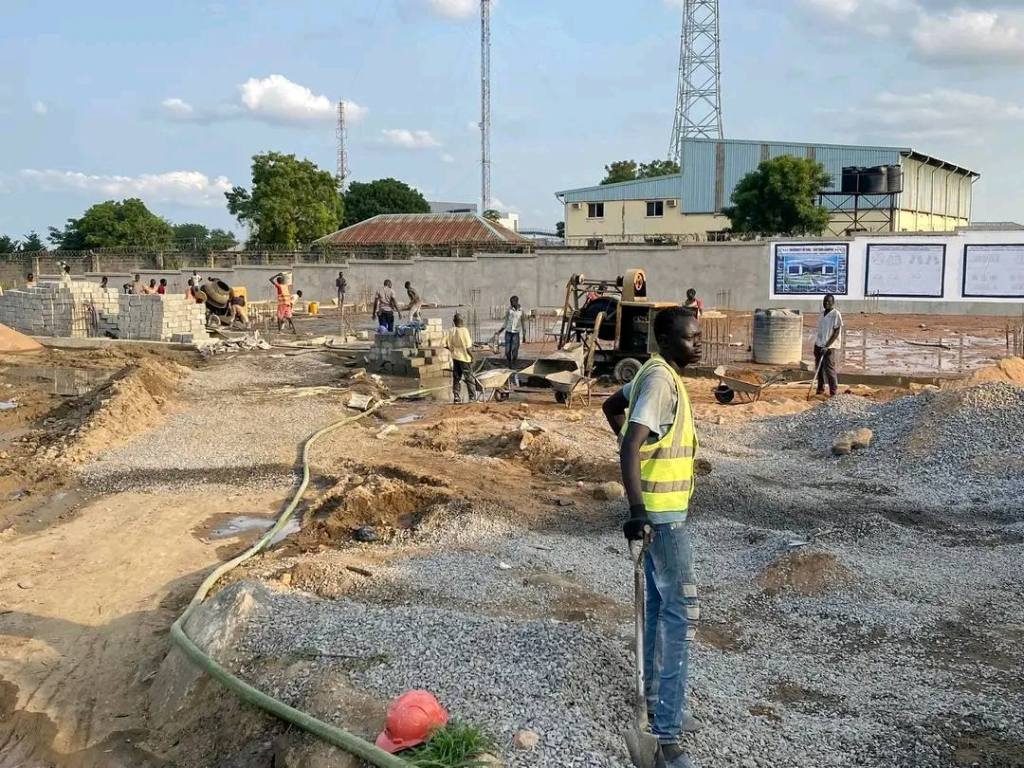
Juba University Faces Pressure Over Space Project Delay/Photo: Tonj Times
(Juba) – Students at the University of Juba are expressing frustration over the prolonged delay in the construction of the Mayardit Academy for Space Sciences, a high profile initiative launched under the leadership of former Vice Chancellor Professor John Akec.
For three consecutive years, students have each been charged a $100 fee (approximately 460,000 South Sudanese Pounds at current official BoSS exchange rates) intended to help fund the project.
Yet, despite these ongoing contributions, no visible structure has appeared at the proposed site, and no firm completion date has been provided.
The academy was approved by the university senate in December 2022 and has been presented as a cornerstone of the university’s modernization efforts.
The project aims to establish South Sudan as a regional hub for space science and technology. In addition to the academy itself, the university pledged to construct new lecture halls and research facilities as part of the same initiative.
University authorities, including current Vice Chancellor Professor Robert Mayom, continue to express support for the project. Recently, Professor Akec was asked to remain involved in overseeing its implementation. Officials have claimed that preliminary engineering work is ongoing and that university leadership is conducting regular site visits. However, students say these updates lack substance and do not account for the apparent lack of physical progress.
Some student groups have called for an independent audit of the funds collected from both students and external donors, citing a lack of transparency and inconsistent communication from the administration. They are also demanding that the university publicly release a timeline outlining clear steps toward completion.
The administration argues that the project is active and evolving, citing the Mayardit Academy’s participation in recent international space conferences as proof of progress. However, this has done little to address the main concern among students i.e. why, after years of financial contributions, there is still no visible building.
In response to the student concerns, some voices within the community have urged patience. Commentators like Malek Nyuat Akol have defended the university’s efforts, stating that the laying of a foundation is often the most complex phase of construction. According to Akol, once the base is in place, the rest of the structure can be assembled more quickly.
Despite such reassurances, students remain unconvinced. Many argue that three years is more than sufficient time to show significant results, especially given the amount of money collected.
They insist that without transparency and measurable outcomes, their trust in the university leadership will continue to erode.
Discover more from Access Radio Yei News
Subscribe to get the latest posts sent to your email.