nets
(JUBA) – Health Link South Sudan says it is using digital registration, barcode tracking, and household education as it leads mosquito net distribution in Central and Eastern Equatoria states, as part of the country’s nationwide malaria prevention campaign.
The campaign, launched Saturday in Gurei, outside Juba, is part of a national drive to distribute 9.5 million long-lasting insecticide-treated mosquito nets to reduce malaria infections and deaths.
Dr. Ojok Agustin Alex Obadiah, Juba County health coordinator for Health Link South Sudan, said the organization has been selected as the implementing partner for Central and Eastern Equatoria states.
He said active distribution has already started in Eastern Equatoria, while rollout in Central Equatoria is expected to begin in Lainya County.
“Health Link, as an implementing partner, has won the award to distribute mosquito nets in Central Equatoria State and Eastern Equatoria State,” he said.
Obadiah said Health Link expects to distribute about 2.4 million to 2.5 million mosquito nets across the two states, although final figures may be adjusted during implementation.
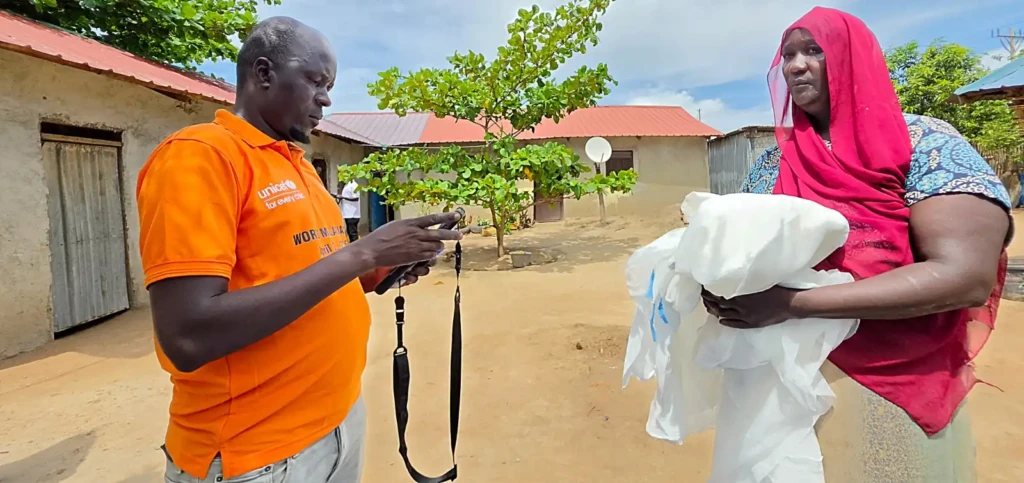
The organization is using a digital system to register households and determine how many nets each family should receive.
During registration, teams collect key details. These include names of household members, total family size, the number of children under five, and whether there is a pregnant woman in the home.
He said women and young children are among the most vulnerable groups and often carry the burden of malaria.
After the information is entered, the system calculates how many nets should be issued to each household.
Each mosquito net carries a barcode that is scanned before handover. Teams also capture GPS coordinates of homes to confirm delivery.
“We are doing all this for accountability purposes, to be sure that this has been given,” Obadiah said.
He said the digital system is intended to improve transparency, reduce leakages, and strengthen monitoring during distribution.
Obadiah said lessons from earlier campaigns showed that some mosquito nets were misused. Some were used for gardens, tying goats, or repairing houses instead of protecting families from mosquitoes.
As a result, Health Link teams are providing household education on proper use of the nets and malaria prevention.
He also advised families to air the treated nets in the sun for three to four hours before first use. This helps reduce possible skin irritation.
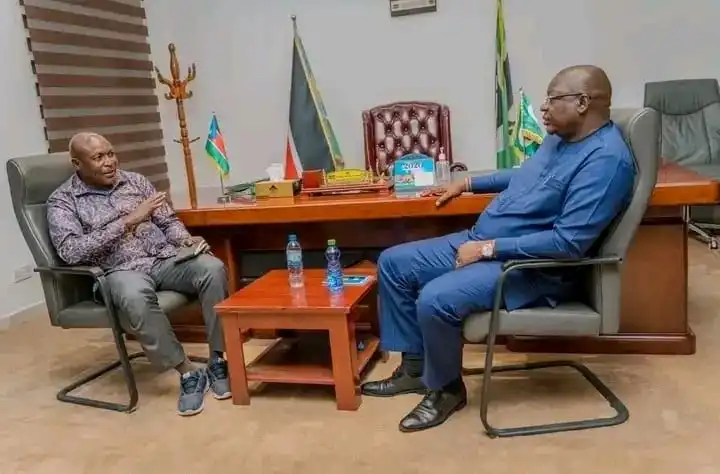
Undersecretary in the Ministry of Health, Dr. Oromo Francis, said communities must take ownership of the campaign. He urged households to ensure mosquito nets are used for their intended purpose.
“All our children and all of us in the house must sleep under the mosquito nets,” he said.
Francis also stressed accountability in the campaign. He said all partners and communities must work together to ensure nets reach households and are properly used.
At the first household visited in Gurei’s Muraba Saba area, a resident, Muna Tuong, received five nets.
“I’m very happy. It’s the first time people have come to my house,” she said.
South Sudan is distributing 9.5 million mosquito nets nationwide with support from UNICEF, the World Health Organization, and the United Nations Development Programme.
The success of the campaign, officials say, will depend on both effective delivery and consistent household use of the nets.
Discover more from Access Radio Yei News
Subscribe to get the latest posts sent to your email.