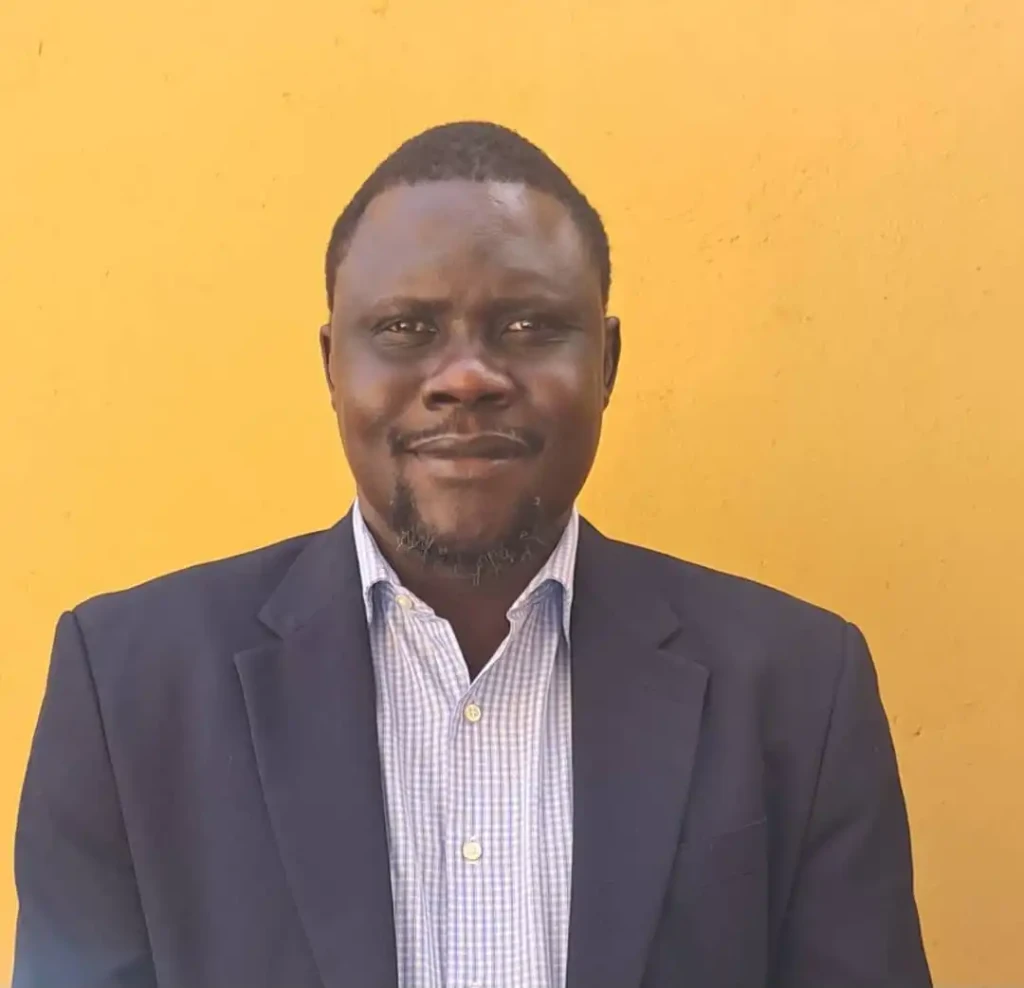
James Boboya Edimond-PHOTO CREDITS-Hand out
(JUBA)-A South Sudanese civil society leader has urged President Salva Kiir Mayardit to withhold controversial amendments to the peace agreement, warning that the process has not met the legal and procedural requirements set out in the deal.
In a letter dated April 29, Boboya James Edimond of the Institute of Social Policy and Research called on the president to ensure that any proposed changes to the Revitalized Agreement on the Resolution of the Conflict in South Sudan (R-ARCSS) follow due process and involve all key stakeholders.
Boboya said the recent decision to suspend parliamentary debate on the amendments was a welcome step, but stressed it should mark the beginning of a reset.
He noted that the amendments were approved by the cabinet and forwarded to parliament without adequate consultation, particularly with the Reconstituted Joint Monitoring and Evaluation Commission (RJMEC), the body mandated to oversee implementation of the peace agreement.
“There must be transparency, inclusivity, and adherence to agreed procedures,” he wrote. He warned that passing such steps risks eroding trust among signatories and the wider public.
The controversy stems from concerns that not all parties to the agreement, especially the Sudan People’s Liberation Movement-in-Opposition (SPLM-IO), were properly consulted before the proposals were tabled. Parliament last week halted debate on the amendments, citing a technical error.
The proposed changes would remove the requirement to complete a national population census and adopt a permanent constitution before holding elections, deferring both tasks to a post-election government.
They also seek to drop provisions that give the 2018 peace deal precedence over the Transitional Constitution, a move intended to streamline the legal framework, but one that has drawn significant political resistance.
Boboya warned that sidelining key signatories risks deepening divisions at a critical moment in the transition.
He also raised concerns about plans to remove Articles 8.2 and 8.3, which guarantee the supremacy of the peace agreement over conflicting laws.
He said weakening these provisions could undermine the legal foundation of the transition and open the door to unilateral decision-making.
“The peace agreement is not just a political document; it is the legal backbone of South Sudan’s transition,” he said.
Signed in 2018 after years of civil war, the R-ARCSS set out a roadmap for peace, governance reforms, and eventual elections. It established transitional institutions, including RJMEC, to ensure compliance among the parties.
Implementation, however, has been slow and uneven, with key milestones, such as security arrangements, constitutional reforms, and preparations for elections, still incomplete.
The proposed amendments are widely viewed as an attempt to adjust timelines and legal frameworks as the country edges closer to elections.
Boboya cautioned that pushing through such changes without consensus could jeopardize the gains made since the agreement was signed.
“Elections are not an event; they are a process,” he wrote, stating that credibility depends on respect for legal frameworks and trust among stakeholders.
He urged President Kiir to open consultations with civil society, political actors, and international partners before revisiting the amendments.
The letter frames the moment as a test of leadership, calling on the president to demonstrate openness and a commitment to national unity.
“Leadership at this moment requires not only authority, but also a willingness to listen,” Boboya Stated.
Discover more from Access Radio Yei News
Subscribe to get the latest posts sent to your email.