













(OPINION | Aggrey Cyrus Kanyikwa)
Peace and its meaning have often been misunderstood and misinterpreted. Many peacemakers and advocates in South Sudan and across Africa define peace simply as the end of insecurity, conflict and violence.
Efforts to end persistent insecurity, conflict and violence in South Sudan have faced resistance and ethnic mobilisation aimed at protecting the very causes of insecurity and conflict.
Peace has been made conditional on narrow, self defined benefits rather than on national interests and shared responsibility.
True peace requires full acceptance of our mistakes and honest recognition of the damage those mistakes have caused.
This damage includes the loss of human life, destruction of property and natural resources and harm to people’s souls, health, knowledge, psychological wellbeing, dignity, integrity, loyalty and future.
Conflict has two sides: one that initiates action and another that reacts to it. Both initiation and reaction produce results, whether positive or negative.
When such situations reach a standstill, the best approach is to accept the results, whether good or bad. If the outcomes are bad, it is necessary to calculate and apply corrections. If the outcomes are good, there is a need to strengthen them and move forward.
Peace in South Sudan has reached a stalemate because those involved in creating insecurity, pursuing conflict and sustaining violence refuse to accept the truth of nationhood.
Instead, they choose to live with past mistakes and force those mistakes to continue working in the same failed ways.
Blaming one another for failing to bring peace, or for spoiling it, while refusing to genuinely accept our own mistakes and open our hearts to peace, is an act of self deception. It is driven by the false belief that some tribes are larger, stronger, or more deserving than others.
Viewing one another through tribal labels instead of seeing each other as South Sudanese weakens wisdom and unity.
This happens because our hearts have not accepted equal participation in one nation. This is a serious mistake that requires a comprehensive solution and the opening of an unconditional path to peace.
God did not place one tribe above another, but entrusted leaders to guide and lead a nation. No single tribe owns South Sudan.
Leadership should be based on loyalty to the nation, not tribal identity. This truth must be accepted so that South Sudanese can forgive past mistakes, accept one another, and live and work together.
If South Sudanese continue to judge one another and value national contribution through tribal identity while hiding hatred in their hearts, they deceive themselves and undermine their own right to live as one nation.
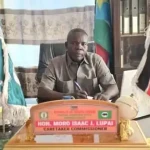
Aggrey Cyrus Kanyikwa is a former Commissioner of Yei River County. He is a trainer and a senior local government official in South Sudan, with long experience in governance, leadership and community development.
Disclaimer
Access Radio® publishes opinion articles to provide a platform for diverse and independent views. The opinions expressed do not necessarily reflect the views of Access Radio® or its editorial team.
The publication of this opinion does not imply agreement or endorsement by Access Radio®.
Responsibility for facts and opinions rests solely with the author. Access Radio® does not take responsibility for the accuracy of claims made by contributors.
We welcome thoughtful opinion contributions from our listeners and readers. To share your views, email news [at] radioyei.org. All submissions may be edited for grammar or related issues.
Discover more from Access Radio®
Subscribe to get the latest posts sent to your email.