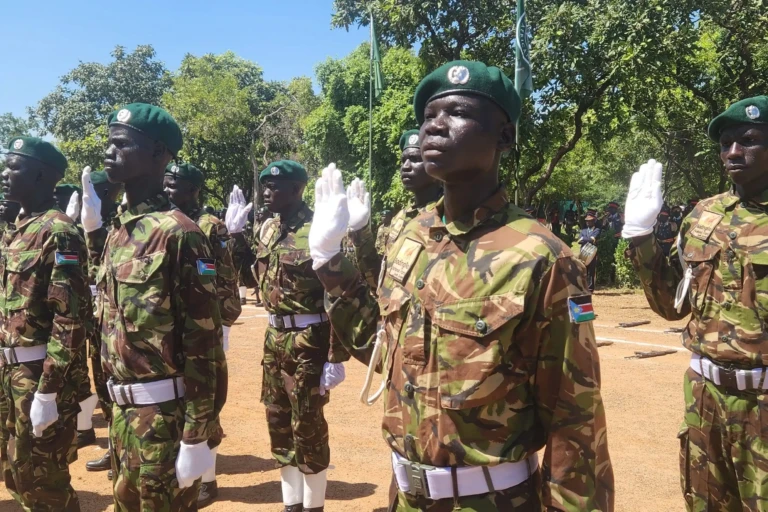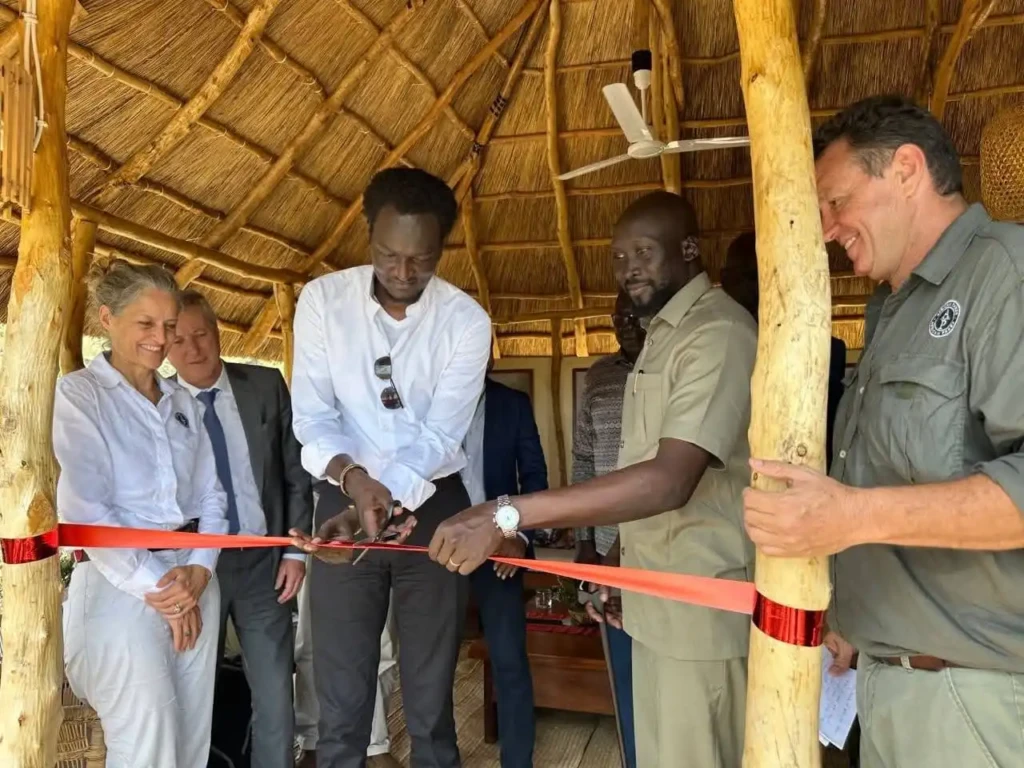
Officialss during the officials l launch of the tourist camp|Photo| Greater Pibor Adminstrative Area press unit
(MARUWO) — Maruwa Hills Tourist Camp, located inside Boma National Park in the Greater Pibor Administrative Area (GPAA), has been inaugurated on Thursday, marking a vital step toward developing South Sudan’s largely untapped tourism sector.
The facility was opened by Chief Administrator Gola Boyoi Gola alongside Minister of Wildlife, Conservation and Tourism Denay Chagor, in partnership with African Parks.
The camp, described as the first of its kind in the country, is aimed at attracting both domestic and international visitors to one of the country’s most naturally rich regions.
Speaking during the launch, Chagor said the opening of the site represents a historic moment for the country.
“We are opening the first tourism site of its kind in South Sudan, where the benefits for our people have already begun,” he said.
According to officials, the presence of the camp is expected to generate jobs for nearby communities in Maruwo and surrounding areas, including roles in hospitality, tour guiding, transport and conservation.
Local businesses are also likely to benefit from increased demand for food supplies, crafts and other services linked to tourism.
For his part, Gola Boyoi said the initiative could transform the local economy if peace and stability are sustained, encouraging further investment in hotels and infrastructure.
“This place is very beautiful. Let us work together to make it peaceful so that we can attract investors. Hotels will be constructed here, and the communities will benefit,” Gola said.
Boma National Park is one of Africa’s largest protected areas and is globally known for hosting one of the continent’s most spectacular wildlife migrations.
Each year, vast herds of antelope, including white-eared kob, tiang and Mongalla gazelle, move across the landscape in numbers that compete with the famous migrations of East Africa.
The Boma National Park forms part of an ecosystem that includes Bandingilo National Park, a vast wildlife corridor that environmentalists say remains one of the least disturbed in the world.
Despite this natural wealth, South Sudan’s tourism sector has remained largely underdeveloped due to years of conflict, limited infrastructure and insecurity.
The country’s economy has instead relied heavily on oil revenues, leaving sectors such as tourism and conservation underfunded.
Discover more from Access Radio Yei News
Subscribe to get the latest posts sent to your email.