



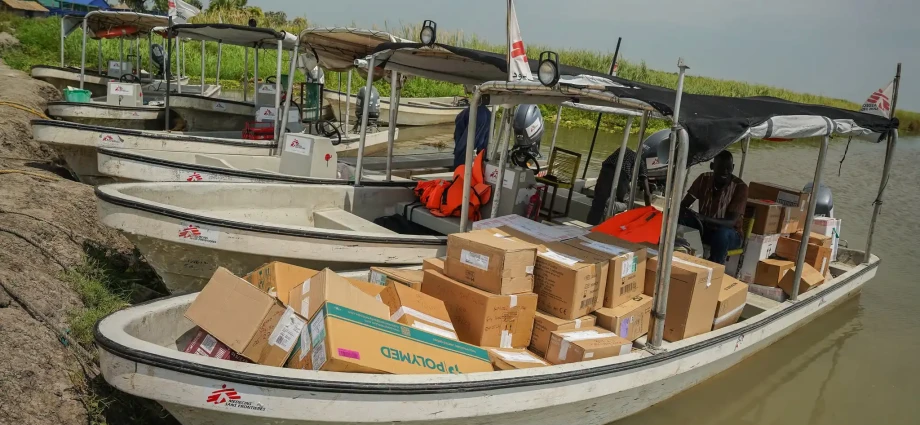
(FAKAK COUNTY) – Communities in Fangak County, Jonglei State, are facing severe difficulties in accessing healthcare after years of flooding, displacement and insecurity, according to Médecins Sans Frontières, also known as Doctors Without Borders.
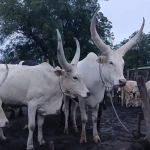
Nyanuot Giel Tor, a 60 year old resident of the Nyaling community in Payiat Boma, said her island was once beautiful, with farms and many cattle. She said when the water came, everything was destroyed, crops and cattle died, and the family had to move to higher land.
Médecins Sans Frontières reported in October 2026 that since 2019 communities across Fangak County have faced a cycle of flooding, displacement and insecurity.
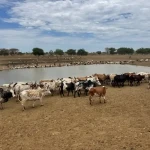
Recurrent floods have submerged homes, farmland and grazing areas, forcing families to leave their villages and seek safety on scattered islands and patches of higher ground across the Sudd wetlands.
As communities become more dispersed, reaching basic services, including healthcare, has become more difficult. Many people now live hours away from the nearest working health facility.
For Nyanuot and her family, displacement has changed almost every part of daily life. The land they once farmed remains underwater, and the cattle that supported their livelihoods have long been lost.
Like many others in Fangak, the family now relies largely on fishing and collecting water lilies from the river for food.
The challenges facing communities in Fangak go beyond flooding.
Since late April 2025, tensions between government forces and opposition groups have escalated repeatedly, forcing community movements across the county and pushing many people even further from healthcare.
In May 2025, the Médecins Sans Frontières hospital in Old Fangak, which served more than 110,000 people, was bombed by Government forces during an aerial attack that killed seven people and injured 27 others, including patients and aid staff.
The destruction of the hospital removed one of the county’s most important healthcare facilities and further disrupted access to medical care in an area already struggling with displacement.
Today, more than one million people living in opposition controlled areas of Jonglei State rely on just two working hospitals, both operated by Médecins Sans Frontières.
The impact of these overlapping crises is visible in the communities where the organisation works today, as flooding and conflict have fundamentally changed where people live and how they access healthcare.
Dieu Top, Outreach Nursing Team Supervisor in Fangak, said many people were found huddled together living on islands that are higher because of the floods and because of the fighting, especially after the bombing of the hospital in Old Fangak. He said most of these people escaped to hard to reach places looking for safety and shelter.
For many families, healthcare becomes difficult to access once they have settled in these remote locations. Safety often takes priority over being close to services, leaving communities isolated from routine medical care.
Top said the most important thing for people is to find somewhere they can feel safe. He said they find it safer living in areas that are very difficult to reach, but in doing so they move away from healthcare services and miss essential care.
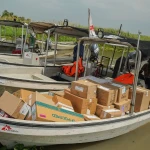
Transport is another major challenge. Across much of Fangak County, canoes are often the only means of travel between communities, used to reach markets, fishing grounds, schools and health facilities.
However, years of flooding have submerged large areas of woodland traditionally used to make canoes, making them increasingly difficult and expensive to obtain.
Nyayiek Gai from Dhornor Boma said their only means of transport is a canoe, and getting one is very difficult. She said they sometimes have to wait for days to get a canoe when someone is sick, to take them to the health centre.
The challenges facing communities have been made worse by major reductions in humanitarian funding in South Sudan. As a result, several organisations working in Fangak have scaled down activities in recent years, putting more pressure on an already fragile health system and increasing the burden on Médecins Sans Frontières, one of the few remaining health actors in the area.
In February 2026, Médecins Sans Frontières introduced the Community Paramedicine Initiative in Fangak County to bring essential medical services closer to people living beyond the reach of conventional facilities.
The programme serves an estimated 25,146 people across the islands of Dhornor, Kuerbuay, Kuerdeng and Payiat.
Patients are no longer required to travel long distances by canoe, and health workers travel to their communities to deliver care.
Through regular visits, teams provide outpatient consultations, maternal healthcare, follow up care and boat referrals for patients who need more advanced treatment.
The initiative also works closely with community based drug dispensers, who help ensure young children living on smaller and more isolated islands can access timely treatment closer to home.
Ghan Paul Hoth, a paramedical clinical officer in Dhornor, said that after the bombing of Old Fangak, this community was one of the places people fled to in search of safety. He said they see more than 100 patients every week, and there are many cases of diarrhoea because people do not have access to safe drinking water.
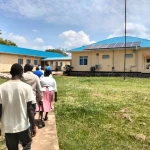
In Payiat, Nyanuot sat with her four-year-old grandson while he received treatment from a paramedical nurse. He had been coughing for two days, and she brought him to the paramedical site to be reviewed.
Life on the island remains challenging, and the fear of conflict and flooding has not gone away. But the presence of healthcare within the community has eased one of the many burdens families face.
Nyanuot said knowing that they now have free medication close by is the one good thing they have.
Across Fangak County, flooding, conflict and displacement have repeatedly pushed communities further away from healthcare.
Through the Community Paramedicine Initiative, Médecins Sans Frontières said it is adapting to that reality by bringing care directly to people living in some of the county’s most isolated locations, so that access to healthcare does not depend on a family’s ability to find a canoe or travel long distances for treatment.
Discover more from Access Radio®
Subscribe to get the latest posts sent to your email.