

















(JUBA) – South Sudan is strengthening its preparedness for Ebola after Kenya confirmed a third case of the Bundibugyo virus disease, with authorities warning that the country remains at high risk due to its close trade and travel links with affected neighbours.
Kenya’s Ministry of Health said on 16th October 2026 that the new patient is a 65 year old woman who was already in quarantine as a primary contact of the first two cases. She tested positive at both the National Virology Reference Laboratory and the KEMRI laboratory after developing fever, sore throat and malaise.
South Sudan has not confirmed any Ebola case, but the country’s National Public Health Institute has classified 15 counties as tier one priority areas for improved readiness, including Juba, Yei, Yambio and Nimule . The risk assessment considered porous borders, large cross border trade, humanitarian displacement and major transport corridors, particularly along the western and southern borders with the Democratic Republic of the Congo.
The national Ebola readiness score improved from 29% in May to 65% by mid July 2026, according to the World Health Organization . However, gaps remain in infection prevention and control, case management and logistics, where capacity was assessed at below 50% .
Kenya has screened 685,027 people since its outbreak began in May 2026, and 127 of 130 listed contacts, or 97.7%, have been traced and quarantined. The Ministry of Health said the tracing rate is above the global benchmark of 85% needed to break the chain of transmission.
Travellers from 10 high risk countries, including South Sudan, are required to complete a digital surveillance form before boarding flights to Kenya and show a QR code to port health officers on arrival. All aircraft from these countries undergo enhanced public health screening at Kenyan airports.
Kenya’s Director General for Health, Dr Patrick Amoth, said the second patient remains in stable condition and is responding well to supportive care. He said the risk to the public remains low because there is no evidence of community transmission.
“Ebola spreads through direct contact with the blood or body fluids of a sick or deceased person, not through the air,” Dr Amoth said. “Anyone who has a fever, unusual tiredness, muscle or joint pains, vomiting, diarrhoea or unexplained bleeding should report at once to the nearest health facility.”
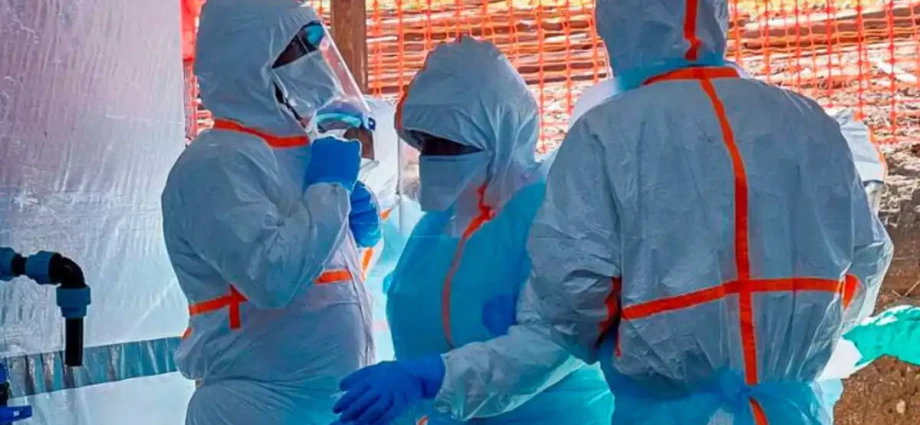
Kenya has distributed personal protective equipment, infection prevention supplies and screening equipment to all 28 high risk counties and points of entry. The country has also trained 4,971 healthcare providers in Ebola prevention and case management, and operates 15 isolation and treatment units with plans to expand to 22 .
South Sudan’s health authorities are working with the World Health Organization and partners to strengthen surveillance at high risk locations including Juba, Nimule, Yei, Tambura, Yambio and Maridi . The country’s early warning system has detected 29 Ebola alerts, all of which tested negative or were discarded .
The Kenyan shilling traded at KES 129.71 per US dollar on 1st October 2026, according to the Central Bank of Kenya . Kenya’s Ministry of Health said the country remains open for business, with no restrictions on travel, trade or public gatherings.
Discover more from Access Radio®
Subscribe to get the latest posts sent to your email.