(RENK, UPPER NILE) – The UK has been accused of breaking its promise to provide critical foreign aid to Sudan and South Sudan after support reaching the neighbouring country, hosting more than 1.3 million refugees, was drastically reduced.
When the UK announced in February 2025 that its aid budget would fall from 0.5 to 0.3 per cent of gross national income, Sudan was cited as a priority alongside Ukraine and Gaza. In April, the UK hosted a Sudan conference promising not to “look away” as famine emerged.
The conflict in Sudan, ongoing since 2023, has killed over 150,000 people and displaced more than 12 million. Many of these people have sought safety in South Sudan, which has received its lowest level of international aid since the country’s independence in 2011.
According to the United Nations Office for the Coordination of Humanitarian Affairs (OCHA), UK aid to South Sudan fell by more than 40 per cent, from $131 million (£97 million) in 2024 to $75 million (£56 million) in 2025. Other donors have also cut support, including the US, from $708 million to $283 million, and Germany, from $102 million to $63 million.
“Humanitarian aid is a lifeline for people in South Sudan, and neither the system nor the people were ready for these cuts,” said Shabnam Baloch, country director for Oxfam South Sudan. She described donor fatigue, noting that many international partners feel their contributions have produced limited results.
Even so, Baloch said, aid continues to save millions of lives. “Next year we will support less than half of the 770,000 people we assisted this year. No other organisation can fill the gap left by these cuts, so people are going to suffer,” she warned.
Baloch stressed that support to South Sudan should be part of a regional response to the Sudan crisis, noting that countries such as Chad and South Sudan do not have the capacity to handle refugee inflows alone.
UK Foreign Secretary Yvette Cooper responded, saying: “The UK will always stand with the innocent civilians of Sudan caught in this appalling conflict. This year alone, we have committed over £146 million and supported over one million people with lifesaving aid.”
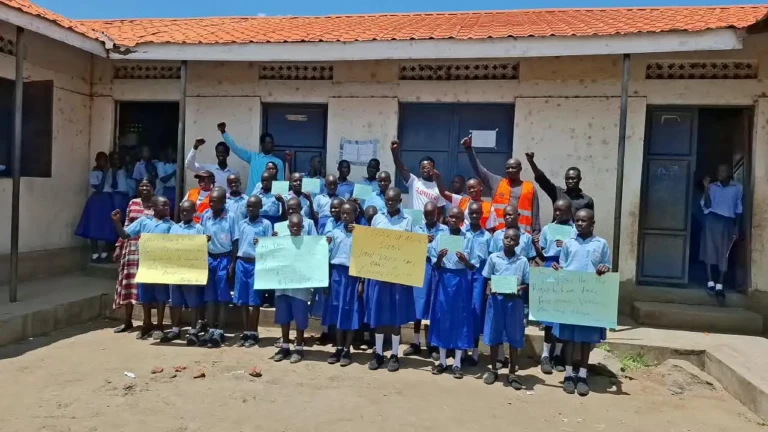
Conditions in South Sudan are increasingly dire. The Renk transit centre in Upper Nile, which processes refugees from Sudan, is housing 44,000 people, including more than 11,000 in the main facility, far beyond its intended capacity.
Water is scarce, with one tap serving 433 people instead of the standard 250, and health services are stretched. The International Organisation for Migration has been unable to provide onward transport for new arrivals, leaving many in the centre longer than the two-week ration period provided by the World Food Programme.
Sanitation and health services have been severely affected. The number of cleaners at the centre has dropped from 40 to 15, and maintenance staff from 10 to five. Cholera, first reported in October 2024, has exceeded 1,500 cases, while Hepatitis E has affected 1,131 people, according to Oxfam.
Climate impacts, including floods and extreme heat, have worsened the situation, displacing approximately 300,000 people this year. Small reservoirs supplying water in Renk are evaporating rapidly and may run dry by the end of January 2026, forcing NGOs to truck in bottled water.
Many refugees have endured severe trauma before arriving. One woman recounted watching her husband killed and bargaining for her children’s safety at multiple checkpoints. Another, only 21, said she felt her childhood ended when she crossed into South Sudan carrying four young children.
The refugee crisis in South Sudan occurs alongside extreme poverty, which affects over 80 per cent of the population. Around six million people face extreme hunger, and fighting within South Sudan has displaced 445,000 people in recent months. Nearly 1,000 patients wounded by weapons have been treated with support from the International Committee of the Red Cross.
Aid reductions are pushing essential services to breaking point, leaving millions dependent on international support for survival.
This article was produced as part of The Independent’s Rethinking Global Aid project.
Discover more from Access Radio Yei News
Subscribe to get the latest posts sent to your email.