






















(Port Sudan) – Sudan and South Sudan concluded recent high level talks in Port Sudan without reaching a final agreement on proposed revisions to crude oil export fees, according to officials and technical experts familiar with the discussions.
The negotiations were part of ongoing efforts to restore and stabilize South Sudan’s oil exports, which have only partially resumed following a nearly year-long suspension due to damage caused by conflict in Sudan.
South Sudan, a landlocked country that relies heavily on oil revenues, transports its crude oil through Sudan’s pipelines to Port Sudan on the Red Sea. It pays fees for processing, transit, and logistics services under a 2012 agreement signed after independence.
However, Sudan’s ongoing war, which erupted in April 2023 between the Sudanese Armed Forces and the paramilitary Rapid Support Forces (RSF), has significantly disrupted infrastructure and regional trade. The conflict has claimed tens of thousands of lives and displaced over 13 million people across East Africa.
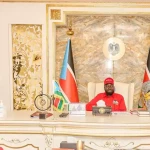
The recent meeting brought together senior officials from both countries, including oil and finance ministry representatives from South Sudan. According to Sudan’s Ministry of Energy, the discussions were held in a “positive and transparent atmosphere,” with both sides addressing technical and financial matters.
While the detailed agenda was not publicly disclosed, sources confirmed that Sudan proposed revising the oil fee structure in response to post war logistical challenges, particularly at the Bashayer oil terminal in Port Sudan.
Under the current 2012 agreement, South Sudan pays the following per barrel of oil: $1.60 for processing, $8.40 for PETCO transit, $6.50 for Petrodar transit, a $1 sovereign fee, and $15 as part of transitional financial arrangements.
So far, Juba has paid over $2.5 billion of the $3.028 billion required under the transitional deal, leaving an outstanding balance of approximately $500 million.
Sudan’s new proposal includes splitting the fees into three categories: transit, processing (adjusted based on crude quality), and export logistics tied specifically to the Bashayer terminal.
A PETCO source said that full resumption of crude exports would require not just new agreements, but physical repairs to the pipeline and assurances that the conflict-affected regions along the route are secure.
South Sudan’s delegation inspected pumping stations along the route during their visit. They made no public statement afterward, but a Facebook post from the Ministry of Petroleum described the meetings as focused on “mutual cooperation.”
Technical sources said that limited quantities of crude have begun moving through the pipeline as part of a trial run, although full capacity has yet to be restored.
Before the pipeline shut down in February 2024, PETCO had been transporting around 90,000 barrels per day (bpd), with half of that oil reportedly used for Sudan’s domestic consumption. At present, the pipeline is handling only 28,000 bpd, according to Sudanese officials.
Both countries acknowledged the sensitivity of the oil sector, which remains one of South Sudan’s few reliable sources of revenue.
The export shutdown has had a devastating impact on South Sudan’s fragile economy, further weakened by inflation and political uncertainty. South Sudan holds 75% of the former unified Sudan’s oil reserves and depends on oil for the majority of its budget.
The delay in securing a final agreement on revised fees comes amid internal tensions in South Sudan. In March, the country’s Oil Minister Puot Kang Chuol, a close ally of detained First Vice President Riek Machar was arrested, raising concerns about political interference in the country’s energy sector.
Further negotiations between the two countries are expected to take place in both Juba and Port Sudan in the coming weeks to reach a comprehensive deal on resuming crude oil exports at full capacity.
Discover more from Access Radio®
Subscribe to get the latest posts sent to your email.