






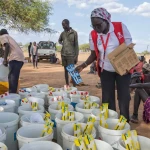


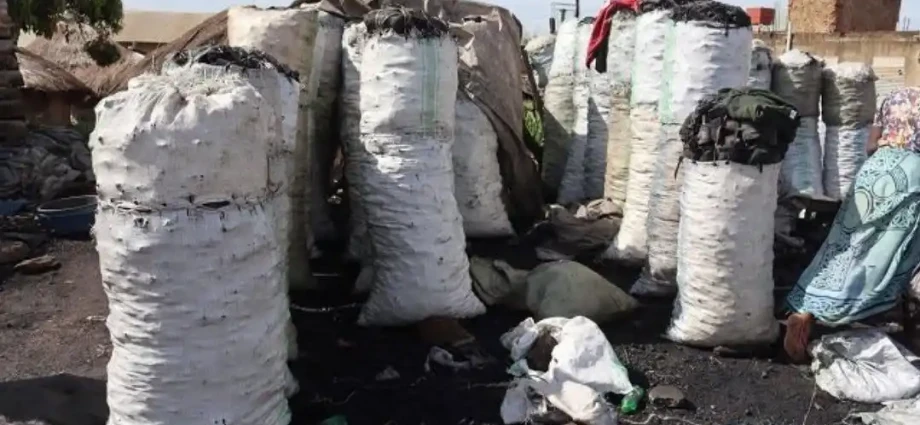
(KOBOKO, UGANDA) – Charcoal traders along Uganda’s border with South Sudan have asked President Yoweri Museveni for a three-month grace period to sell existing stocks, saying enforcement of the 2023 charcoal ban has left more than 172 dealers with over 90,000 bags worth UGX 2.4 billion ($645,000 / £492,000) stranded.
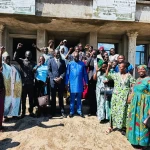
The traders from Busia in Koboko District and Kerwa in Yumbe District stormed Koboko District headquarters on Wednesday, seeking intervention over enforcement of Executive Order No. 3.
The order targets commercial charcoal production and trade to curb deforestation.
The traders argue that their charcoal is sourced from South Sudan and that they have paid the required taxes in both countries.
Many say they shifted their sourcing across the border after the order was issued in 2023.
Dorcus Okello, chairperson of traders in Kerwa, said 78 dealers had more than 60,000 bags worth UGX 1.8 billion ($484,000 / £369,000) stranded.
Some stocks have been damaged by rain and termites.
“We have a lot of issues about this abrupt enforcement. At the moment, I have 78 dealers with over 60,000 bags of charcoal worth UGX 1.8 billion affected and stuck,” Ms Okello said.
She said traders faced loan repayments and school fees.
She said the traders had met Uganda Revenue Authority officials, who inspected their consignments and cleared charcoal they said had been sourced from South Sudan through Oraba.
Ms Okello said the current restrictions intensified around June after a former division commander banned charcoal imports from South Sudan over concerns that traders were moving charcoal produced in Uganda across the border.
She said commissioners from Kaya and Kajo-Keji in South Sudan had written to the commander seeking permission for traders to transport stocks already purchased, but the efforts had not resolved the impasse.
Ms Okello said she had personally invested in 2,400 bags bought from a South Sudanese company. Her daughter, who is at university, had been sent home over unpaid fees.
Dickson Tezikoma, chairperson of traders in Busia, said about 94 dealers had more than 30,000 bags worth UGX 1.2 billion ($323,000 / £246,000) stranded.
He asked the government to allow them three months to dispose of their stocks and exit the business.
Mr Tezikoma said he had invested more than UGX 40 million ($10,800 / £8,200), including money obtained through the Parish Development Model.
Another trader, Madina Namagembe, said she had borrowed more than UGX 40 million to invest in 120,000 bags of charcoal and was struggling to repay the loan.
Trader Masiko Julius said dealers had been unable to transport their merchandise to market for nearly three months.
The traders say the restrictions have disrupted their livelihoods and left them struggling to meet household expenses and repay loans.
However, Koboko Resident District Commissioner Samuel Mpimbaza Hashaka said the executive order was issued in 2023 and traders had been given sufficient time to leave the business.
He also said South Sudan had repeatedly accused Uganda of enabling rebel activities in its Central Equatoria State through illegal logging and charcoal trade, which he said provided funding for armed groups.
“Whether you have one bag, it will be picked,” Mr Hashaka said, adding that the request for more time had been referred to higher authorities for discussion.
President Museveni issued Executive Order No. 3 in 2023 to protect the environment and curb deforestation in Northern Uganda, including Acholi, West Nile and parts of Karamoja.
The order bans commercial charcoal burning and trade, as well as cutting trees for commercial purposes.
The traders’ appeal came amid a parliamentary debate over the ban, with lawmakers questioning why government has not sufficiently expanded access to affordable alternatives to charcoal three years after the directive was issued.
Leader of Opposition in Parliament Joel Ssenyonyi asked what government had done to make alternative energy sources accessible to ordinary households since 2023.
“How aggressively are we making it possible for the ordinary persons down there to access alternative sources of energy?” Mr Ssenyonyi asked, arguing that the time since the order was issued should have been used to prepare households for the transition.
Kilak MP Gilbert Olanya argued that domestic charcoal use should be allowed while commercial production that destroys forests should be restricted.
State Minister for Energy Phiona Nyamutooro maintained that alternatives, including gas-powered cooking solutions, had been provided.
However, legislators questioned whether adoption levels were sufficient to support a rapid transition away from charcoal.
Parliament Speaker Jacob Oboth-Oboth directed that the total ban on charcoal use be suspended with immediate effect.
He gave government until next Wednesday to return to the House with a plan to move Ugandans away from charcoal without leaving households unable to afford cooking energy.
Discover more from Access Radio®
Subscribe to get the latest posts sent to your email.