

















![A view of the JIA Terminal 3 set for launch on Thursday. [Photo: Courtesy]](https://radioyei.org/wp-content/uploads/2026/08/747207989_2046536650072546_3048914931428307321_n.webp)
(JUBA)— The East African Community (EAC) Secretariat has commended South Sudan for visible improvements in infrastructure, singling out upgrades at Juba International Airport and new road networks as signs that the country is positioning itself for regional trade integration.
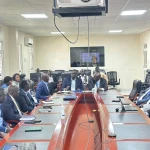
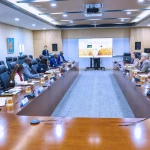
Speaking during EABC CEOs’-Trade and Investment Roundtable in Juba, Annette Mutaawe Ssemuwemba, EAC Deputy Secretary General in charge of Customs, Trade and Monetary Affairs, said the changes were signs of growing investment potential in the country.
“I also want to commend the extensive progress that I have witnessed right from the airport. Clearly, there is progressive improvements right from the arrivals,” she while officially opening the roundtable.
Annete added that she had noticed new hotels, upgraded roads, and even a redesigned airport parking area since her last visit to Juba roughly a year earlier.
“Something very, very good is happening here in this country.”
The remarks offer a positive assessment of the country’s infrastructure development as the country seeks to use its membership in the EAC to attract investment, expand trade and strengthen links with regional markets.
Infrastructure development remains one of EAC central ambition to strengthen links within the regional market. Efficient airports, roads, border facilities and logistics networks can make it easier and less costly for businesses to move people, goods and services across borders.
The deputy secretary general also highlighted progress at the Nimule-Elegu border crossing between South Sudan and Uganda, where the two countries have continued cooperation on coordinated border management and one-stop border facilities.
She recalled visiting the Nimule border post and subsequently engaging development partners to mobilize resources for improvements there.
“There is progress that is being made, led by the Secretariat,” she said.
The Nimule-Elegu corridor is strategically important to South Sudan’s regional trade, providing a key connection between Juba and Uganda and onward to other EAC markets.
Beyond transport infrastructure, the EAC official said South Sudan’s geographical position, natural resources and young population give the country a strong foundation for economic transformation.
But she cautioned that infrastructure and economic potential must ultimately translate into production, investment, value addition, trade and jobs.
“South Sudan has significant economic potential,” she said. “However, potential alone will not create prosperity.”
Annette urged the country to move beyond dependence on imported finished goods and develop its productive capacity, including manufacturing, agriculture and regional value chains.
The official said improved transport and storage infrastructure would be particularly important for farmers and manufacturers, helping them move agricultural produce and industrial inputs more efficiently.
She encouraged businesses to view South Sudan not only as a market for imported products but as a potential base for production, investment and regional trade.
“For South Sudan, the pathway is clear: strengthen productive capacity at home, deepen integration within the EAC and use the regional market to build scale,” she said.
She urged the government and private sector to build on the momentum by ensuring infrastructure development supports a more competitive business environment.
“Let us not make South Sudan simply a market within the East African Community, but a strategic place and destination for trade and investment,” she said.
South Sudan joined the EAC in 2016 and has been working to implement commitments covering trade, customs, infrastructure and services.
Discover more from Access Radio®
Subscribe to get the latest posts sent to your email.