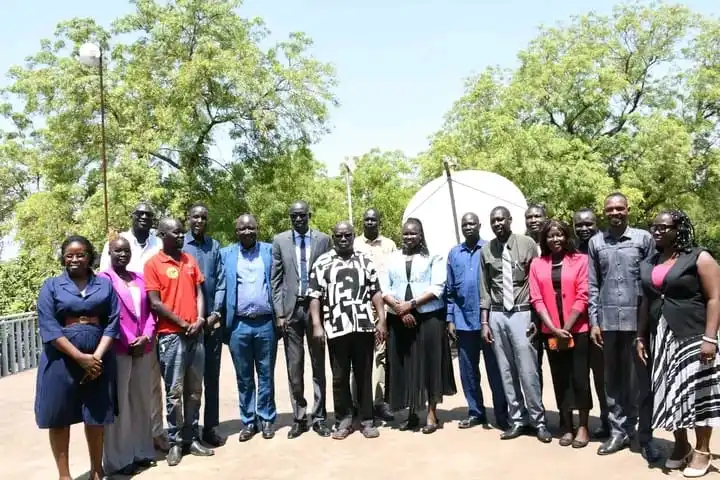
Photo: Office of the Vice President & Chairperson of Economic Cluster, South Sudan
(Juba) – The International Monetary Fund (IMF) has pledged its support to the Government of South Sudan in building strong microfinance policies that aim to enhance long term economic stability and promote inclusive development.
This commitment was made during a high level meeting between Vice President Dr. Benjamin Bol Mel and an IMF delegation currently visiting the country.
The meeting was attended by the Mission Chief for South Sudan, Mame Astou Diouf, along with the Minister of Finance and Planning, Dr. Marial Dongrin Ater.
The Vice President thanked the IMF for its continued support and updated the delegation on efforts underway to restore macroeconomic stability, promote accountability in financial governance, and encourage inclusive growth across the country.
The IMF delegation is on a 10-day mission in Juba to follow up on the implementation of the Staff Monitored Program (SMP).
This initiative is intended to guide South Sudan toward macroeconomic stability and to create a framework for long-term engagement with the IMF.
The SMP serves as a non-financing tool that helps governments design and implement sound policies while building a track record for potential future funding.
Vice President Bol Mel, who also chairs the Economic Cluster, emphasized the importance of trusted partnerships in rebuilding the economy. He said South Sudan is taking deliberate steps to reverse years of economic hardship and is committed to creating opportunities that benefit all citizens.
The IMF’s technical and policy assistance will focus on strengthening financial systems, including the development of microfinance institutions that can provide access to credit and support livelihoods, especially in underserved communities. These reforms are viewed as key to reducing poverty and unlocking sustainable development.
While some citizens online welcomed the development and expressed hope for real change, others urged caution and called for greater transparency and practical implementation of economic policies.
A few also raised concerns about the historical role of international financial institutions in developing countries.
Discover more from Access Radio Yei News
Subscribe to get the latest posts sent to your email.