TIB
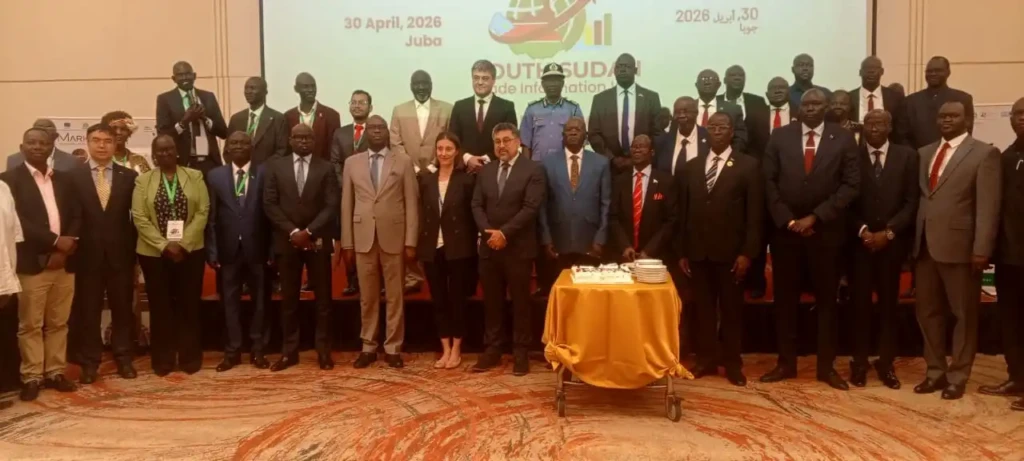
(JUBA)-South Sudan on Thursday took a major step toward modernizing its economy with the launch of the Trade Information Hub, a digital platform designed to improve transparency, streamline procedures, and enhance efficiency in the trade sector.
The hub serves as a centralized online platform that provides traders, investors, importers, and exporters with clear and up-to-date information on trade procedures, requirements, and regulations.
It is also expected to reduce delays, lower operational costs, and replace manual systems with a synchronised digital framework.
The launch, attended by senior government officials, development partners, and private sector representatives, marks a shift toward digital governance and trade.
Speaking at the event, Undersecretary in the Ministry of Trade and Industry, Yel Luol Koor, described the launch as a key milestone in modernizing the country’s trade systems and supporting businesses.
“The establishment of the Trade Information Hub is a direct response to the growing need for accessible, reliable, and up-to-date trade information,” he said.
Koor noted that traders, small and medium enterprises (SMEs), and investors have been facing challenges, including complex procedures, limited access to data, and fragmented systems.
He said the new platform addresses these challenges by offering a one-stop digital solution that simplifies trade processes and strengthens South Sudan’s integration into regional and global markets.
Koor further explained that the hub would enhance transparency by reducing clearance times, cutting costs, and enabling businesses to comply with international standards. It will also expand opportunities for market access, financial inclusion, and digital participation, particularly for SMEs.
“It is also a platform for advocacy, ensuring that traders, SMEs and investors have a voice in shaping policy reforms. It is also a bridge to regional integration, harmonizing our practices with the East African Community, African Continental Free Trade Area and World Trade Organization Trade Facilitation Agreement (TFA),” he said.
Koor further added that the platform also serves as a reliable reference point for investors.
“For investors, it is a single source of South Sudan’s readiness to engage with global markets, offering transparency and predictability that fuels investor confidence.”
He expressed appreciation to development partners, including the European Union for funding through the Market Access Upgrade Programme (MACAP2), the East African Community Secretariat for regional oversight, and the International Trade Centre for technical support.
Vice President for the Economic Cluster, James Wani Igga, said the platform aligns with global trade facilitation standards promoted by institutions such as the World Trade Organization and the World Customs Organization.
He added that it is expected to simplify trade procedures, reduce the cost and time of doing business, strengthen accountability, improve revenue collection, and promote investment and economic growth.
However, Igga also pointed to key challenges that could affect implementation, including weak ICT infrastructure, limited internet access, high operational costs, institutional resistance to change, and shortages of skilled personnel.
He called for investments in digital infrastructure, legal reforms, stakeholder engagement, and stronger cybersecurity systems.
“This is not merely a technological innovation; it is a transformational reform that reshapes how economies engage in trade,” he said, adding that the government remains committed to supporting the initiative financially and institutionally.
Representing development partners, Barbara Egger, head of the European Union delegation, said digital platforms such as the Trade Information hub are essential for unlocking trade, attracting investment, and creating jobs.
“For South Sudan, a country with vast potential, a youthful population, and a strategic location in East Africa, trade and investment are key to turning challenges into opportunities,” she said.
For his part, Speaker of the Transitional National Legislative Assembly, Joseph Ngere Paciko, cautioned that weak digital infrastructure could undermine the platform if not properly maintained.
“Without consistent updates and maintenance, platforms like this risk becoming inaccessible to the very users they are meant to serve,” he warned.
Acting Minister of Trade and Industry, Pieng Ding Kuol, urged stakeholders to actively use and support the system, stressing that its success depends on continuous engagement and improvement.
“This initiative marks the beginning of a broader transformation toward a more transparent and competitive trade environment,” he said.
According to officials behind the project, embracing digital systems makes it easier for local businesses to find their place on the world stage.
Discover more from Access Radio Yei News
Subscribe to get the latest posts sent to your email.