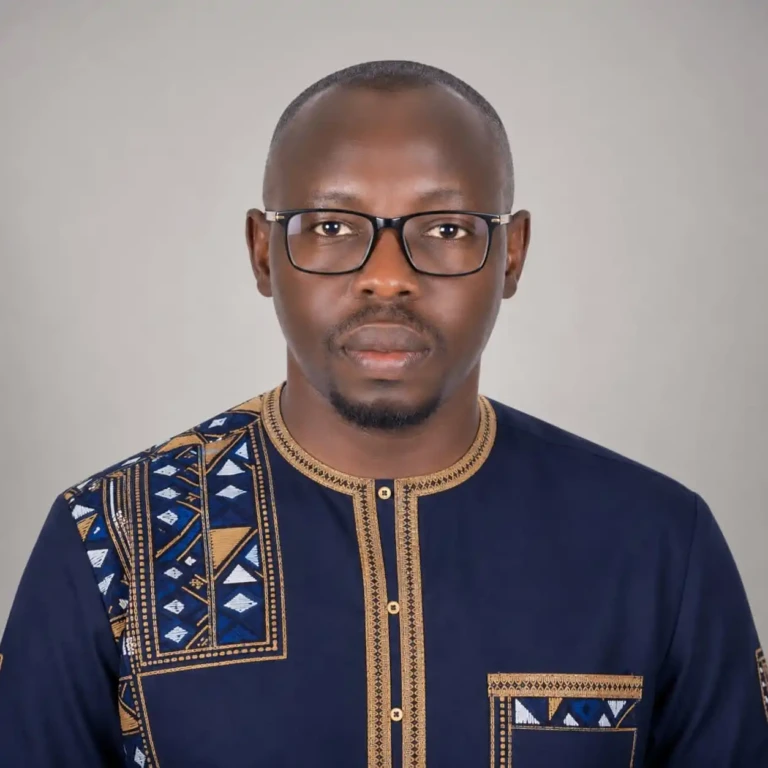
Victor Batali Silas is a lawyer and environmental rights defender who has litigated various human rights abuse cases and championed environmental conservation in Yei River County.
South Sudan’s political instability has caused a significant environmental crisis, including the loss of human lives, deforestation, flooding, drought, oil pollution, school interruptions and water scarcity. These crises are man made, aggravated by ongoing conflict and a weak system of governance, leading to unsustainable resource extraction, land degradation and water contamination.
According to the South Sudan Forestry Policy (2015), over 3% of the country’s forests and woodlands are destroyed annually. We have waged war against nature by indiscriminately cutting down trees for charcoal, timber and firewood, without an equal, organised, and sustained effort to replenish and protect our forests. This is a destructive and dangerous path for both the present and future generations. The problem stems from a mindset consumed by the pursuit of unsustainable economic gain. Until our communities begin to value trees not only for their commercial use but also for their essential role in our survival, progress in the fight against climate change will remain minimal.
We have failed to confront the environmental crisis that continues to devastate and damage our lives. The Earth, our life giver and sustainer is crying out. Its voice, though not expressed in human words, resounds through the cracking of ice sheets, the rage of hurricanes, the cracked soil of prolonged droughts,and the silent extinction of countless species. For too long, we have ignored this cry, blinded by the illusion of progress and deafened by the noise of short term desires. We have treated our planet not as a sacred trust but as an endless larder, a boundless playground and a convenient dumping ground. Today, I urge you to awaken to the urgency of our situation. Let us listen to the Earth’s cry and commit ourselves to a new era of environmental stewardship.
The evidence of South Sudan’s environmental crisis is not some distant prophecy. It is unfolding before our very eyes. From the depths of the White Nile to the peaks of our highest mountains, the fingerprints of human impact are unmistakable. Climate change, driven by our relentless burning of fossil fuels, remains the most widespread and potentially catastrophic threat we face. The Arctic ice, a sentinel of global temperatures, is shrinking at an alarming rate, contributing to rising sea levels that endanger coastal communities and island nations. Glaciers, the lifeblood of rivers and ecosystems are melting rapidly, threatening water supplies for millions. Extreme weather events, once rare, have become frequent. Wildfires scorch continents, droughts dry up fertile lands and storms grow more intense and destructive.
But the crisis goes beyond climate change. Our water bodies, the cradles of life, are choked with plastic waste, a glaring sign of our throwaway culture. Microplastics, invisible to the eye, penetrate the food chain, poisoning marine life and eventually affecting our own health. Ocean acidification, caused by the absorption of excess carbon dioxide, is decimating coral reefs, vibrant ecosystems that support a quarter of all marine species. Our forests, the lungs of the planet are being felled at a disturbing rate due to refugee settlement expansion, illegal logging and resource competition. This destruction not only releases enormous amounts of carbon dioxide into the atmosphere, worsening climate change, but also destroys vital habitats, driving species toward extinction.
The loss of biodiversity is another silent tragedy, especially in South Sudan. Species are disappearing at an unprecedented rate due to habitat loss, pollution and climate change. Each species, no matter how small or seemingly insignificant, plays a vital role in the intricate web of life. Biodiversity loss weakens ecosystems, making them more vulnerable to disease, pests and disruption. It also robs us of potential sources of medicine, food and other natural benefits.
The roots of this environmental crisis are complex and intertwined. They lie in our unsustainable consumption patterns, reliance on fossil fuels, disregard for the interconnectedness of life and our narrow focus on short term economic growth at the expense of environmental sustainability. But acknowledging the complexity of the problem does not absolve us of the responsibility to act.
We must change our mindset from one of dominion over nature to one of partnership with it. We must recognise that we are not separate from the environment but an integral part of it. Our well-being is inseparable from the health of the Earth. When we harm the planet, we ultimately harm ourselves.
The solutions to this crisis are within reach. We possess the knowledge, technology and resources to create a sustainable future. We must transition to a clean energy economy powered by renewable sources such as solar, wind, and geothermal energy. We must invest in sustainable agriculture, community managed forests and efficient transport systems. We must reduce our resource consumption and adopt a circular economy in which waste is minimised and materials are reused.
However, technology alone will not save us. We must also address the social and economic roots of environmental degradation. We must promote sustainable development that meets present needs without compromising the ability of future generations to meet theirs. We must empower communities to manage natural resources responsibly. Environmental education and awareness must be enhanced so that everyone understands their role in protecting the planet.
This is not solely the responsibility of governments or organisations. Every individual has a role to play. We can make informed choices in our daily lives to reduce our environmental footprint. We can walk, cycle, or use public transport. We can reduce meat and dairy consumption, which have high environmental costs. We can conserve water and electricity, recycle and compost. We can support businesses that practise sustainability.
Above all, we must raise our voices and demand bold action from our leaders. We must hold them accountable for safeguarding the environment. We must engage in public discourse, advocate for sound environmental policies, support environmental groups and encourage community based action.
The Earth is crying out. Will we listen? Will we act? The future of our planet and humanity depends on our response. Let us rise to the occasion. Let us be the generation that halts environmental destruction and ushers in an era of ecological stewardship. Let us leave a legacy of a healthy planet for our children and grandchildren. The time for action is now. We must not fail.
The call to action is growing louder. A bell is tolling for climate emergency response, environmental legal reform and the renewal of collective commitment to shaping a national climate strategy. We must finalise the climate change policy, strengthen our mitigation framework and increase national efforts to reduce community vulnerability to climate impacts. These measures must be adopted as guiding principles for natural resource management and environmental protection in South Sudan.
Finally, I urge South Sudan’s leaders to create the necessary conditions for people to heal from the trauma of war, to de-escalate tensions threatening peace, security and stability, and to foster unity and harmony in pursuit of environmental sustainability. We must rise above our political and personal interests, which have cost hundreds of thousands of lives and subjected millions to suffering, starvation and senseless violence. These actions have weakened our ecosystem. Making peace within ourselves to provide a safe space for biodiversity restoration is essential.
Victor Batali Silas is a lawyer and environmental rights defender who has litigated various human rights abuse cases and championed environmental conservation in Yei River County, South Sudan. He is the founder of the Forestry Conversers Association (FCA-SS), advocating for environmental rights, and co-founder of the Centre for Legal Aid and Justice (CLAJ), which provides legal aid to vulnerable populations.
Currently, Victor resides in Uganda’s refugee settlements, having fled prolonged conflict in South Sudan. As Executive Director of the Justice for Refugees Network Organisation (J-RENO), a refugee led group, he works to ensure equal access to justice, offering pro bono legal assistance, counselling, psychosocial support, alternative dispute resolution, advocacy for human rights and good governance, environmental justice, peace building, and economic empowerment for refugees, asylum seekers, at risk human rights defenders and host communities.
Disclaimer: The views and opinions expressed in this article are those of the author, and do not necessarily reflect the official policy or position of Access Radio 88.8 FM or its editorial team. The platform provides space for public dialogue and diverse voices, but does not endorse individual viewpoints.
Discover more from Access Radio Yei News
Subscribe to get the latest posts sent to your email.