Health CSOs Demand Answers on 101 Facilities After Donor Exit / PHOTO: National Health Portal
(JUBA) – Civil society groups have asked the Ministry of Health to explain how 101 health facilities will keep running after the Health Sector Transformation Project pulled out in January this year.
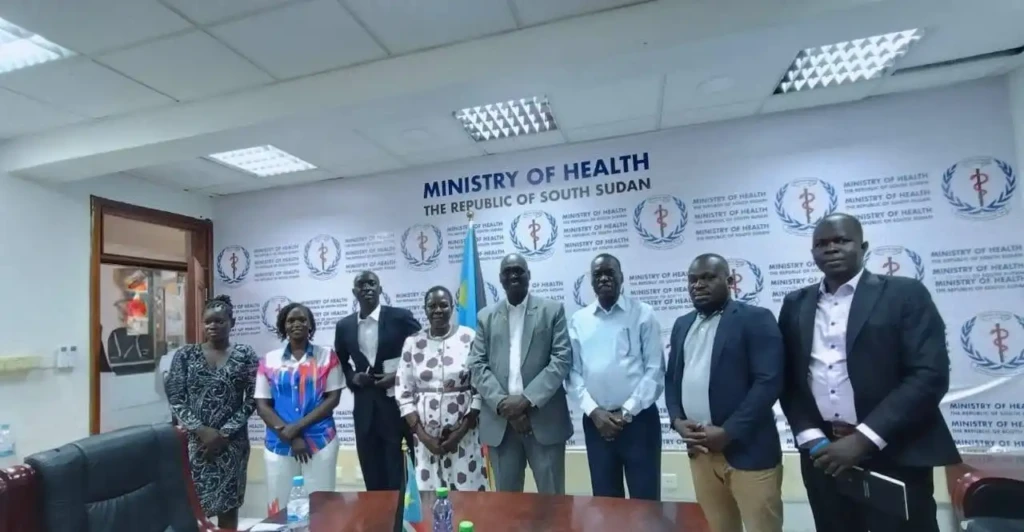
The Network of AIDS and Health Service Organizations of South Sudan, known as NASOSS, led a delegation to meet Undersecretary Dr Oromo Francis Seriano on Wednesday. The talks centred on funding shortages, the future of donor backed programmes, and reports that citizens are being charged for services that should be free.
The delegation included representatives from the Network of People Living with HIV, Malaria Youth Champions, and groups led by key and vulnerable populations. They presented eight priority issues to the Undersecretary.
First, the groups sought updates on the memorandum of understanding signed between the United States and South Sudan.
Second, they asked for an assessment of the 101 health facilities left exposed after HSTP support ended in January 2026.
Third, they called for plans to protect healthcare resources and infrastructure built with donor money.
Fourth, the civil society organisations discussed the Global Fund Grant Cycle 8 and proposed ways to find efficiencies and improve community engagement in HIV, TB and malaria services.
Fifth, they put forward ideas for domestic health financing, including national insurance and earmarked taxes. Sixth, they requested a progress report on commitments made at the South Sudan Health Summit in 2025.
Seventh, the delegation asked the Undersecretary to arrange a follow up meeting with the Minister of Health.
Eighth, they raised concern over out of pocket payments demanded from patients at public health facilities for services that are officially free, and urged the ministry to remove these financial barriers.
Dr Oromo Francis Seriano told the delegation that the Ministry of Health would continue to engage with NASOSS and its partners. He described the meeting as part of efforts to reinforce the partnership between the government and health civil society networks.
NASOSS said after the meeting that the network remains committed to ensuring communities have a central voice in shaping health policies, promoting institutional accountability, and advancing sustainable health systems.
No new funding commitments were announced at the meeting. Health funding in South Sudan remains under severe strain. The withdrawal of HSTP support has left more than one hundred facilities without guaranteed operational budgets.
The country’s health sector relies heavily on international donors, and civil society groups have warned that without fresh domestic financing, service delivery will continue to deteriorate.
The meeting took place against the backdrop of broader concerns over transparency and sustainability in South Sudan’s health sector.
Last year’s health summit produced a series of resolutions, but civil society groups say progress has been slow and citizens are still being asked to pay for services that should be free at public facilities.
The delegation consisted of seven key representatives from NASOSS leadership, the Network of People Living with HIV, Malaria Youth Champions, and organisations led by key and vulnerable populations.
Discover more from Access Radio Yei News
Subscribe to get the latest posts sent to your email.