
























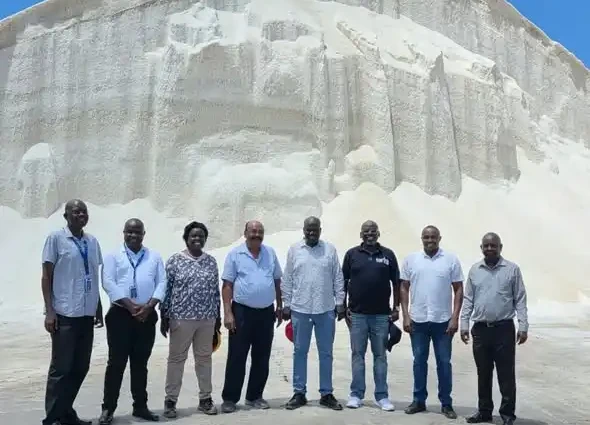
(KILIFI, KENYA) – Four salt producers have won a court case against a KES 200 ($1.50 / £1.20) per tonne levy imposed by the Kilifi County government.
The High Court declared the charge unconstitutional and ordered a stop to collections.
The judge ruled that the charge under the Kilifi County Finance Act, 2018, lacked meaningful public participation and was not authorised by national legislation.
The court also found the county had not linked the levy to a service.
“Having failed to demonstrate the services rendered in relation to salt extraction, the Court finds that the cess imposed is not a charge for service as contemplated by Article 209(4) and cannot stand,” the court said.
Krystaline Salt Company Ltd, Ken Salt Company Ltd, Malindi Salt Works and Kurawa Industries filed the case against the County Government of Kilifi, the County Assembly and the Attorney-General.
The firms challenged a levy introduced at KES 60 ($0.50 / £0.40) per tonne in 2017 and increased to KES 200 ($1.50 / £1.20) under the 2018 law.
The companies said the charge raised production costs.
They said a meeting with the county finance team in October 2018 did not lead to a cut.
A Kenya Association of Manufacturers memorandum in September 2019 sought a reduction to KES 100 ($0.80 / £0.60) per tonne.
They argued that counties could not impose the cess without authority under national law and that the county provided no service to justify it.
They also said that businesses and residents were not adequately consulted over the tax.
The county maintained that the Finance Act was subjected to public participation across all seven sub-counties.
It said notices had been issued, copies of the draft bill were available online and in hard copy, and views from meetings had been considered.
The County Assembly argued that the Constitution empowered counties to raise revenue for public services.
But the court found shortcomings in the county’s own participation record.
The notice inviting public views was undated, and no deadline was given for written memoranda.
The county’s report recorded complaints that the draft bill had not reached participants in good time.
The judge also noted requests for Kiswahili versions, ward-level meetings to reduce travel costs, and sign-language interpretation.
She found the process did not give people a fair opportunity to understand the proposals and contribute.
“The imposition of cess on salt in the Finance Act, 2018 is unconstitutional for violation of Article 10(2) of the Constitution for failure to facilitate meaningful public participation,” the judge ruled.
The court found that the levy breached Article 209(3), which limits county taxes to property rates, entertainment taxes and other taxes authorized by an Act of Parliament.
The county had not identified any national law authorizing the salt cess.
Under Article 209(4), counties may charge for services they provide.
The court found Kilifi had not identified a service or amenity offered in exchange for the charge, saying the county’s reference to essential services was vague.
The court also found that the cess could prejudice economic activities across county boundaries and interfere with the movement of goods.
It further ruled that managing seawater and the salt extracted from it fell under the national government’s functions.
These responsibilities had not been assigned to county governments under the Constitution.
The court said Kilifi County therefore lacked the constitutional authority to impose the levy on salt extraction.
The court declared the cess provision null and void.
It prohibited the county government and assembly from collecting the fee under that provision.
It did not order refunds or compensation.
The judge said compensation had been raised in submissions but was not sought in the petition.
The companies had also challenged Kilifi’s 2019 draft valuation roll.
They said it increased land rates to more than 1,000% of unimproved site value and contained inflated or inaccurate entries.
The court declined to reconsider that issue because another High Court judgment had quashed the roll in May 2021.
In its defence, the county argued that losing the levy would deprive it of revenue needed to provide essential services to residents.
The County Assembly maintained that the cess was a legitimate source of income.
It urged the court not to issue orders that would undermine the county’s ability to fund public services.
The judge acknowledged the importance of county revenue in supporting a devolved government.
But she said the power to raise money must be exercised within the limits set by the Constitution.
The judge noted that counties must generate sufficient revenue to deliver services.
However, they cannot impose charges without a proper legal basis or where the Constitution does not permit them.
“The power to impose taxes must, however, be exercised in a manner that meets constitutional muster and where it does not, the Court must intervene,” the court ruled.
She also found that the Attorney-General was improperly joined in the dispute because no violation had been alleged against that office.
County institutions have their own legal representation.
Discover more from Access Radio®
Subscribe to get the latest posts sent to your email.