









(JUBA) – Laboratory services are being strengthened at 40 health facilities across South Sudan to bring testing closer to communities.
The work is being carried out through the Health Sector Transformation Project, run by the Ministry of Health and the World Health Organization.
It covers 20 county hospitals and 20 primary health care centres.
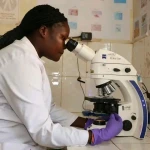
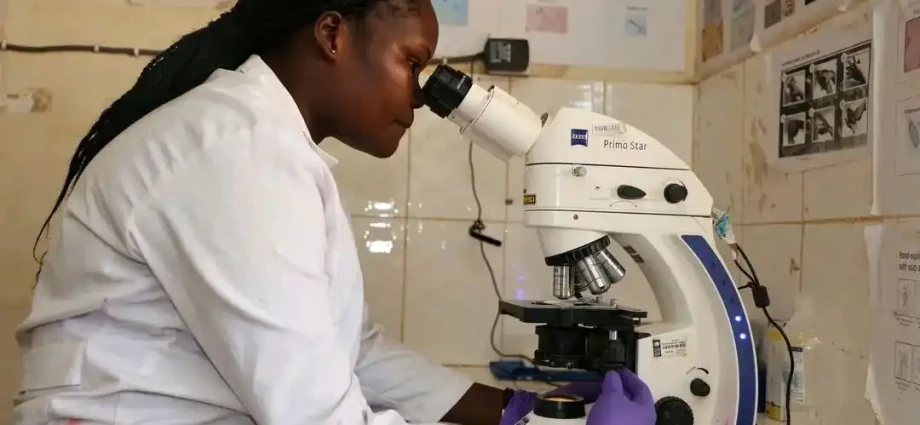
The support includes blood count and clinical chemistry analysers, microscopes and supplies.
It also covers installation and training for the people who use and maintain the equipment.
By September 2026, equipment had been installed and commissioned, and staff trained, at 36 of the 40 facilities.
Work at the remaining facilities in Jonglei State and Pibor Administrative Area was continuing.
Across the project, 125 laboratory technicians have been trained to operate the equipment.
In Panyagor, Jonglei State, Abraham Chol has seen what it means when patients can get test results close to home.
“I have seen patients who came worried about their illness get their results the same day and start treatment without having to travel to another hospital,” he said.
The change is being felt in other parts of South Sudan.
At Mariallow Hospital in Warrap State, new laboratory equipment is helping clinicians make decisions sooner.
Dr Beny Mayor recalled that patients with suspected anaemia, infections and other conditions once had to travel to referral facilities for basic tests. This added costs and delayed care.
“Now, we can perform blood counts, chemistry and microscopy tests here,” he said.
“Patients receive results sooner, treatment can start earlier, and fewer patients need to leave the community for essential diagnostic services.”
For many facilities, providing those tests remains difficult.
According to the South Sudan Health Sector Performance Report for 2024/25, shortages of laboratory supplies persist and enforcement of quality standards remains weak.
The national laboratory accreditation system is still being developed, with only one laboratory accredited.
Trained personnel are also unevenly distributed across the country.
Jackson Kasim, a health worker in Yambio, has seen the effect on patients.
“Before, getting a simple laboratory test was a real struggle. I saw patients travel for hours, spend money they did not have, and sometimes wait days for results. Some could not afford to make the journey at all,” he said.
The need for reliable testing extends beyond individual consultations.
During South Sudan’s prolonged cholera outbreak, laboratories were needed to confirm cases and support the response.
In 2025, the country also faced outbreaks of anthrax, measles, hepatitis E, mpox and circulating vaccine-derived poliovirus type 2.
Responding to several health threats at once places further demands on laboratories to support surveillance and confirm cases.
At Yirol County Hospital, laboratory technician Daniel Malual described how practical training has changed his work.
“I can now operate the equipment, identify basic faults and produce reliable results with greater confidence,” he said.
“Seeing patients receive their results here and start treatment sooner makes me feel that my work is making a real difference.”
Keeping equipment working is as important as installing it.
The World Health Organization supported the establishment of a Biomedical Engineering Unit at Juba Teaching Hospital. It also funded training for 15 biomedical engineers in maintenance and troubleshooting.
It has worked with the Ministry of Health on equipment standards, deployment, installation and training.
Dr Gregory Wani, Director General of DDLs at the Ministry of Health, said the support goes beyond equipment.
“Through technical guidance, training and coordination, we now have better equipped and more confident staff and can provide more reliable tests closer to our communities,” he said.
Dr Ongom Moses, WHO Representative Officer-in-Charge in South Sudan, said the organisation will continue working with the Ministry of Health to sustain these gains across South Sudan.
Sustaining these services will require regular maintenance, a steady supply of reagents and consumables, and continued support for laboratory staff.
From a patient waiting for a test result in Panyagor to a health team investigating an outbreak, reliable laboratories matter across South Sudan.
Working with the Ministry of Health to bring testing closer to communities and strengthen emergency readiness is part of WHO South Sudan’s commitment to Health in All Contexts.
The World Health Organization reported in October 2026 that equipment had been installed and commissioned at 36 of the 40 facilities.
Discover more from Access Radio®
Subscribe to get the latest posts sent to your email.