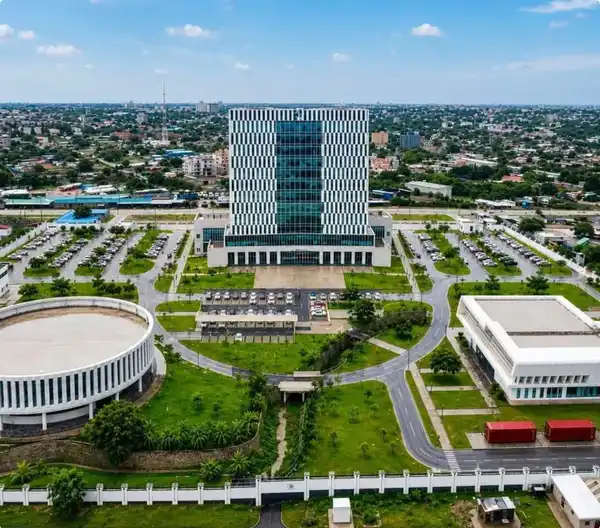
Central Bank of South Sudan
(JUBA) – The Bank of South Sudan has issued a new directive tightening the rules on the movement of cash both within the country and across its borders.
The announcement, made by the Directorate of Banking Supervision and Financial Stability on 16 September 2025, requires all large transfers of money in South Sudanese Pounds (SSP) or foreign currency to be carried out only through licensed financial institutions and their authorised agents.
The Bank of South Sudan stated that businesses and traders may move cash, but only for the purpose of depositing it into commercial banks. All transactions must be documented, declared and reported directly to the central bank.
For cross border transfers, the directive is stricter. Individuals or companies cannot take large amounts of money in or out of South Sudan unless they first obtain written approval from the central bank. Any undeclared or unauthorised movement of currency will be treated as a violation of the law. Penalties include confiscation of the money involved and possible legal action.
The central bank also instructed financial institutions, companies, and their agents to submit reports of all such cash transfers to the Directorate of Currency and Banking Operations within 24 hours.
The directive comes as part of broader efforts to strengthen South Sudan’s financial system and reduce risks linked to money laundering, illicit financing, and currency hoarding. The Bank of South Sudan said it will work closely with law enforcement, customs and border officials to enforce the new rules.
BoSS Officials explained in the circular that the regulations are not designed to stop businesses from operating, but to ensure financial transparency and strengthen the use of banks as the official channel for moving money.
Dr Majok Kuol Mading, Director General of Banking Supervision and Financial Stability, signed the directive and urged all financial institutions and corporate entities to circulate the instructions within their organisations and ensure full compliance.
The directive is expected to impact traders and companies that often rely on moving large sums of money in cash due to limited electronic banking infrastructure in the country. However, the central bank argues that this step is necessary to build confidence in South Sudan’s financial system and encourage the use of modern banking services.
Central Bank Directive on Cash Movement
| Category | Rules | Who is Affected | Reporting | Penalties |
|---|---|---|---|---|
| Domestic Movement | Large sums of SSP or foreign currency can only move through licensed banks or their agents. | Businesses, traders, financial institutions | Must be declared and reported to BoSS. | Confiscation and legal action if rules ignored. |
| Purpose Allowed | Only for depositing into commercial bank accounts. | Businesses and traders | Documentation required. | Same as above. |
| Cross-Border Movement | No one can take cash across borders without central bank approval. | Individuals and companies | Written authorisation required before transfer. | Confiscation and legal action. |
| Reporting Obligation | Reports of transactions must be submitted within 24 hours. | Financial institutions and corporate entities | Sent to Directorate of Currency and Banking Ops. | Non-compliance punishable by law. |
| Enforcement | Rules enforced by central bank, law enforcement, customs, and border authorities. | All stakeholders | Nationwide circulation of directive required. |
Discover more from Access Radio Yei News
Subscribe to get the latest posts sent to your email.