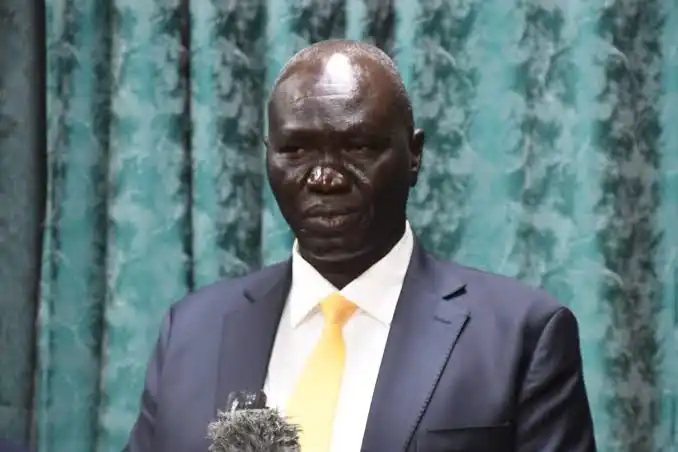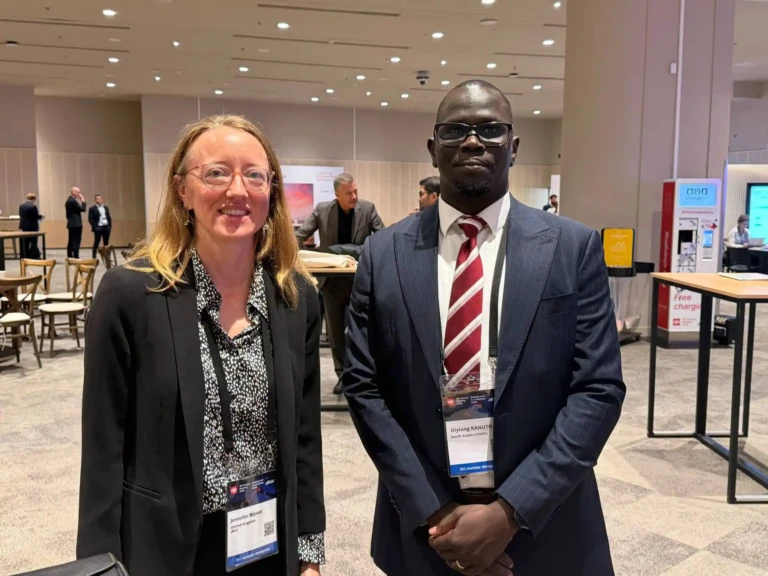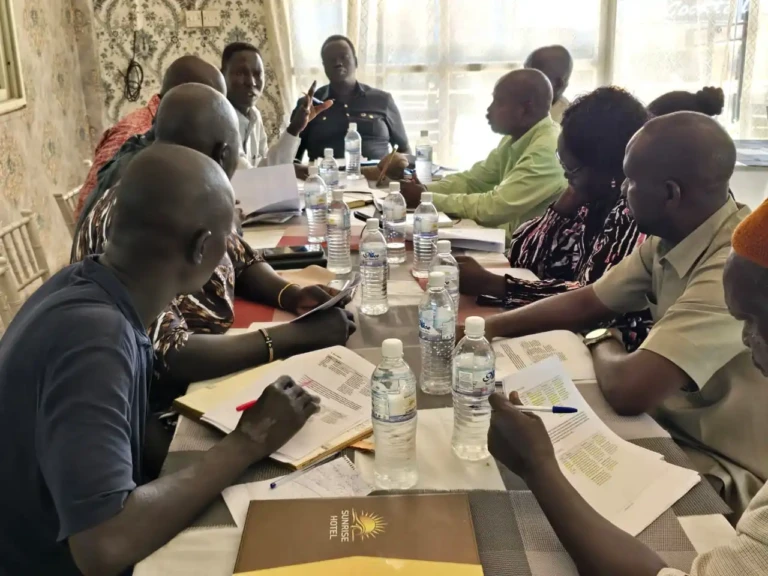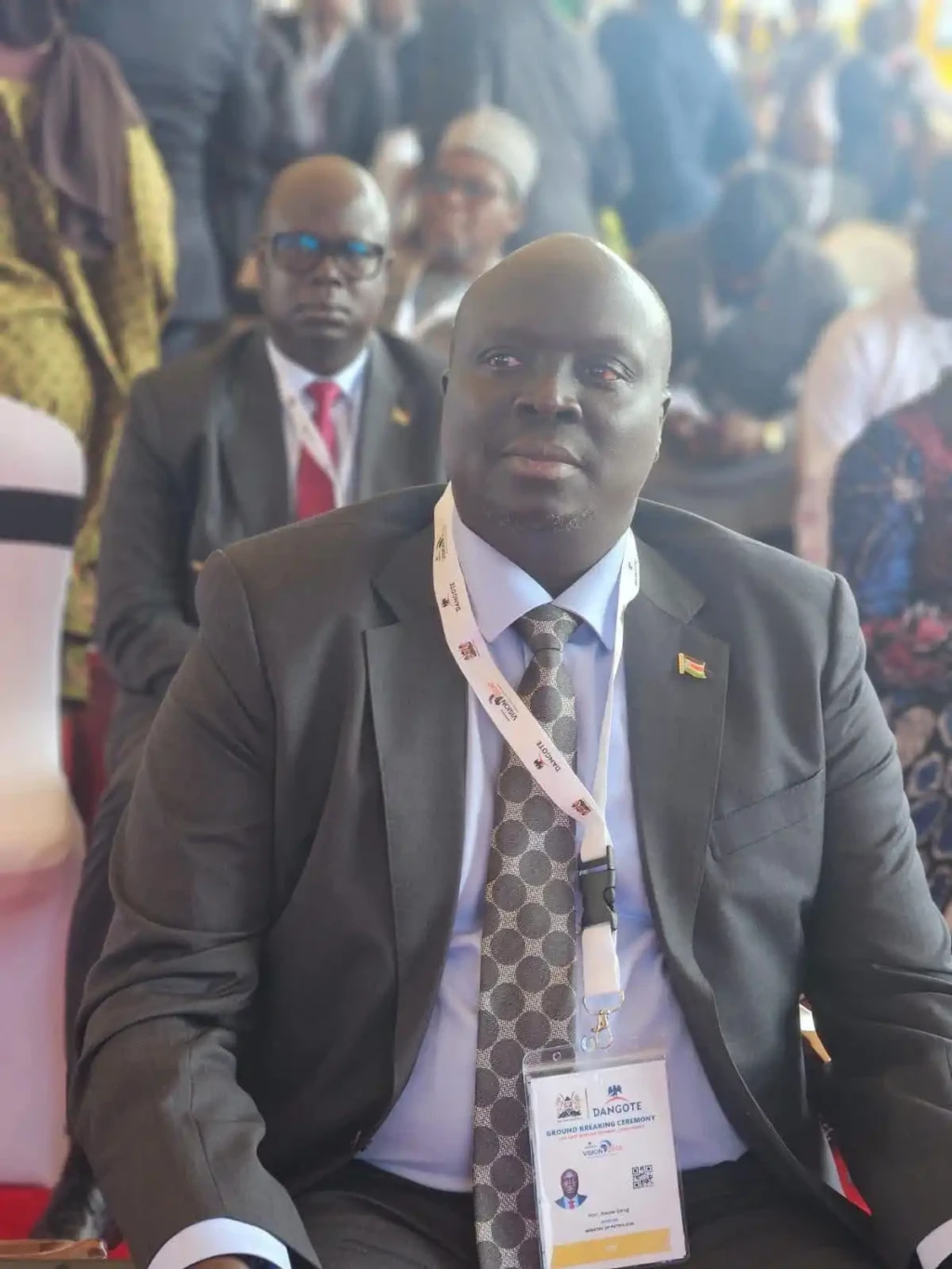
A high-level delegation from South Sudan joined Kenya and regional partners in Lamu for the groundbreaking of the Dangote East Africa Refinery. Led by the Caretaker Minister of Petroleum, Eng. Awow Daniel, the delegation included Amb. Simon Juach Deng, alongside other officials.
(JUBA, SOUTH SUDAN) – South Sudan’s President Salva Kiir Mayardit has appointed Awow Daniel Chuang as Caretaker National Minister of Petroleum ahead of the country’s December elections, marking his return to lead the country’s hydrocarbons sector.
The appointment comes as the government seeks new investment in exploration, production and mature asset redevelopment.
Chuang brings extensive experience across South Sudan’s petroleum sector, having previously served as Minister of Petroleum as well as Director General, Undersecretary and Technical Advisor within the Ministry.
His appointment comes as the country works to strengthen petroleum sector management and attract international capital and technical expertise across its upstream industry.
Stepping into the role, Chuang has prioritised strengthening institutional cooperation, internal coordination and effective regulation within the Ministry of Petroleum.
He has also emphasised addressing administrative and organisational challenges, improving accountability and strengthening coordination with the National Legislative Assembly as part of efforts to enhance oversight of South Sudan’s oil and gas sector.
The appointment comes ahead of the seventh edition of South Sudan Oil and Power (SSOP), taking place from 24th to 25th November 2026 in Juba.
Held in official partnership with the Ministry of Petroleum, SSOP 2026 will take place under the theme Resource Renaissance – Energy Fuelled Growth for a New Generation, bringing together government, industry, investors and technology providers to advance cooperation across the country’s energy sector.
SSOP 2026 will feature high level panel discussions, networking opportunities, project showcases and technical workshops focused on emerging opportunities across South Sudan’s oil and gas value chain.
Upstream investment remains a key priority. South Sudan currently has 14 blocks open to investors, namely A1, A2, A3, A4, A5, A6, B1, B4, C1, C2, D1, D2, E1 and E2, creating opportunities for international operators and investors to enter underexplored acreage.
Beyond exploration, the country is seeking investment in mature asset redevelopment and brownfield optimisation as it works to increase recovery and production from existing fields. This creates opportunities for oilfield service companies and technology providers across drilling, enhanced oil recovery, field engineering and supporting infrastructure.
Against this backdrop, SSOP 2026 will provide a platform for the Ministry of Petroleum to engage international investors, operators, service companies and technology providers on the next phase of South Sudan’s petroleum sector development.
According to Zawya, SSOP has established itself as the country’s official energy investment event and the premier gathering for stakeholders shaping the future of energy in South Sudan.
The 2023 edition attracted more than 600 delegates from 24 countries, including six government ministers, and resulted in five strategic agreements covering upstream exploration, drilling capacity expansion, mining cooperation and regional energy collaboration.
South Sudan’s oil sector is entering a new phase of recovery and investment, with production growth, the return of operational activity and infrastructure rehabilitation driving market momentum.
According to Zawya, Greater Pioneer Operating Company recently recorded its highest production levels in two decades, surpassing 60,000 barrels per day, while Sudd Petroleum Operating Company is pursuing production growth in Block 5A.
Dar Petroleum Operating Company continues to expand activity across its producing assets. In March 2026, the company announced a new discovery at the Al Nahla field, improving output from Blocks 3 and 7.
Exploration represents another growth frontier. According to Zawya, South Sudan holds estimated reserves of up to 3.5 billion barrels, with approximately 90% of resources still undeveloped. The government hopes to raise these figures by attracting investment across the oil value chain and facilitating greater exports.
Oil remains the backbone of South Sudan’s economy, and the government is prioritising investments that sustain production growth, strengthen export resilience, develop local content and unlock greater value across the energy value chain.
SSOP 2026 will provide investors with direct access to South Sudan’s key energy stakeholders, including the Ministry of Petroleum, national oil company Nilepet and the country’s leading operators, while facilitating engagement with African energy institutions and national oil companies from across the continent.
According to Oilfield Africa Review, South Sudan is repositioning its economy through several oil and gas reforms to unlock its 3.5 billion barrels of proven oil reserves. These reforms will be driven by an enabling environment and regulatory framework to attract global energy investors into the country’s energy sector.
The African Energy Chamber is engaging with South Sudanese government officials and industry stakeholders to realise economic leverage by constructively working with global energy investment partners.
Current production stands at between 70,000 and 100,000 barrels per day, with estimated output of approximately 8.5 million to 12.2 million barrels between August and November 2026.
The government hopes to raise these figures by attracting investment across the oil value chain, facilitating more exports while addressing key national challenges such as fuel security and power generation.
Major companies operating in South Sudan include national oil company Nilepet, Dar Petroleum Operating Company, Greater Nile Petroleum Operating Company, which is operated by China National Petroleum Corporation, and Sudd Petroleum Operating Company.
The Strategic Fuel Fund of South Africa holds a 90% interest in Block B2 and plans to advance exploration and evaluate refining development opportunities.
According to Oilfield Africa Review, African Energy Chamber Executive Chairman NJ Ayuk said South Sudan has the resource potential to become one of Africa’s most attractive frontier investment destinations, but attracting capital requires sustained engagement with the global investment community.
Ayuk said the chamber will promote South Sudan’s opportunities on the international stage, connect investors with government and industry leaders, and support reforms that create a stable, competitive and investable energy sector.
Discover more from Access Radio Yei News
Subscribe to get the latest posts sent to your email.