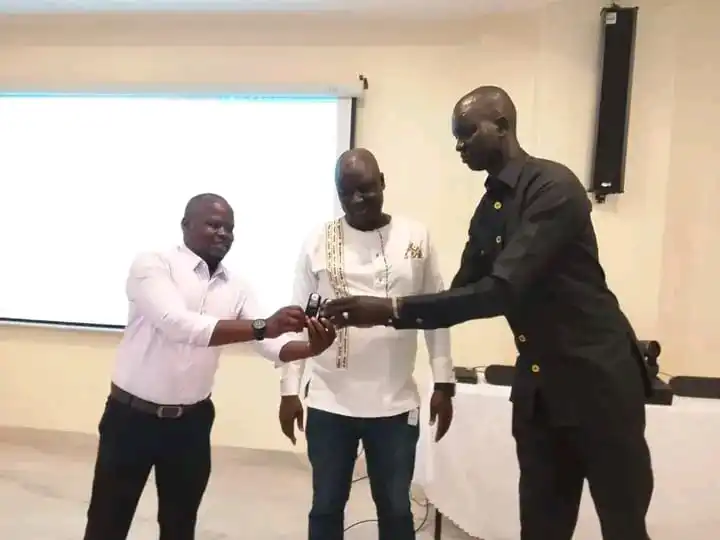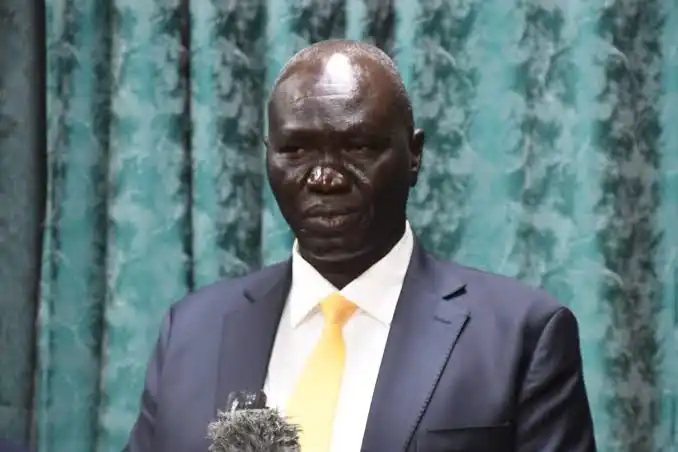
Minister of Energy and Dams Agok Makur Kur Courteesy photo
JUBA — South Sudan has signed regulations governing electricity generation as the government seeks to attract private investment into the power sector where access remains among the lowest in East Africa.
Minister of Energy and Dams, Agok Makur Kur said the electricity generation regulation is part of reforms intended to organise the sector and provide investors with a regulatory framework for power-generation projects.
“This is an important regulation,” Makur said during the signing ceremony on Thursday in Juba. He said the government was open to investors interested in solar, diesel and hydropower generation.
The regulation has four chapters covering permitting, electricity generation, regulatory provisions and miscellaneous matters. Makur said violations of the regulations would be subject to legal proceedings.
The minister said separate regulations covering electricity transmission and distribution were still with the Ministry of Justice for review.
He said the government was also working to expand electricity supply beyond Juba, where electricity generation is currently concentrated.
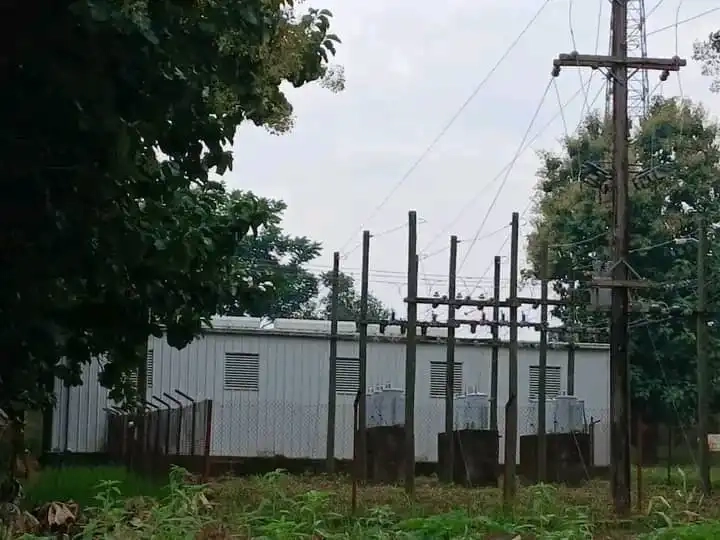
Makur said electricity supply remains concentrated in Juba, while towns including Rumbek, Yambio and Bor depend largely on generators whose operations are affected by fuel availability.
South Sudan’s electricity access remains substantially below levels recorded in several East African countries.
World Bank data show that about 5.4 per cent of South Sudan’s population had access to electricity in 2024. Uganda recorded about 51.5 per cent, Tanzania 48.3 per cent, Rwanda 63.9 per cent and Kenya 76.2 per cent.
Electricity consumption per person is also lower in South Sudan. World Bank data put South Sudan’s consumption at about 48 kilowatt-hours per person in 2023, compared with 95 kWh in Uganda, 135 kWh in Tanzania, 77 kWh in Rwanda and about 212 kWh in Kenya.
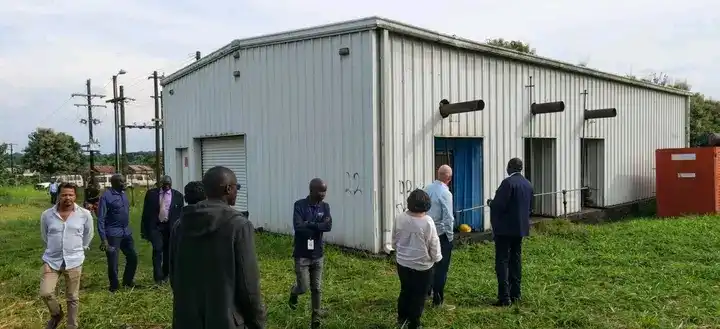
The Ministry of Energy and Dams said the country’s existing power plant has a capacity of about 70megawatts.
Makur said hydropower remained a priority for the ministry, while investors would be allowed to develop other forms of generation.
The ministry is also preparing to expand solar power generation. South Sudan is pursuing electricity interconnection with Uganda as part of efforts to increase access to power.
The South Sudan-Uganda Power Interconnection Project includes a 299-kilometre transmission line.
The project has an estimated cost of $260 million, with the African Development Fund approving $153.66 million in financing. The project is intended to connect South Sudan to the Eastern Africa Power Pool.
Makur said the two countries were working towards formally signing the interconnection arrangements by the end of 2026 or early 2027.
The minister also said the electricity tariff had been reduced from 0.390 to 0.273. He said increased competition among electricity providers could contribute to further tariff reductions.
The new generation regulation comes as the government seeks to increase private-sector participation in electricity generation.
The investment areas identified by the ministry include solar, diesel and hydropower generation. Other power-sector projects requiring investment include transmission and distribution infrastructure, although the regulations governing those areas had not yet been completed at the time of the signing.
Electricity infrastructure is also linked to other sectors of the economy, including agriculture and agro-processing, where reliable power is required for irrigation, milling, refrigeration, storage and processing.
The World Bank has supported energy projects in South Sudan that include grid expansion around Juba, a mini-grid pilot and standalone solar systems for public institutions.
The government says the generation regulation will provide the legal framework for companies seeking to participate in electricity generation.
Discover more from Access Radio Yei News
Subscribe to get the latest posts sent to your email.