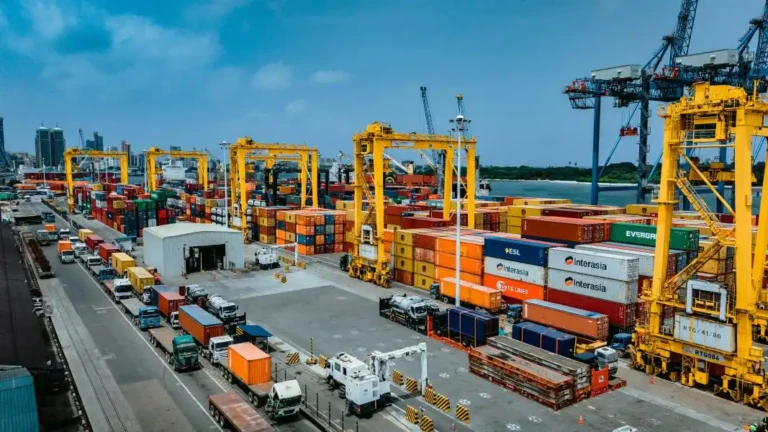
Courtesy photo
ARUSHA, Tanzania— China remained the East African Community’s largest individual trading partner in the second quarter of 2026, as total trade across the eight-member bloc rose 37 percent to $52.3 billion, according to the latest EAC Quarterly Statistics Bulletin.
EAC data for April-June show that exports to China nearly doubled from $5.7 billion in the second quarter of 2025 to $10.7 billion, driven largely by mineral commodities and other raw materials. Imports from China also increased from $4.7 billion to $7.1 billion over the same period.
The figures put China at the centre of the bloc’s expanding external trade, even as African markets and trade among EAC Partner States continued to grow.
Total EAC trade increased from $38.2 billion in the second quarter of 2025 to $52.3 billion in the same period this year. Exports rose 41.3 percent to $26.3 billion, while imports grew 32.9 percent to $26 billion, giving the region a trade surplus of $300 million, compared with a deficit of $945.3 million a year earlier.
The EAC bulletin shows that China was both the bloc’s largest export destination and source of imports during the quarter.
The United Arab Emirates and South Africa were also major destinations for EAC exports, while India, the UAE, Saudi Arabia, the United States and Japan ranked among the leading sources of imports.
African trade expands
Meanwhile, trade with African markets also recorded strong growth during the quarter.
EAC exports to African countries increased by 44.3 percent to $7.2 billion, accounting for 27.5 percent of the bloc’s total exports.
Exports to the Southern African Development Community (SADC) rose 50.8 percent to $5.1 billion, while exports to the Common Market for Eastern and Southern Africa (COMESA) increased 48.3 percent to $3.1 billion.
Trade among EAC Partner States also expanded, with intra-EAC exports rising 33.2 percent to $3.2 billion. However, their share of total EAC exports declined from 12.8 percent in the second quarter of 2025 to 12.1 percent in the same quarter of 2026 as exports to markets outside the bloc grew faster.
Mineral commodities continued to account for a large share of the region’s export earnings. Copper and precious metals represented 61.9 percent of total EAC exports, up from 58.7 percent a year earlier.
Coffee, tea and spices remained among the leading agricultural exports, while petroleum products were the largest import category, followed by machinery, transport equipment and industrial supplies.
Inflation eases
The bulletin also recorded a decline in regional inflation during the quarter.
Annual headline inflation, measured through the EAC Harmonised Consumer Price Index, fell from 11.1 percent in April to 10.7 percent in May and 7.8 percent in June. The June rate was down from 22.7 percent recorded in June 2025.
However, underlying price pressures remained. Core inflation rose from 6.2 percent in April to 7 percent in June.
Food inflation increased to 10.1 percent in June, from 9.5 percent in May, although it remained well below the 37.5 percent recorded a year earlier.
Energy, fuel and utilities inflation declined to 11.1 percent in June, from 14.2 percent in May, but remained above the 6.3 percent recorded in June 2025.
Among Partner States covered by the EAC-HCPI, June annual headline inflation stood at 13 percent in South Sudan and Rwanda, 8 percent in Burundi, 6.5 percent in Kenya, 4 percent in Tanzania and 3.7 percent in Uganda.
Credit growth
The bulletin also reported continued expansion in credit to several productive sectors.
Lending to wholesale and retail trade increased by 29.1 percent year-on-year, while credit to agriculture rose 25.6 percent and construction 22.9 percent. Real estate lending grew 6.2 percent, while manufacturing increased by 0.9 percent.
The household sector held the largest volume of outstanding loans at $17.6 billion, followed by wholesale and retail trade at $11.6 billion.
Broad money supply rose 15.3 percent year-on-year to $107.7 billion, while credit to the private sector increased 15 percent to $75.9 billion. Net foreign assets rose 19 percent to $25.4 billion.
Net credit to central governments increased 7.5 percent to $37.5 billion, while credit to public non-financial corporations declined 3.1 percent to $650 million.
The bulletin is compiled by the EAC Secretariat in collaboration with national statistics offices and central banks of Partner States and provides data on trade, inflation, money supply and other macroeconomic indicators.
Discover more from Access Radio Yei News
Subscribe to get the latest posts sent to your email.