




















(JUBA) – South Sudan has warned that fuel cargoes imported outside its official government to government supply deal will be seized and the companies involved stripped of their licences, a move that directly affects Kenyan oil firms shipping products from the port of Mombasa.
Correspondence shows that Juba issued the warning to oil marketing companies on June 24. The letter said any fuel shipped outside the framework of the Government to Government arrangement, known as G to G, risks being impounded. Companies that breach the rules face having their licences revoked.
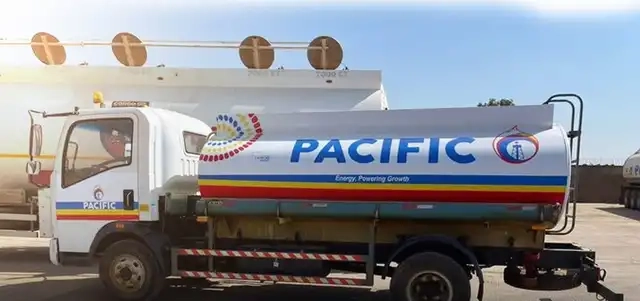
South Sudan currently imports fuel under a G to G arrangement in which Kenya’s Pacific Petroleum is the designated importer of petrol and diesel. The company then supplies licensed oil marketers that operate in the country’s retail market.
Pacific Petroleum admitted that it imported more expensive fuel cargoes outside the G to G framework. This happened after supply disruptions triggered by the conflict between the United States and Israel with Iran.
The costlier cargoes have pushed other oil marketers to divert fuel originally meant for the Democratic Republic of Congo into South Sudan, as they try to sell cheaper products.
A letter dated June 24, 2026 from Santino Dau, Undersecretary at South Sudan’s Ministry of Petroleum, told all oil marketing companies to comply and lift stocks nominated under signed sale and purchase agreements from the supplier. Mr Dau said this would apply while the state-owned South Sudan Energy prepares to take over the role and future communications.
“We are working with all security apparatus to ensure the border is manned and regulated going forward,” Mr Dau said in the letter. “Any stocks not originating from the manifest of stocks imported for South Sudan shall be impounded at the border. Any sabotage to this arrangement will be met with legal action and licence revocation.”
A separate memo shows that one of the disputed cargoes was priced at $1,350 per cubic metre of diesel and $1,000 per cubic metre of petrol.
Kenyan oil marketers licensed to operate in South Sudan say these prices are uncompetitive. They argue that the premiums differ from those agreed under South Sudan’s G to G arrangement.
A letter from Kenya’s Ministry of Energy and Petroleum shows that Pacific Petroleum has recently faced challenges evacuating products from the Kenya Pipeline Company system and Gapco terminals.
Gapco is owned by TotalEnergies Marketing Kenya. The difficulties prompted Petroleum Principal Secretary Kello Harsama to call a meeting with oil marketers to address the bottlenecks.
Mr Harsama said in a letter dated June 22, 2026 that Pacific Petroleum had faced several challenges in carrying out the import arrangement, particularly slow evacuation of product from the Gapco terminal and the Kenya Pipeline Company system.
He invited seven oil companies to a joint meeting with the State Department for Petroleum, Kenya Pipeline Company and the Energy and Petroleum Regulatory Authority to discuss the most efficient way of handling the South Sudan import arrangement without harming Kenya’s own G to G import framework.
The seven companies invited were Pacific Petroleum, Be Energy, Asharami Synergy, Galana Energies, One Petroleum, Oryx Energies and Gulf Energy. All of them import fuel under Kenya’s G to G arrangement.
Kenya imports fuel through state owned suppliers: Saudi Arabia’s Aramco Trading Fujairah FZE, Abu Dhabi’s ADNOC Global Trading Ltd and Emirates National Oil Company Singapore Ltd.
Mr Harsama did not give the reasons behind Pacific Petroleum’s difficulties in evacuating products from Kenya Pipeline Company and Gapco facilities. The delays suggest that nominated cargoes for South Sudan are not being lifted as scheduled.
A memo circulated to oil marketers also shows that South Sudan has frozen requests to amend quantities allocated under the import programme. The memo said the Kenya Revenue Authority had been told not to approve any amendments relating to South Sudan at this time.
South Sudan is the third East African country to adopt a G to G fuel import arrangement, aiming to improve supply security and protect consumers from volatility in global spot markets.
Kenya introduced its G to G framework in March 2023 through agreements with three Gulf suppliers. Uganda followed a year later with a deal involving Vitol Bahrain.
South Sudan adopted its arrangement in March 2026. Rwanda became the fourth country last month after announcing a G to G agreement with Oman’s OQ Trading.
South Sudan has said its state-owned South Sudan Energy will take over the importer role from Pacific Petroleum. Rwanda has also set up a state owned entity to manage its fuel imports, while Uganda imports fuel through the Uganda National Oil Company.
This regional shift has increasingly put fuel imports in the hands of state backed entities, replacing the previous system under which dozens of oil marketers competed to import cargoes through open tenders.
Discover more from Access Radio®
Subscribe to get the latest posts sent to your email.