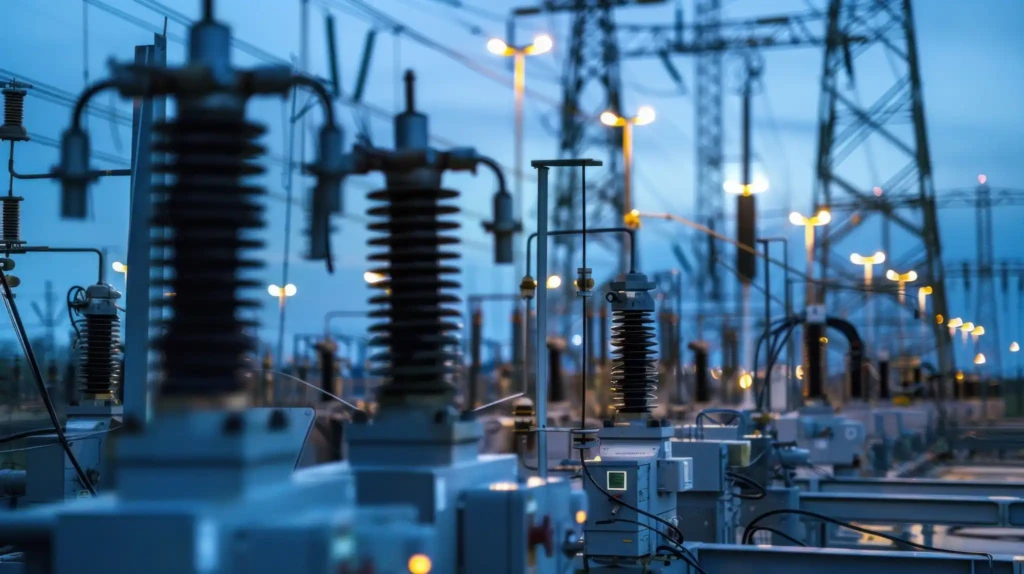
Uganda and South Sudan Open $254m Power Trade Corridor/PHOTO CREDIT: Amnons Business Report
(JUBA) – A 299 kilometre electricity transmission line running from northern Uganda to Juba is set to create a new market for Uganda’s power while giving South Sudan an alternative to expensive diesel generated electricity.
The $254 million South Sudan Uganda Power Interconnection Project (SUPIP), which Uganda technically launched last Thursday, will establish a 400 kV double circuit connection between Olwiyo and Juba/Gumbo, opening a new corridor for cross border electricity trade.
The significance of the project stretches beyond electricity exports to South Sudan. By plugging South Sudan into the Eastern Africa Power Pool (EAPP), the transmission line will become part of a wider regional network through which Uganda could sell electricity when it has excess supply and potentially import power from countries such as Ethiopia when needed.
“It is a case of energy security where you have power trading,” said Ministry of Energy assistant commissioner for electricity supply Edward Baleke.
That two way potential places the project within the wider ambition of the EAPP, which seeks to interconnect national electricity grids and enable countries to trade power depending on supply and demand. South Sudan remains one of the countries that is yet to be fully integrated into that regional electricity market. SUPIP is designed to change that.
The project is being jointly implemented by Uganda and South Sudan, with coordination support from the Nile Equatorial Lakes Subsidiary Action Program Coordination Unit (NELSAP CU). Each country is responsible for infrastructure within its territory. Uganda’s component is estimated at $121 million, while South Sudan’s is valued at about $133 million, bringing the overall project cost to $254 million.
The African Development Bank (AfDB) is financing the project, with the European Union providing co financing for the South Sudan component.
Uganda’s section will comprise about 150 kilometres of 400 kV transmission infrastructure, including approximately 118 kilometres from Olwiyo Substation to Bibia and another 32 kilometres from Bibia to the South Sudan border. The project will also involve construction of a new 400/132/33 kV substation at Bibia and upgrading the existing Olwiyo Substation to 400/132/33 kV. The Karuma Substation will also be extended to facilitate evacuation of electricity from Karuma towards Olwiyo and eventually into the cross border network.
For Uganda, the infrastructure creates another route through which available generation capacity can reach an export market while strengthening the transmission network in the north. For South Sudan, the economics are different. The country continues to depend heavily on costly fossil fuel based electricity, making access to Uganda’s grid potentially important for reducing electricity costs and improving reliability.
Baba S. Fatajo, a Nairobi based power engineer managing the project on behalf of AfDB, said the interconnection provides an opportunity for the two countries to address complementary electricity needs.
“South Sudan is struggling to have a reliable supply of electricity, which is very expensive because they depend on diesel; so, with the cooperation of the two countries, there is an opportunity for them to get a cheaper source of energy from Uganda, which at the same time can export excess energy it produces,” he said.
More reliable electricity is also expected to support businesses, households and social services along the project corridor.
For Uganda, however, exports are only one side of the equation. Regional interconnection could allow electricity to move in either direction depending on demand, giving Uganda another option for accessing electricity from the wider regional market.
Baleke said the South Sudan link is particularly important because of Uganda’s connection to Ethiopia, which has substantial electricity generation capacity.
“This line is the key within the Eastern Africa Power Pool Master Plan to ensure that Uganda has energy security as we move in the future,” he said.
Thursday’s technical launch moves the project further from financing and preparatory work towards implementation. The Ministry of Energy is implementing Uganda’s component in collaboration with the Ministry of Finance, AfDB and Uganda Electricity Transmission Company Limited (UETCL). The launch followed fulfilment of conditions required for the effectiveness and first disbursement of AfDB financing for Uganda, as well as the constitution of the Project Implementation Team.
Attention now shifts to procurement, environmental and social safeguards and mobilisation of consultants and contractors.
UETCL head of grid development and planning, Daniel Okello, said construction will be divided between transmission line and substation works.
“We shall have one contractor for the transmission line, and another for the substations. The project also has an EPC supervision consultant that will coordinate and manage, and be the owner’s engineer for both countries,” he said.
Discover more from Access Radio Yei News
Subscribe to get the latest posts sent to your email.