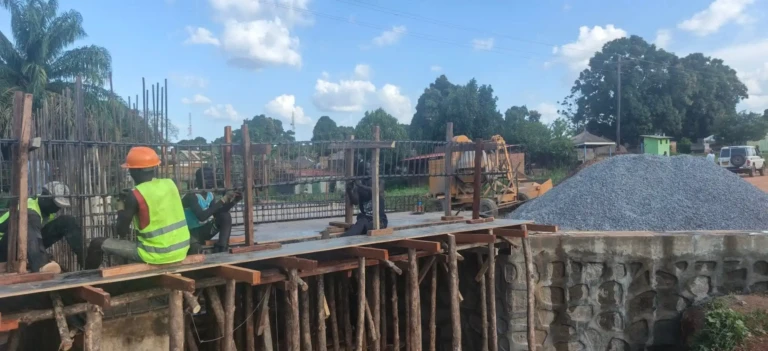
(Kampala) – Uganda has earmarked 2.17 trillion Ugandan Shillings (about $560.2 million) for the construction of its standard gauge railway (SGR) in the upcoming financial year, signaling the long-delayed Malaba-Kampala section is finally set to begin. The bulk of the funding will come from the Islamic Development Bank (IsDB), which has committed $538.3 million (Ush2.09 trillion), while the Ugandan government will contribute $21.9 million (Ush79.03 billion).
This financing marks 19.4 percent of the project’s total estimated cost, allowing Uganda to officially start work on the railway after more than a decade of delays. The Malaba-Kampala line is part of the Northern Corridor Integration Projects (NCIP), a regional infrastructure plan designed to strengthen trade and connectivity across East Africa.
President Yoweri Museveni formally launched the 272-kilometre line in November 2024. During his June 12 budget address, Finance Minister Matia Kasaija described the SGR as a critical national investment that will reduce transport costs by half—from $120 to $60 per tonne—and cut transit time between Mombasa and Kampala from seven days to just one. The goal, Kasaija said, is to transform Uganda from a landlocked to a “land-linked” nation.
The project had previously stalled due to financing difficulties, with several potential backers pulling out. But Uganda recently secured a $800 million deal with the IsDB, signed during the bank’s 50th Annual Meetings held in Algiers on May 20, 2025. The agreement is part of the 2025–2027 Country Engagement Framework between Uganda and the IsDB.
With funds now in place, Uganda issued a Limited Notice to Proceed to the Turkish contractor Yapi Merkezi, backed by $83 million to commence preliminary work. An NTP allows the contractor to start initial activities while the full financing structure is being finalized with additional lenders, including UK Export Finance, Turkish Exim Bank, and China Exim Bank.
Land acquisition for the project is also progressing. An estimated Ush620.87 billion ($172 million) is required to secure 135 kilometers out of the 232-kilometre right of way, approximately 58 percent of the total. Compensation for landowners has been completed from Malaba to Buikwe, and will continue toward Kampala depending on funds availability.
On the Kenyan side of the border, plans are underway to raise Ksh358 billion ($2.77 billion) through a Panda bond in China to extend the SGR from Naivasha to Malaba. Kenya’s Treasury has sent officials to Beijing to finalize the deal, hoping to float the bond on the Shanghai exchange before the end of the year. A Panda bond is a sovereign debt instrument issued in China and denominated in yuan, aimed at attracting Chinese institutional investors.
Sources close to Kenya’s Treasury say the Chinese have agreed in principle to fund the SGR, and the structure of the deal is expected to be finalized in the coming weeks. Kenya previously secured Chinese loans to finance the first two SGR phases—from Mombasa to Nairobi, and then Nairobi to Naivasha. However, China withdrew from financing the Naivasha-Malaba extension, citing concerns over debt sustainability and the line’s economic feasibility.
After years of stalled progress, Kenya resumed talks with China and secured support for joint financing of the 475-kilometre railway from Naivasha to Malaba during President William Ruto’s state visit to Beijing in April. This rail line is expected to connect with Uganda’s SGR at Malaba, forming a continuous network from Mombasa to Kampala.
The absence of a rail link has meant most cargo destined for Uganda, Rwanda, South Sudan, Burundi, and the Democratic Republic of Congo has to be transported by road. This increases transit times and logistics costs. A functioning railway would ease these burdens and significantly boost regional trade.
To bridge the financing gap, Kenya is also exploring other funding sources including Sukuk (Islamic bonds) and tapping into UAE bond markets. National Treasury and Economic Planning Cabinet Secretary John Mbadi said Kenya is seeking to diversify its sources of external borrowing to mitigate risks tied to reliance on a few markets. High global borrowing costs have made non-Western instruments such as Panda bonds and Sukuk increasingly attractive.
China has shifted away from issuing concessional loans to African countries, preferring mechanisms such as public-private partnerships, grants, and sovereign bond facilitation. Initially, Kenya and China agreed to co-finance the Naivasha-Malaba line with each contributing 30 percent, while private investors would fill the gap. Kenya has since requested China to increase its share of the financing.
If Kenya successfully issues its Panda bond, it will become the second African country after Egypt to tap China’s domestic capital markets. Cairo raised $480 million through a similar bond in October 2023 at an interest rate of 3.5 percent for a three-year period.
For Uganda and its neighbors, including South Sudan, the progress on the Malaba-Kampala railway is critical. It is expected to improve access to Mombasa port, reduce cargo handling time, and help unlock economic opportunities across the region. But as both Kenya and Uganda move ahead, much depends on whether the promised funds materialize in time to finally connect East Africa’s key trade arteries by rail.
Discover more from Access Radio Yei News
Subscribe to get the latest posts sent to your email.