New Deal Targets Underserved Areas Through Better Health Data/PHOTO CREDTIS: National Statistics Portal
(JUBA) – South Sudan’s ability to track disease, plan health services and protect households from medical costs is set to improve after two key agencies signed a formal agreement on data cooperation.
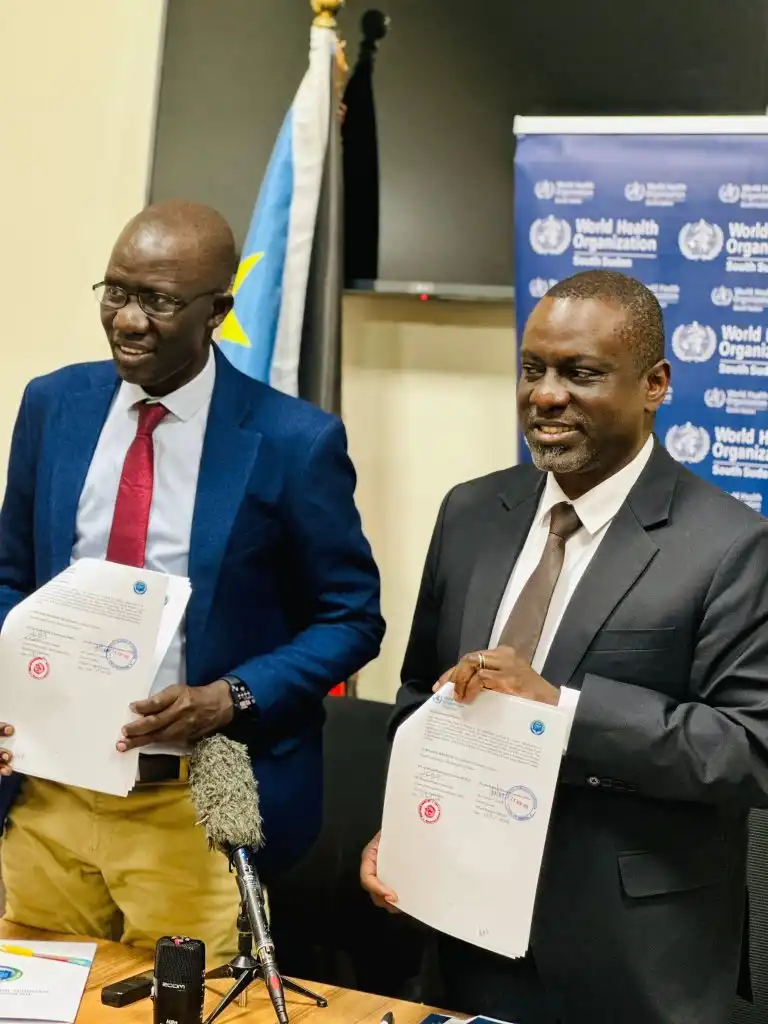
The National Bureau of Statistics and the World Health Organization country office put their names to a Project Collaboration Agreement in Juba.
The pact builds a single framework for gathering, analysing and using health information across the country. It ties survey results directly to local health services, giving officials the tools to spot communities that are missing out, direct resources to where clinics are weakest, and measure how well families are shielded from catastrophic health spending.
The agreement covers five main areas of work. The two bodies will run joint health surveys and research. They will produce statistical reports and knowledge products for public use.
They will invest in technical training and career development for national staff and analyse how the health system is financed.
They will set shared rules for data quality and governance, so numbers from different sources can be trusted and compared.
For a country where maternal deaths remain high and preventable diseases still sweep through villages, the absence of reliable numbers has long been a barrier.
At the signing, NBS Director General Augustino Ting Mayai described the pact as a practical move toward a national approach to health evidence. He thanked WHO for its continued partnership.
WHO Representative Humphrey Karamagi said simply that putting money into statistics is putting money into health, and that better data leads to better policies and better results for the population.
The partners described the agreement as a commitment to accountability, integrity and transparency.
Discover more from Access Radio Yei News
Subscribe to get the latest posts sent to your email.