South Sudan Awaits UNESCO Vote on Boma Antelope Migration/PHOTO CREDITS: Augustine Passilly and Marcus Westberg
(JUBA) – A decision that could secure the future of the planet’s biggest land mammal migration lies with the United Nations cultural agency. In July, the UNESCO World Heritage Committee will vote on a bid to protect the vast migratory landscape that links Boma and Badingilo national parks in South Sudan.
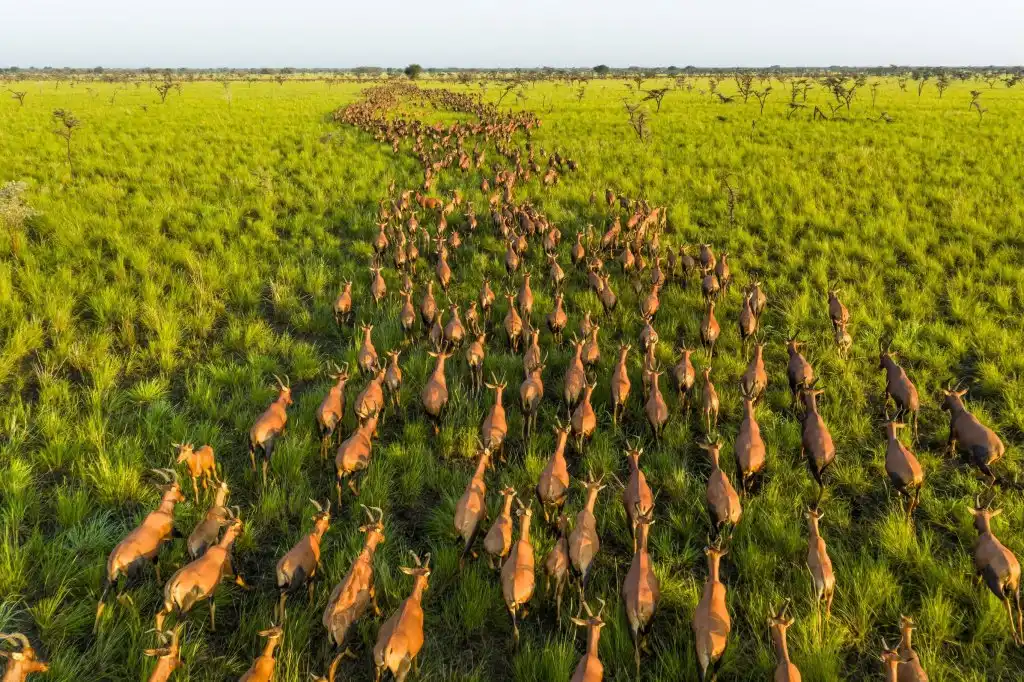
The site is home to more than six million antelopes. The annual circular trek of these animals, including white-eared kob, tiang and Mongalla gazelle, is a natural event of immense scale. It unfolds between the lush green plains of Badingilo National Park and the larger Boma reserve near the Ethiopian border.
The migration depends on a fragile, unprotected corridor. During the rains, roughly between April and September, antelope species gather in Boma, which spans 19,747 square kilometres. As waters dry up around October, the herds move west towards the lakes and swamps of Badingilo, an area of 8,935 square kilometres, where they remain until the rains return. This connecting route has no formal legal shield, leaving it open to poaching, encroachment, and unchecked development.
South Sudan currently has no sites on the World Heritage List. A successful inscription would be a first for the country. Backers say it would draw global attention and resources to protect a wildlife spectacle that scientists and conservationists describe as unmatched.
“There is no other place with so many animals,” a specialist monitoring the plains told the French daily La Croix, speaking from a patrol microlight aircraft operated by the conservation group African Parks.
African Parks manages the two reserves under a long mandate from the national government. From the air, the vast green carpet of Badingilo is broken by blue-grey lakes, which serve as the central draw for wildlife during the dry months. The group’s flights track animal numbers, watch for armed poachers, and assess the health of the grasslands.
The formal bid to UNESCO seeks inscription for the “Boma-Badingilo Migratory Landscape”. The proposal focuses on its outstanding universal value, both for the sheer density of antelopes and the presence of other threatened species. The dossier has been years in preparation, involving wildlife officials, international ecologists, and community representatives.
Protection of this corridor would tighten rules on roads, settlement, and hunting across a landscape larger than some nations. Conservationists argue that safeguarding the migration is an ecological and economic necessity for a country where conflict often overshadows natural wealth. They point to the potential for regulated tourism and jobs linked to a globally recognised brand.
Risks to the site are well documented. Commercial poaching driven by distant markets, small arms proliferation, and charcoal production all chip away at the habitat. Unplanned infrastructure cuts through ancient movement routes. Without a change in status, supporters warn, the migration could fragment in a generation.
The World Heritage Committee is scheduled to review the nomination at its session in July 2026. A positive outcome would mean not just a first inscription for South Sudan, but a major new protected zone for Africa’s largest surviving concentration of medium and large mammals outside the elephant ranges.
Discover more from Access Radio Yei News
Subscribe to get the latest posts sent to your email.