





The National Elections Commission (NEC) recently announced that South Sudan will hold national elections in December 2026, in accordance with the provisions of the extended transitional period under the Revitalized Agreement on the Resolution of the Conflict in the Republic of South Sudan (R-ARCSS). The ruling Sudan People’s Liberation Movement (SPLM) has already begun mobilizing supporters and positioning itself for the anticipated polls.
The opposition, however, remains largely unenthusiastic, with little indication that most parties are prepared to participate. One notable exception is the National Democratic Movement (NDM), led by Dr Lam Akol Ajawin, which has signalled its willingness to contest the elections, provided certain conditions are met.
This raises a critical question: can South Sudan organise free, fair, credible, and legally grounded elections within the few months remaining before December? The answer, regrettably, is almost certainly no.
Some observers argue that the government’s insistence on holding elections this year is intended to reassure the international community that the peace process remains on track. Others believe the announcement is designed to avert a looming legitimacy crisis when the transitional period expires in February 2027, while simultaneously creating a pathway for the current leadership to retain power.
Yet the realities on the ground tell a different story.
Implementation of the R-ARCSS remains significantly behind schedule. Several key provisions of the peace agreement have not been fulfilled, the permanent constitution-making process has seen limited progress, and there is no broad political consensus among signatory parties regarding the timing, conditions, and preparedness for national elections.
Under these circumstances, a credible election in December appears more like political ambition than a practical possibility.
If the government is genuinely committed to democratic transformation, it should first strengthen democratic practices at the grassroots and institutional levels before attempting a nationwide vote. One practical starting point would be supporting credible elections within public institutions, including national universities.
The recent experience at the University of Juba offers a telling example. As South Sudan’s premier institution of higher learning, the university was unable to conduct guild elections in a free, fair and peaceful manner, ultimately leading to their suspension. If a university environment where literacy levels are relatively high and political engagement is more sophisticated cannot sustain peaceful electoral competition, serious questions must be asked about the country’s readiness for a national election.
University guild elections often reflect broader political trends. They provide political parties with an opportunity to assess public support, promote candidates, and demonstrate their commitment to democratic principles. In many countries, student elections serve as a training ground for future leaders and an important platform for nurturing democratic participation.
It is therefore deeply concerning that institutions tasked with preparing the country’s future professionals and leaders struggle to organise credible elections. This raises wider concerns about the capacity of state institutions to manage a national electoral process that can be accepted as legitimate by all stakeholders.
The challenge facing South Sudan is not merely about conducting elections to meet a deadline. The greater challenge lies in creating the political, legal, and institutional conditions necessary for those elections to be meaningful, peaceful, and credible. Without these foundations, elections risk becoming a symbolic exercise rather than a genuine expression of the people’s democratic will.
South Sudan needs more than ballot papers. It needs strong institutions, public trust, political consensus, and a democratic culture that gives those ballots real meaning.
Only then can elections serve their true purpose not as a procedural milestone, but as a legitimate pathway for citizens to determine the future of their nation.
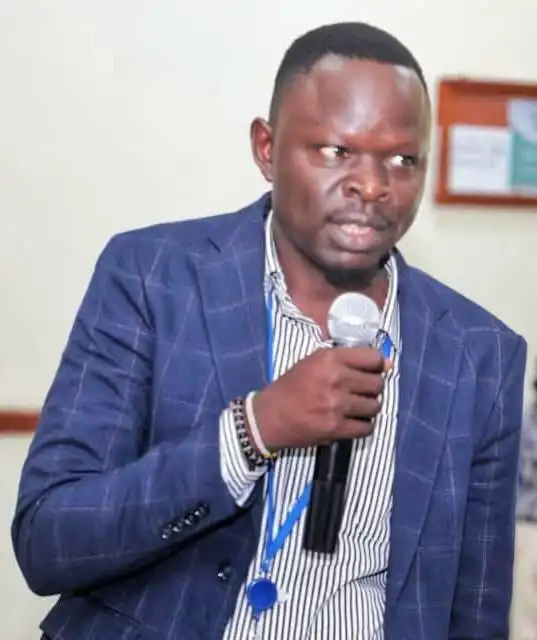
Taban Kwaje is a social and political commentator and can be reached at taban.kwaje@gmail.com. The views expressed in this article are solely those of the author and do not necessarily reflect the views of any institution with which he is affiliated.
Disclaimer
Access Radio® publishes opinion articles to provide a platform for diverse, independent, and constructive viewpoints. The views and opinions expressed in these articles are solely those of the respective authors and do not necessarily reflect the position of Access Radio®, its management, staff, or editorial team.
The publication of an opinion article does not constitute endorsement, approval, or agreement with its content by Access Radio®.
Authors bear full responsibility for the accuracy of the information, claims, and opinions contained in their submissions. Access Radio® accepts no liability for any errors, omissions, statements, or interpretations presented by contributors.
We encourage thoughtful, respectful, and well-informed contributions from our listeners and readers. To share your views, please contact us at news@radioyei.org.
All submissions are subject to editorial review and may be edited for grammar, clarity, style, length, and compliance with our editorial standards. However, such editing does not alter the author’s ownership of the expressed opinions.
Access Radio® remains committed to promoting freedom of expression, balanced public dialogue, and responsible journalism in the public interest.
Discover more from Access Radio®
Subscribe to get the latest posts sent to your email.