Photo: SSBC/ Daniel Mareng Wek
(Juba) – The Governor of the Bank of South Sudan (BoSS), Dr. Addis Ababa Othow, has launched a national process aimed at reforming and stabilizing the South Sudanese Pound (SSP), which continues to face inflationary pressure and weakening public trust.
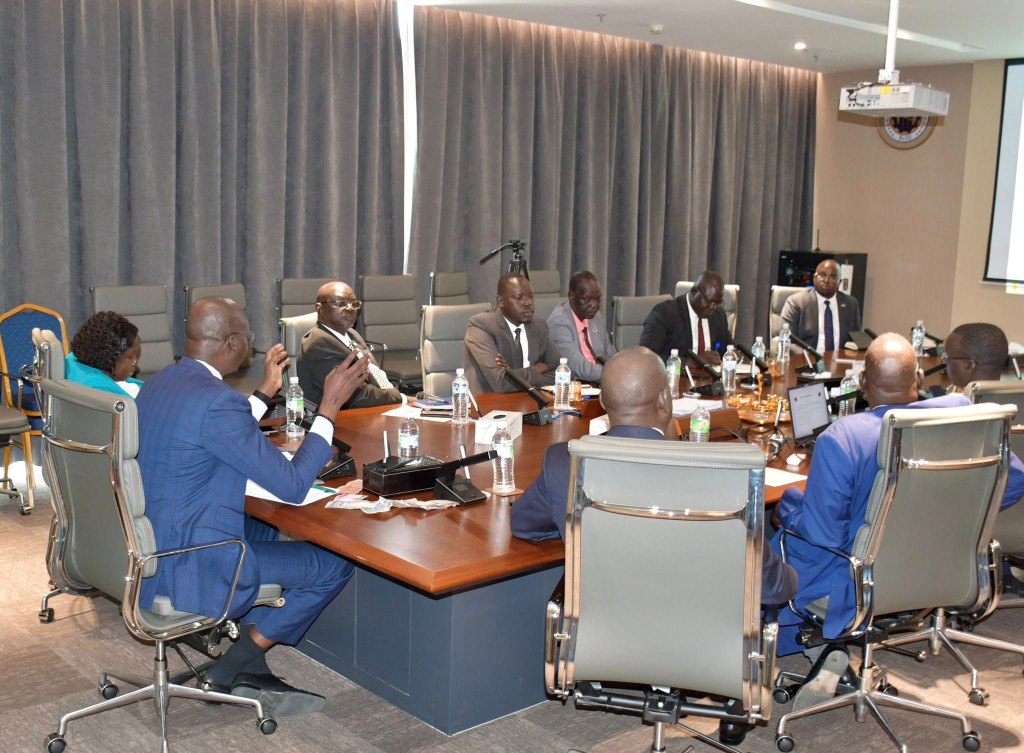
The initiative began with a high level meeting in Juba, bringing together top officials from the central bank to map out a new economic direction.
The meeting marked the first formal session of the newly established Currency Management Committee. The committee will be responsible for examining the structure and management of the SSP and recommending reforms that reflect both national needs and regional realities. Governor Othow said the goal is to create a more stable and inclusive financial system.
“This meeting sends a strong message we have begun the journey to fix and manage our currency through an inclusive process that leaves no one behind,” Governor Othow stated.
Among the core issues discussed were monetary policy improvements, solving liquidity challenges, increasing digital banking services, and enhancing currency security.
These areas are seen as essential to restoring trust in the currency and improving access to reliable financial services across South Sudan.
The Bank’s First Deputy Governor, Samuel Yanga Mikaya, who chairs the Currency Management Committee, pledged practical and workable solutions.
He emphasized the importance of timely action and technical expertise to restore economic confidence.
Second Deputy Governor Rita Nyankiir Akoon described the meeting as “an eye opener” and praised Governor Othow’s leadership in spearheading the process.
Currently, the South Sudanese Pound continues to depreciate, and many citizens rely on the U.S. Dollar or regional currencies such as the Ugandan Shilling for transactions.
As of June 24, 2025, the exchange rate stands at approximately 4,600 SSP per 1 USD, meaning that even modest economic transactions are increasingly costly for ordinary people. This has further driven the demand for reform.
The Currency Management Committee is expected to issue a series of recommendations in the coming weeks. These may include increased support for mobile money and digital transactions.
The broader economic context remains challenging. South Sudan’s economy is struggling with high inflation, foreign currency shortages, and declining oil revenues, which form the bulk of government income.
Currency mismanagement has been one of the core barriers to investment and development financing in South Sudan, where confidence in monetary systems remains low.
The involvement of senior technocrats and the emphasis on long term stability point to a growing recognition that currency reform is central to broader economic reforms.
With inflation continuing to erode household incomes and the SSP losing ground against foreign currencies.
The Bank of South Sudan plans to update the public on next steps following the Currency Management Committee’s first policy brief, expected before the end of July.
Discover more from Access Radio Yei News
Subscribe to get the latest posts sent to your email.