

(OPINION / Bjørn Halvorsen, Norway) – I have waited some time before putting these thoughts to paper. They come neither from politics nor from personal ambition, but from years spent observing a country whose people have shown remarkable strength under circumstances few others have had to endure.
I know South Sudan, and I know the Equatorias, Central and Eastern alike, better than many who visit only briefly. I have sat beneath the shade of village trees, shared simple meals, listened more than I have spoken and learned that wisdom is often found far from conference rooms and official reports. I have spoken with chiefs, clergy, teachers, mothers, young people, civil servants and soldiers. I have seen both the promise and the pain. That is why I write not as a stranger, but as someone who has come to care deeply about the future of your country.
A neighbour does not always have the answers. Nor should a neighbour presume to tell other people how they should govern themselves. Yet friendship carries with it a quiet duty to speak honestly when silence serves no one.
South Sudan possesses extraordinary natural wealth. It has fertile land, abundant water, forests, minerals, energetic young people and a strategic place within East Africa. These are not small advantages. They are foundations upon which peaceful and prosperous societies have been built elsewhere. Yet history teaches that natural wealth alone does not create stability. More often, it tests institutions, leadership and the willingness of communities to place the common good above immediate interests.
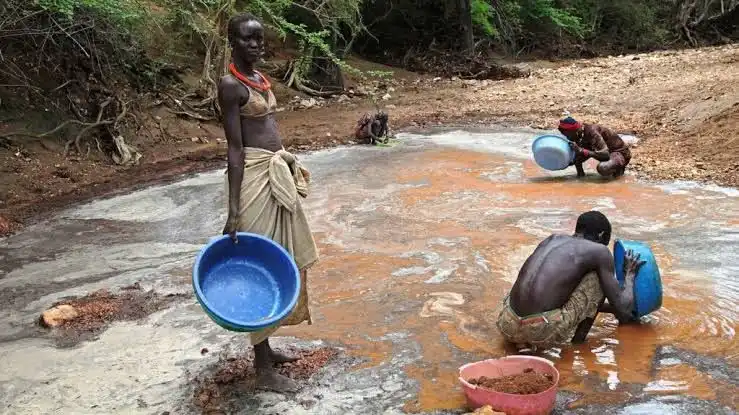
The proposed mining activities in Kala Boma therefore deserve careful thought. Exploration itself is neither good nor bad. What decides its value is the quality of governance that surrounds it. Communities should understand what is being proposed before decisions are taken. They should know who the investors are, what minerals are expected, how the environment will be protected, how land rights will be respected and how benefits will be shared. These questions should never be treated as obstacles to development. They are the conditions that make development lasting.
There is a tendency, in many countries blessed with mineral resources, to measure wealth only by what lies beneath the soil. That is understandable, but it is incomplete. A forest, a clean river, productive farmland and a healthy community are also forms of capital. They do not appear on a balance sheet as easily as gold or rare minerals, yet they sustain life for generations. Good governance recognises every form of wealth, not only that which can be extracted and exported.
Experience from many countries suggests several principles that are worth keeping in mind. Independent geological assessments build confidence. Environmental and Social Impact Assessments should be transparent and available to the public. Local communities should take part freely and meaningfully in decisions that affect their land and livelihoods. Agreements on employment, education, healthcare, infrastructure and community investment should be reached before production begins rather than afterwards. Independent oversight, including representatives of traditional authorities, women, youth, churches, technical experts and civil society, helps keep trust alive over time.
Strong institutions are often less visible than roads or bridges, yet they are the infrastructure upon which every successful society ultimately depends. Transparent procurement, independent courts, professional civil servants and accountable local government are not administrative luxuries. They are the means through which citizens develop confidence that development is being pursued fairly and for the benefit of all.
South Sudan need not imitate another country. Every nation must find its own path. Yet there is wisdom in studying both successes and failures elsewhere. Norway’s stewardship of petroleum revenues, Botswana’s management of diamonds and Ghana’s continuing efforts to strengthen mining governance offer valuable lessons. Equally instructive are countries where natural wealth has fuelled corruption, environmental damage or conflict. Good judgement is often formed as much by understanding mistakes as by celebrating successes.
The greatest resource in Kala Boma is unlikely to be the mineral itself. It is the young people who will inherit the consequences of today’s decisions. Investment in technical education, apprenticeships, scholarships and vocational training should begin before large scale extraction. Local people should become engineers, geologists, environmental scientists, heavy equipment operators, entrepreneurs and business leaders. Communities should become participants in development rather than observers of it.
Mining also requires a longer view. Every mineral deposit will one day be exhausted. The question is therefore not simply what can be extracted from the ground, but what will remain when extraction has ended. If revenues are invested wisely in schools, hospitals, roads, renewable energy, agriculture, clean water, technical education and local enterprise, future generations will inherit assets that continue to create opportunity long after the last truck has departed.
Responsible mining should leave behind more knowledge than pollution, more opportunity than dependency and more resilience than regret. Environmental restoration should be planned before excavation begins, not after the landscape has already been altered.
In my own country, we have learned that trust is perhaps the most valuable resource a nation can possess. It cannot be mined, drilled or harvested. It is earned slowly through honesty, fairness and institutions that serve all citizens equally. Once lost, it is difficult to restore. Every major public decision should therefore strengthen trust rather than weaken it.
Peace is not secured only through political agreements. It is strengthened whenever citizens believe that public decisions are fair, transparent and inclusive. Development carried out with integrity, therefore, becomes an instrument of peace as much as an instrument of economic growth.
Those entrusted with public office are not merely administrators of the present. They are custodians of the future. Minerals extracted today belong, in a moral sense, not only to those alive now but also to children yet unborn. Good leadership asks not only what can be gained today, but what should still remain tomorrow.
South Sudan has travelled a difficult road. Those who have walked alongside the country over the years have admired not only its courage but also the patience and dignity shown by ordinary people. That history deserves a future built upon transparency, accountability and careful stewardship rather than haste.
I hope that this consultation marks the beginning of an open conversation rather than the conclusion of one. Development succeeds when governments, investors and communities work not as opponents but as partners. That approach demands time, honesty and mutual respect. It is rarely the quickest path, but it is almost always the strongest one.
During my years of knowing the people of the Equatorias, I have never doubted their dignity, strength or practical wisdom. Those qualities have carried communities through war and uncertainty. I believe they are equally capable of guiding development, provided their voices are heard with respect and their participation is genuine.
I have learned over the years that the most important decisions are rarely those taken most quickly. They are the decisions that people still regard as wise twenty or thirty years later. My hope is that the choices made in Kala Boma will be judged in that way by the children who will one day inherit both the land and the responsibility of caring for it.
I offer these reflections with respect for the sovereignty of South Sudan and with confidence in the wisdom of its people. Good neighbours do not seek to decide another nation’s future. They simply hope that, when important choices arise, those choices are made carefully, openly and with future generations firmly in mind.
With sincere respect,
Bjørn Halvorsen
Stavanger, Norway
About the Author
Bjørn Halvorsen is a Norwegian citizen with long standing ties to South Sudan. He has spent years living and working across the Equatorias and other parts of the country.
His reflections draw on direct experience with communities, traditional leaders and public servants. He writes in a personal capacity from Stavanger, Norway.
DISCLAIMER
+ Access Radio publishes opinion articles to provide a platform for varied voices. The views expressed here belong to the author alone and do not represent the position of Access Radio, its editors or its funders.
+ Access Radio does not endorse or take responsibility for any claims, statements or interpretations made by contributors.
+ Publication by Access Radio should not be understood as agreement with or approval of its contents.
+ Access Radio welcomes diverse perspectives from listeners and readers. Commentators are responsible for verifying the facts in their submissions. Access Radio publishes opinion articles to encourage public debate, not to validate every claim made by contributors.
We welcome thoughtful contributions from our listeners and readers. To share your opinion, email news [at] radioyei.org. Submissions may be edited for grammar, clarity and length at the discretion of Access Radio.
Discover more from Access Radio®
Subscribe to get the latest posts sent to your email.