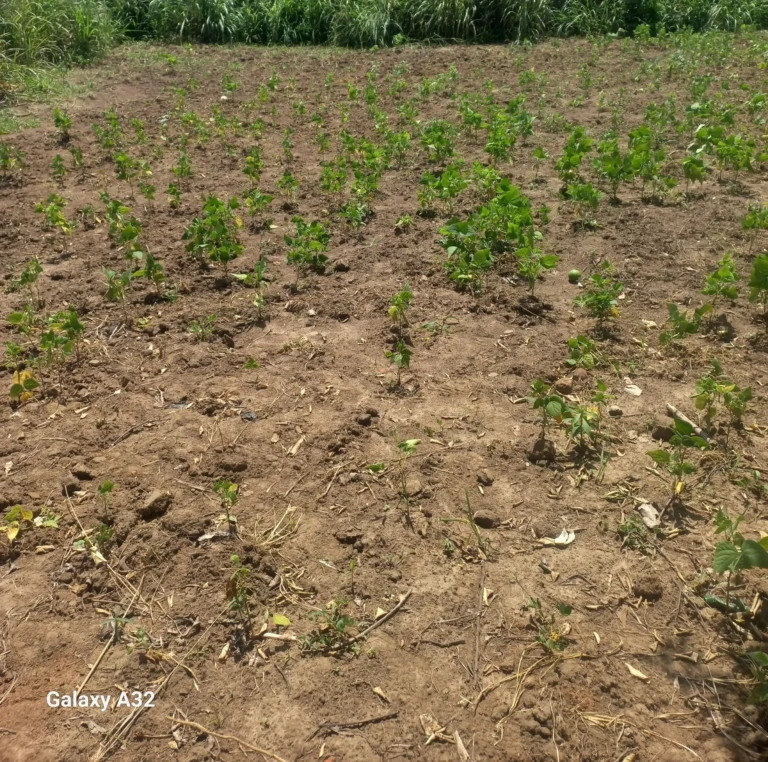
(MAGWI) – Farmers across Magwi County in Eastern Equatoria State are warning of widespread crop failure due to prolonged drought conditions, which are threatening local harvests and driving up food prices.
The situation is particularly severe in the farming communities of Abara, Opari, Moli Tokuro, and parts of Greater Pageri, which supply produce to Torit and the capital Juba.
Without sufficient rainfall, many farmers are reporting that their maize and other staple crops have withered in the fields. Sam George, a farmer in Opari, said that the dry conditions and pests have made it impossible to sustain production.
“The seeds are not germinating well. The maize leaves are tiny because of larvae, and we cannot plant again. The land is too dry,” he said. “Food prices are already rising daily. Many people may flee to Uganda to escape hunger.”
Due to the lack of rain and absence of irrigation infrastructure, most farmers are unable to replant or switch crops. The resulting food shortages are beginning to affect local markets, where the cost of basic items like maize, cassava and sorghum has begun to increase. Based on local reports, prices of staple goods have risen by at least 20 percent in recent weeks.
Rose Kiriba, a farmer from Pageri, explained that families have started relying on wild fruits and leaves for survival. “Nothing is sprouting. Children and women are suffering. The government must intervene with food aid,” she said.
Experts point to worsening climate trends as a major factor. The region has experienced increasingly erratic rainfall patterns, longer dry seasons, and more intense heat, all of which are linked to global climate change. These conditions have also been worsened by deforestation and poor soil quality, reducing the land’s capacity to retain water and support crops.
Magwi County Commissioner Benjamin Olum Pole Pole described the outlook as serious.
“This year’s harvest may be worse than in previous years,” he said.
He advised farmers to plant drought resistant crops such as cassava and sorghum and urged them not to sell any remaining food stocks until the full impact of the drought is understood.
Although farming activity continues in parts of the county, the scale of damage is increasing concern. If rains do not return in the coming weeks, many fear the situation may escalate into a local food emergency.
Commissioner Pole Pole also appealed to the national government and humanitarian agencies for urgent support to help communities bridge the food gap and prepare for more resilient planting methods in the next season.
While the effects are local, similar climate driven disruptions to agriculture are being reported globally in countries such as Cambodia, Ireland, and Morocco.
Discover more from Access Radio Yei News
Subscribe to get the latest posts sent to your email.